Notoxus calcaratus
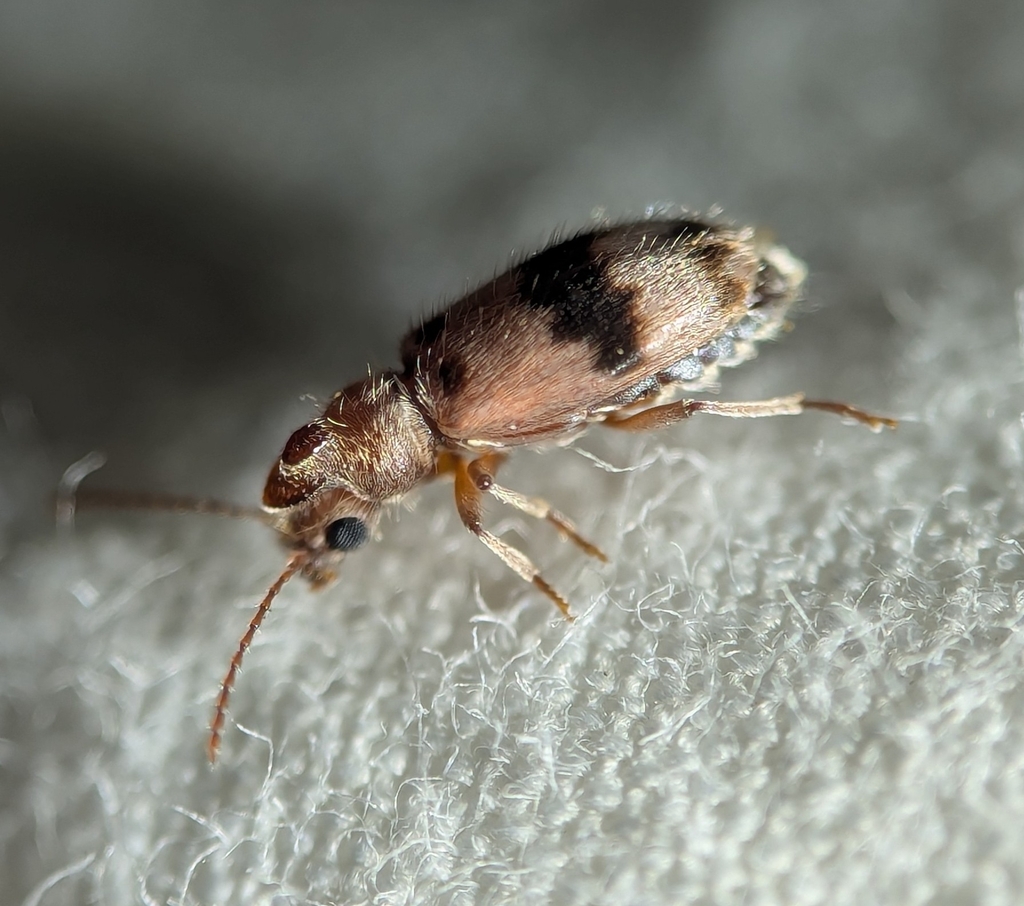
(c) Zihao Wang, some rights reserved (CC BY) · licence
Family: Anthicidae · Class: Insecta · Order: Coleoptera
Notoxus calcaratus is a California animal in the Anthicidae family.
Notoxus calcaratus is a small beetle in the family Anthicidae, commonly known as antlike flower beetles or monoceros beetles. Adults measure 2.6 to 4.2 mm in length, with a distinctive body form characteristic of the subfamily Notoxinae (BugGuide 2025). The species name 'calcaratus' derives from the Latin word for 'spur', likely referring to morphological features of the legs or thorax. This species has a transcontinental distribution across the United States, ranging from Oregon and California in the west to New Jersey and Florida in the east, and extending into Mexico (BugGuide 2025). The distribution is primarily concentrated in the southwestern United States. In California, the species occurs throughout suitable habitat areas, though specific county-level distribution data requires further documentation. Notoxus calcaratus inhabits diverse terrestrial environments where it can be found on flowers and vegetation. Adults are attracted to artificial lights at night, as documented in collection records from Utah (BugGuide 2023). The species appears to prefer areas with flowering plants, consistent with the feeding habits typical of anthicid beetles. Specific microhabitat preferences and elevation ranges within California have not been thoroughly documented in the available literature. The seasonal activity pattern extends primarily from April through October, based on collection data across the species' range (BugGuide 2025). Adults are presumably active during warmer months when flowering plants provide nectar resources. Like other members of the family Anthicidae, N. calcaratus likely feeds on nectar and pollen from various flowering plants, though specific host plant relationships have not been well documented. The nocturnal attraction to artificial lights suggests crepuscular or nocturnal activity patterns, at least for dispersal or mate-seeking behaviors. Reproductive biology and larval ecology remain poorly studied for this species. Anthicid beetle larvae typically develop in soil or organic debris, often feeding on fungal material or decaying plant matter, but specific details for N. calcaratus are lacking. Adult emergence timing and generation number per year have not been documented. Notoxus calcaratus does not appear on federal or state conservation lists and presumably maintains stable populations throughout its wide geographic range. The species' broad distribution and apparent habitat flexibility suggest it is not currently at conservation risk. However, like many small invertebrates, population trends and potential threats from habitat modification, pesticide use, or climate change have not been systematically assessed. Detailed ecological studies of this species remain limited. The information presented here synthesizes available observations from taxonomic databases and community reports. Research gaps include specific host plant relationships, larval biology, population ecology, and detailed habitat requirements within California ecosystems.
Classification
Class: Insecta · Order: Coleoptera · Family: Anthicidae
Frequently asked questions
How is Notoxus calcaratus classified?
Notoxus calcaratus belongs to class Insecta, order Coleoptera, family Anthicidae.
What family does Notoxus calcaratus belong to?
Notoxus calcaratus is in the Anthicidae family.
What is Notoxus calcaratus?
Notoxus calcaratus is a small beetle in the family Anthicidae, commonly known as antlike flower beetles or monoceros beetles.
Is Notoxus calcaratus found in California?
Yes. Notoxus calcaratus is recorded in California in The California Species Project's catalogue.
Related species
Other California species in the same genus, family, or bioregion.
Data from The California Species Project — 14,000+ California species with verified data from CNPS, CDFW, USFWS, and more.