Numenius americanus
Long-billed Curlew
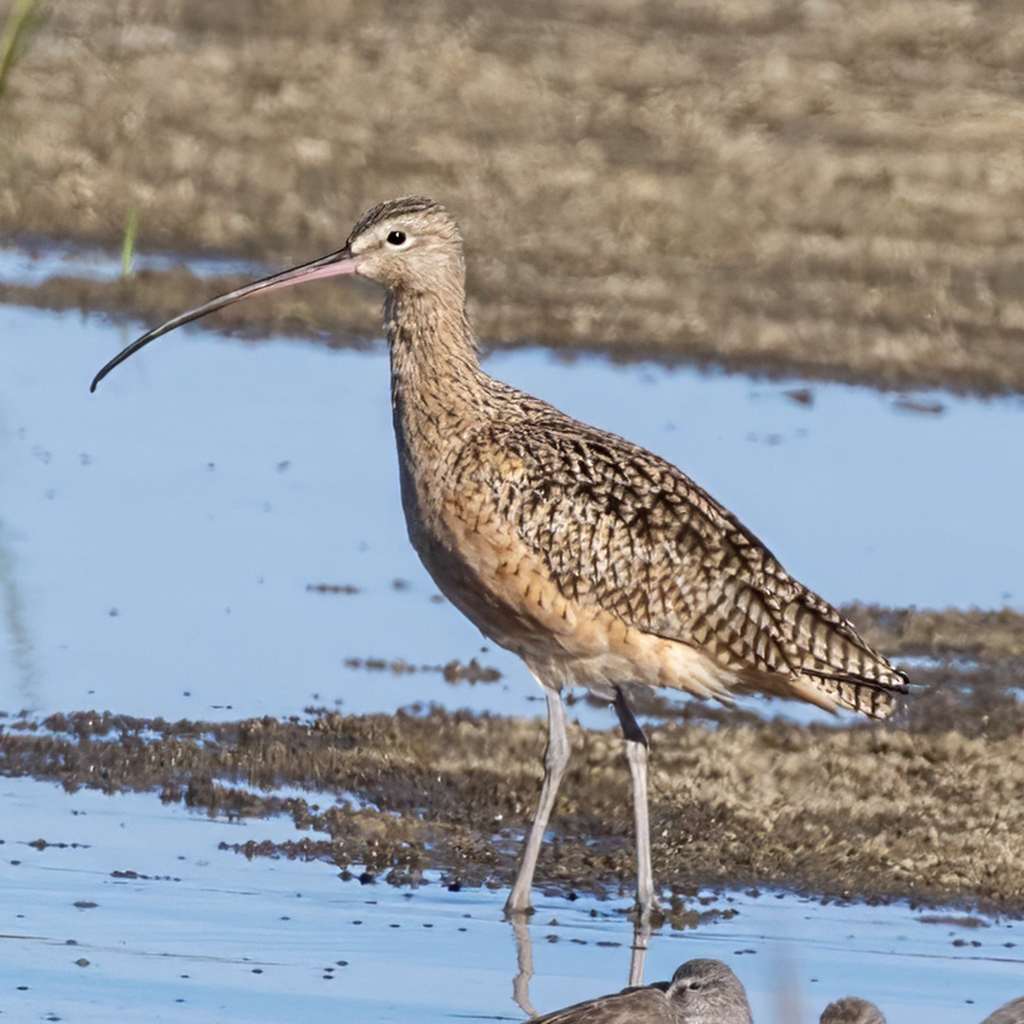
(c) Dan Vickers, some rights reserved (CC BY) · licence
Family: Scolopacidae · Class: Aves · Order: Charadriiformes
Conservation status: WL · G4 S2
Numenius americanus (Long-billed Curlew) is a California animal in the Scolopacidae family.
The Long-billed Curlew is North America's largest shorebird, measuring 50 to 65 cm (20 to 26 inches) in length with a wingspan reaching 90 cm (35 inches). Adults weigh 490 to 950 grams (1.1 to 2.1 pounds). The species is distinguished by its extremely long, curved bill, which measures 11 to 22 cm (4.3 to 8.7 inches) in length and is longer in females than males. The plumage is predominantly cinnamon-buff with darker barring on the back and wings. The head and neck display streaked patterns, while the underparts are pale buff to white. In flight, the species shows cinnamon-colored underwings and lacks wing stripes. Historically, Long-billed Curlews bred throughout the Great Plains and intermountain regions of western North America. In California, the species currently breeds in limited numbers in the northeastern counties, including Modoc, Lassen, and Siskiyou counties. Small breeding populations may also occur in the Central Valley and coastal areas. During migration and winter, the species is more widely distributed along the California coast and in the Central Valley, with significant concentrations in San Francisco Bay, Humboldt Bay, and the Salton Sea. Breeding habitat consists of short-grass prairie, agricultural fields, and wet meadows with sparse vegetation. The species requires large, open landscapes with minimal human disturbance for successful nesting. During winter and migration, Long-billed Curlews utilize mudflats, salt marshes, beaches, agricultural fields, and coastal estuaries. They show strong site fidelity to both breeding and wintering areas. Long-billed Curlews are ground nesters, creating shallow scrapes lined with grass in open areas. Breeding occurs from April through July, with females laying 3 to 5 olive-brown eggs with dark markings. Incubation lasts 27 to 30 days, performed primarily by males. Chicks are precocial and capable of feeding themselves shortly after hatching, though parents provide protection and guidance. The species feeds primarily on invertebrates, using its long bill to probe soil and mud for earthworms, beetle larvae, and crustaceans. During winter, marine invertebrates including crabs, worms, and mollusks constitute the primary diet. The Long-billed Curlew is listed as a California Species of Special Concern with a state rank of S2, indicating the species is imperiled in California with 6 to 20 occurrences or few remaining individuals. According to the North American Bird Conservation Initiative, the species has experienced significant population declines, with breeding populations decreasing by approximately 2% annually. Primary threats include habitat loss from agricultural conversion, urban development, and energy development in breeding areas. Coastal habitat degradation affects wintering populations. Climate change poses additional challenges through altered precipitation patterns and sea-level rise affecting coastal habitats.
Classification
Class: Aves · Order: Charadriiformes · Family: Scolopacidae
Conservation status
WL · G4 S2
Frequently asked questions
How is Numenius americanus classified?
Numenius americanus belongs to class Aves, order Charadriiformes, family Scolopacidae.
What family does Numenius americanus belong to?
Numenius americanus is in the Scolopacidae family.
Is Numenius americanus protected or of conservation concern?
Numenius americanus carries the following status: WL · G4 S2.
What is Numenius americanus?
The Long-billed Curlew is North America's largest shorebird, measuring 50 to 65 cm (20 to 26 inches) in length with a wingspan reaching 90 cm (35 inches).
Is Numenius americanus found in California?
Yes. Numenius americanus is recorded in California in The California Species Project's catalogue.
Related species
Other California species in the same genus, family, or bioregion.
Data from The California Species Project — 14,000+ California species with verified data from CNPS, CDFW, USFWS, and more.