Numenius tahitiensis
Bristle-thighed Curlew
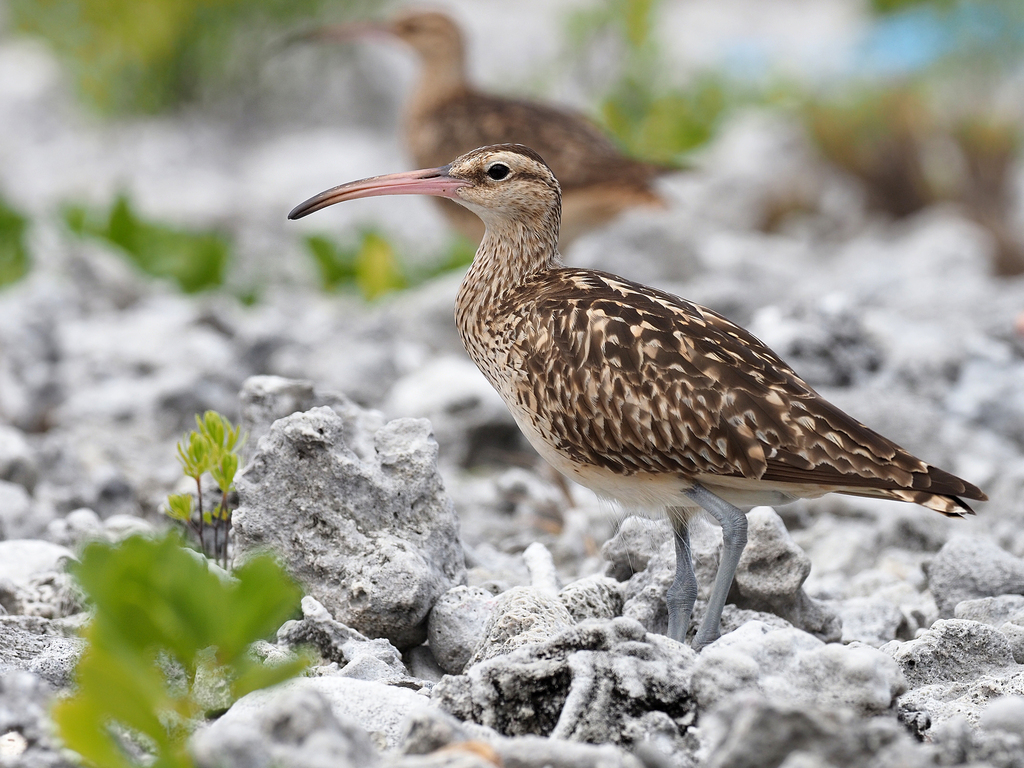
no rights reserved · CC0
Family: Scolopacidae · Class: Aves · Order: Charadriiformes
Numenius tahitiensis (Bristle-thighed Curlew) is a California animal in the Scolopacidae family.
The Bristle-thighed Curlew (Numenius tahitiensis) is a large shorebird distinguished by its long, curved bill and distinctive bristle-like feathers on the thighs and flanks. Adults measure approximately 40-44 cm (16-17 inches) in length with a wingspan of 84-91 cm (33-36 inches). The species exhibits buff-brown plumage with darker streaking above and lighter coloration below. The characteristic bristled thigh feathers, for which the species is named, are stiff, hair-like structures that extend beyond the normal contour feathers. The Bristle-thighed Curlew has one of the most restricted breeding ranges of any shorebird, nesting only in remote tundra regions of western Alaska. According to Birds of the World, breeding occurs in two small areas: the Seward Peninsula and the Yukon-Kuskokwim Delta region. The species winters exclusively on atolls and small islands across Oceania, including locations in French Polynesia, Kiribati, the Marshall Islands, and Hawaii. This transpacific migration represents one of the longest migrations undertaken by any shorebird. Breeding habitat consists of rolling hills at elevations of 50-500 meters with slopes of 3-10 percent, covered in upland tundra vegetation (Birds of the World). Nests are placed on the ground and often well-concealed by low vegetation. During the non-breeding season, the species inhabits coral atolls, sandy beaches, mudflats, and reef areas. Birds forage in both terrestrial and intertidal zones, less frequently utilizing wetlands and medium-shrub habitats including marshy streambeds and shallow lakes (Birds of the World). Bristle-thighed Curlews are opportunistic foragers, using their long bills to probe for invertebrates in sand and mud. Their diet includes marine worms, crustaceans, mollusks, and insects. The species exhibits unique behavioral adaptations, including the ability to become flightless during molt, making it particularly vulnerable during this period. Breeding occurs from May through July, with females typically laying 3-4 eggs in a shallow scrape lined with vegetation. The Bristle-thighed Curlew faces significant conservation challenges due to its extremely limited breeding range and small global population. The species is protected under the Migratory Bird Treaty Act and appears on various Habitat Conservation Plans in Hawaii (USFWS ECOS). Primary threats include habitat degradation on both breeding and wintering grounds, predation by introduced species on Pacific islands, and climate change impacts on tundra breeding habitat. The remote nature of breeding areas has historically limited research efforts, though intensive studies have improved understanding of the species' ecology and distribution patterns. Population estimates suggest fewer than 10,000 individuals remain globally, making this one of North America's rarest shorebirds. Conservation efforts focus on protecting breeding habitat in Alaska and managing threats on wintering grounds throughout the Pacific.
Classification
Class: Aves · Order: Charadriiformes · Family: Scolopacidae
Frequently asked questions
How is Numenius tahitiensis classified?
Numenius tahitiensis belongs to class Aves, order Charadriiformes, family Scolopacidae.
What family does Numenius tahitiensis belong to?
Numenius tahitiensis is in the Scolopacidae family.
What is Numenius tahitiensis?
The Bristle-thighed Curlew (Numenius tahitiensis) is a large shorebird distinguished by its long, curved bill and distinctive bristle-like feathers on the thighs and flanks.
Is Numenius tahitiensis found in California?
Yes. Numenius tahitiensis is recorded in California in The California Species Project's catalogue.
Related species
Other California species in the same genus, family, or bioregion.
Data from The California Species Project — 14,000+ California species with verified data from CNPS, CDFW, USFWS, and more.