Nuttallina californica
California Spiny Chiton
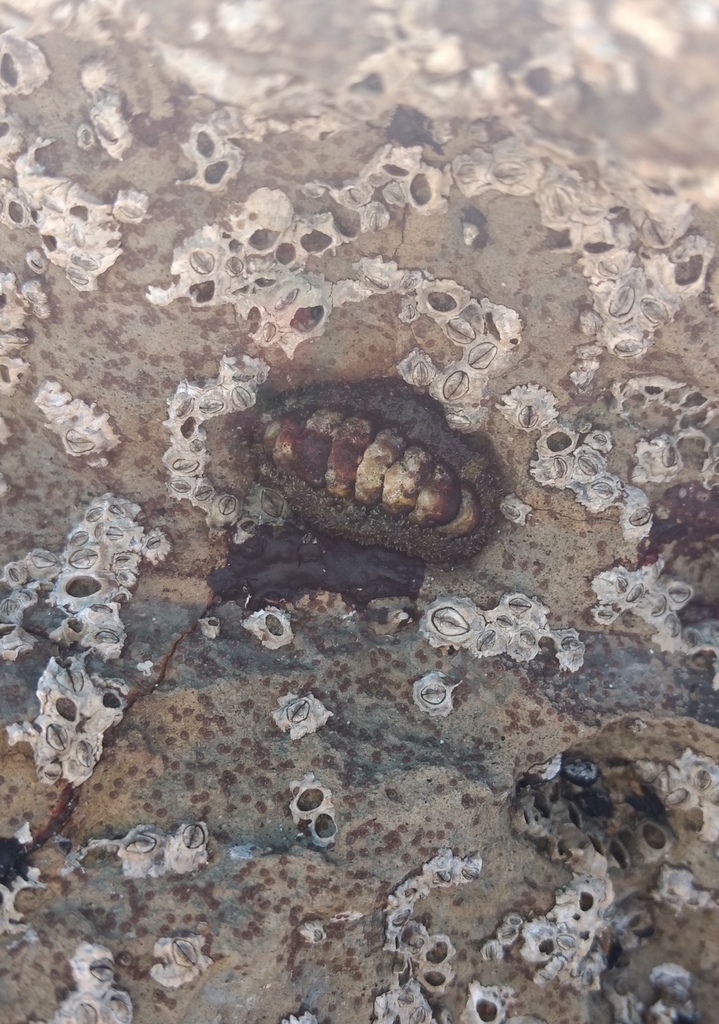
(c) Michele Jones, some rights reserved (CC BY) · licence
Family: Ischnochitonidae · Class: Polyplacophora · Order: Chitonida
Nuttallina californica (California Spiny Chiton) is a California animal in the Ischnochitonidae family.
Nuttallina californica, the California spiny chiton, is a marine mollusk in the family Ischnochitonidae native to the Pacific Coast. This species displays the characteristic eight-plated shell structure typical of chitons, with plates that are often marked by distinctive spines or ridges that give the species its common name. The valves are typically brownish to grayish in coloration, and the girdle surrounding the plates may bear small spines or scales. The California spiny chiton occurs along the coasts of California and Baja California, Mexico. Its distribution extends from the intertidal zone to subtidal waters along the Pacific coastline. The species is native to this region and represents one of the chiton species endemic to the California Current marine ecosystem. This chiton inhabits rocky intertidal and shallow subtidal environments, where it adheres to hard substrates using its muscular foot. Nuttallina californica is commonly found in depressions, crevices, and among beds of mussels (Mytilus spp.) and other sessile invertebrates (Grokipedia). The species occurs in areas with moderate to high wave action, where it can maintain its grip on rock surfaces despite dynamic water movement. Its habitat preferences include both exposed and semi-protected rocky shores. As a grazing mollusk, N. californica feeds by scraping algae, diatoms, and organic detritus from rock surfaces using its radula, a rasping feeding structure. The species exhibits typical chiton behavior, remaining largely sedentary while attached to substrates during daylight hours and becoming more active during periods of high tide or at night. Members of the class Polyplacophora, including this species, are mostly gonochoric, meaning individuals are either male or female (SeaLifeBase). Reproduction involves the release of gametes into the water column, where fertilization occurs externally. Like other chitons, N. californica plays an ecological role as both a grazer of algal growth on rocky surfaces and as prey for various predators including sea stars, crabs, and fish. The species is described as one of the most abundant chitons within its range, suggesting stable populations in suitable habitat areas (Grokipedia). Currently, no specific conservation status has been assigned to the California spiny chiton by major conservation organizations. The species does not appear on federal or state endangered species lists, and no particular conservation concerns have been documented. However, like other intertidal organisms, N. californica may face pressures from coastal development, pollution, ocean acidification, and climate change effects that alter marine ecosystems. The rocky intertidal habitats where this species occurs are generally well-represented in California's marine protected areas, which may provide some conservation benefit to chiton populations.
Classification
Class: Polyplacophora · Order: Chitonida · Family: Ischnochitonidae
Frequently asked questions
How is Nuttallina californica classified?
Nuttallina californica belongs to class Polyplacophora, order Chitonida, family Ischnochitonidae.
What family does Nuttallina californica belong to?
Nuttallina californica is in the Ischnochitonidae family.
What is Nuttallina californica?
Nuttallina californica, the California spiny chiton, is a marine mollusk in the family Ischnochitonidae native to the Pacific Coast.
Is Nuttallina californica found in California?
Yes. Nuttallina californica is recorded in California in The California Species Project's catalogue.
Related species
Other California species in the same genus, family, or bioregion.
Data from The California Species Project — 14,000+ California species with verified data from CNPS, CDFW, USFWS, and more.