Nycteola cinereana
Grey Midget Moth
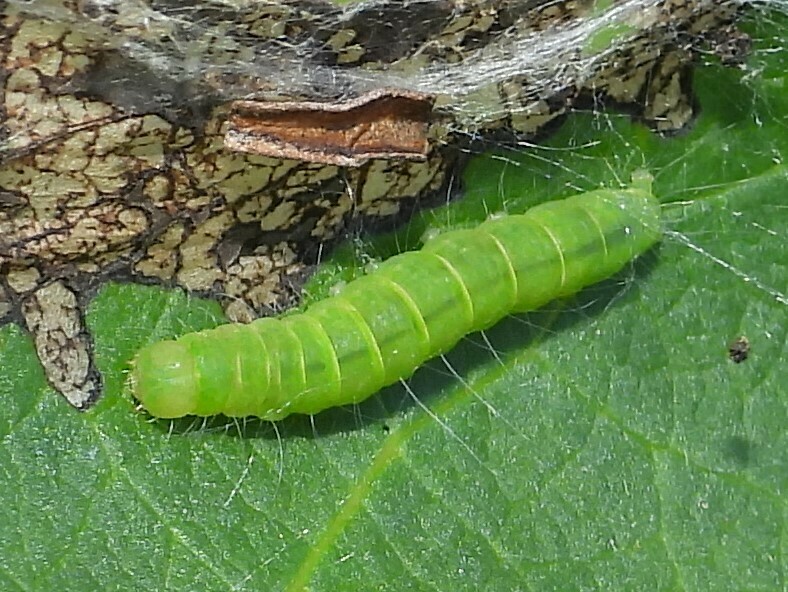
(c) Dan MacNeal, some rights reserved (CC BY) · licence
Family: Nolidae · Class: Insecta · Order: Lepidoptera
Nycteola cinereana (Grey Midget Moth) is a California animal in the Nolidae family.
The Grey Midget Moth is a small nocturnal moth in the family Nolidae, subfamily Chloephorinae. Adults are characterized by grey coloration and narrow wings, with a distinctive black line or streak extending from the wing base on the thorax outward and downward, often described as a "moustache" marking (BugGuide). The sexes appear similar in coloration and size. Wingspan measurements are not extensively documented in available literature. This species exhibits a broad North American distribution, ranging from British Columbia east to New Brunswick and south to California, Nevada, and Colorado (BugGuide). The moth occurs across Canada and extends southward through mountainous regions to California and Colorado. Within California, the species has been documented in locations including Siskiyou County near Mount Shasta City and Calaveras County along Gwin Mine Road (Lepidopterists' Society records). The distribution pattern suggests this moth primarily inhabits boreal and montane environments. Grey Midget Moths occur in deciduous woodland habitats, particularly those dominated by poplar species (BugGuide). The species shows a strong association with boreal forest ecosystems and mountainous terrain. Adults are found in areas supporting their larval host plants, which consist primarily of poplar trees. Larvae are specialized feeders on poplar species, particularly Balsam Poplar (Populus balsamifera), though other poplar species may also serve as hosts (BugGuide). Larvae are described as dark olive green without markings, featuring pale spiracles with pale brown rims and pale, slender setae. The head is unmarked pale brownish green. Pupation occurs within a distinctive white cocoon that is pointed at one end and truncate at the other. Adults exhibit seasonal flight patterns, flying in both fall and spring periods and may overwinter as adults (BugGuide). This extended adult activity period distinguishes the species from many other small moths with more restricted flight seasons. The Grey Midget Moth appears to have stable populations throughout most of its range, though it may be more common than trapping records suggest due to its cryptic nature and habitat preferences. The species lacks formal conservation status designations at federal or state levels. Its dependence on poplar woodland habitats means populations could be affected by forest management practices or climate-driven changes in boreal forest distribution. The moth's broad geographic range across North America likely provides some resilience against localized habitat disturbances. Detailed ecological studies of this species remain limited, particularly regarding population dynamics, detailed life cycle timing, and specific habitat requirements within its California range. The above information synthesizes available observations from taxonomic databases and lepidopterist records. Additional field research would enhance understanding of this moth's ecology and distribution patterns within California's diverse forest ecosystems.
Classification
Class: Insecta · Order: Lepidoptera · Family: Nolidae
Frequently asked questions
How is Nycteola cinereana classified?
Nycteola cinereana belongs to class Insecta, order Lepidoptera, family Nolidae.
What family does Nycteola cinereana belong to?
Nycteola cinereana is in the Nolidae family.
What is Nycteola cinereana?
The Grey Midget Moth is a small nocturnal moth in the family Nolidae, subfamily Chloephorinae.
Is Nycteola cinereana found in California?
Yes. Nycteola cinereana is recorded in California in The California Species Project's catalogue.
Related species
Other California species in the same genus, family, or bioregion.
Data from The California Species Project — 14,000+ California species with verified data from CNPS, CDFW, USFWS, and more.