Nyctoporis carinata
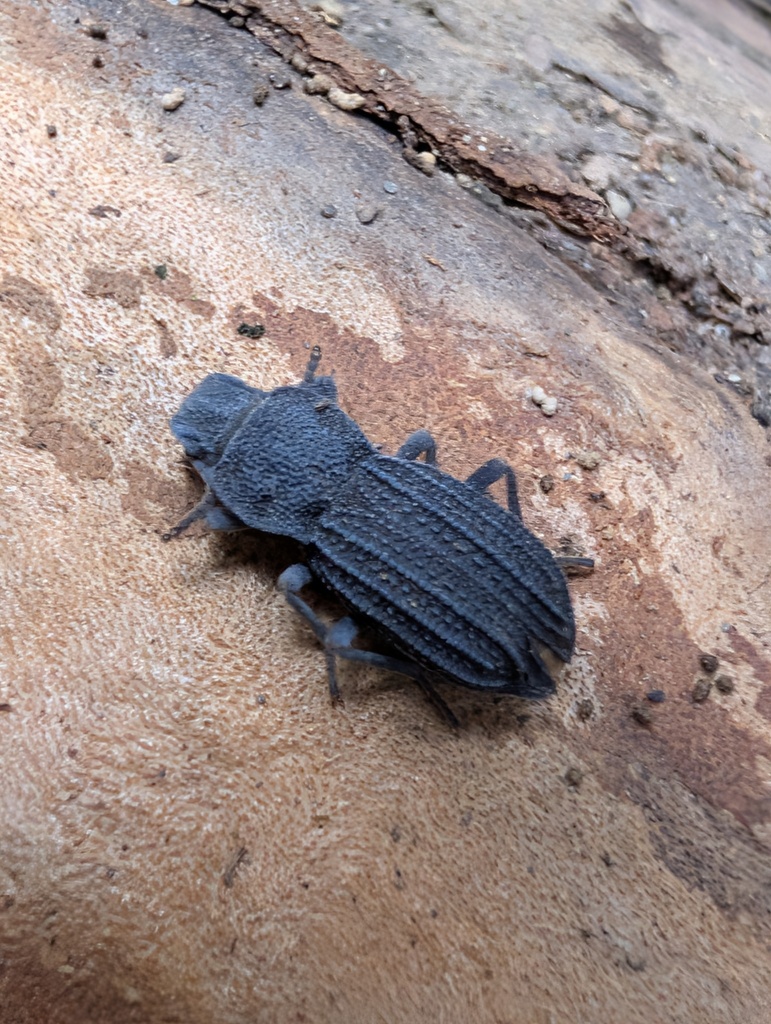
(c) Trevor Van Loon, some rights reserved (CC BY) · licence
Family: Tenebrionidae · Class: Insecta · Order: Coleoptera
Nyctoporis carinata is a California animal in the Tenebrionidae family.
Nyctoporis carinata is a darkling beetle in the family Tenebrionidae found in coastal Southern California. This species belongs to a diverse family of beetles adapted to arid environments, with members typically characterized by their hardened wing covers and ability to survive in dry conditions. The physical description of N. carinata has not been well documented in available scientific literature. Like other members of the genus Nyctoporis, this species likely displays the typical tenebrionid body plan with a robust, somewhat flattened form and dark coloration, though specific morphological details require further study. Historically, N. carinata occurred in the coastal dune systems of Los Angeles County, California. According to a 1991 biological assessment, the species was documented from the Ballona Wetlands area and surrounding coastal habitats (Mattoni 1991). The species appears to have had a limited distribution along the Southern California coast, particularly in association with native dune vegetation communities. The habitat requirements of N. carinata are closely tied to coastal dune ecosystems and their associated plant communities. These environments are characterized by sandy soils, salt spray influence, and specialized vegetation adapted to maritime conditions. Coastal dunes support unique assemblages of native plants that provide both food resources and microhabitat structure for specialized invertebrates like darkling beetles. Limited ecological information is available for this species. As members of the Tenebrionidae, darkling beetles typically function as detritivores, feeding on decaying plant material, though some species may also consume seeds or other organic matter. The reproductive biology, seasonal activity patterns, and specific dietary preferences of N. carinata have not been documented in accessible scientific literature. The conservation status of N. carinata is uncertain, as the species lacks formal state or federal protection status. However, the historical distribution in coastal Southern California suggests significant conservation concern, given the extensive development and habitat modification that has occurred in this region over the past century. Coastal dune habitats in Southern California have experienced severe fragmentation and loss due to urbanization, recreational activities, and invasive plant species. The Ballona Wetlands area, where this species was historically documented, has undergone substantial alteration, though restoration efforts are ongoing. The current population status of N. carinata is unknown. Targeted surveys would be needed to determine if viable populations persist in remaining coastal dune fragments or restored habitats. The species may serve as an indicator of ecosystem health in these specialized coastal environments. Further taxonomic and ecological research is needed to better understand the biology, distribution, and conservation needs of this darkling beetle. Anyone encountering this species in the field should document observations with photographs and location data to contribute to our understanding of its current status and distribution.
Classification
Class: Insecta · Order: Coleoptera · Family: Tenebrionidae
Frequently asked questions
How is Nyctoporis carinata classified?
Nyctoporis carinata belongs to class Insecta, order Coleoptera, family Tenebrionidae.
What family does Nyctoporis carinata belong to?
Nyctoporis carinata is in the Tenebrionidae family.
What is Nyctoporis carinata?
Nyctoporis carinata is a darkling beetle in the family Tenebrionidae found in coastal Southern California.
Is Nyctoporis carinata found in California?
Yes. Nyctoporis carinata is recorded in California in The California Species Project's catalogue.
Related species
Other California species in the same genus, family, or bioregion.
Data from The California Species Project — 14,000+ California species with verified data from CNPS, CDFW, USFWS, and more.