Nyia gazophylax
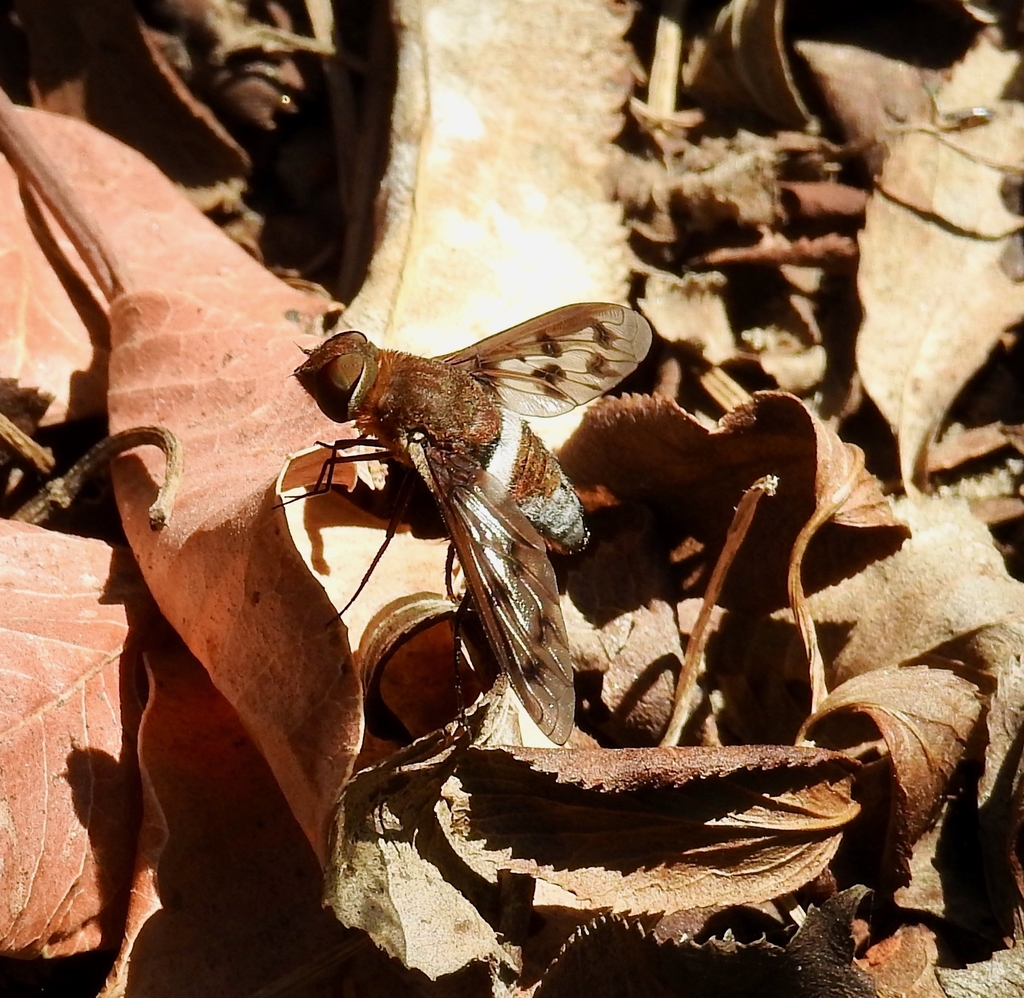
(c) James M. Maley, some rights reserved (CC BY) · licence
Family: Bombyliidae · Class: Insecta · Order: Diptera
Nyia gazophylax is a California animal in the Bombyliidae family.
Nyia gazophylax is a medium-sized bee fly in the family Bombyliidae, subfamily Anthracinae. Adults measure approximately 10-19 mm (0.4-0.75 inches) in length, with a robust, fuzzy body characteristic of bee flies (BugGuide 2024). The species displays distinctive dark wing banding patterns that aid in field identification. The body is typically covered in dense setae, giving it a bee-like appearance that serves as protective mimicry. This species occurs across southwestern North America, with its range extending from southwestern United States through Central America to Panama (BugGuide 2024). In California, Nyia gazophylax has been documented in Los Angeles and Orange counties, with specific records from Long Beach, San Pedro, and other coastal and inland locations. The species was originally described by Loew in 1869 under the genus Ligyra, but taxonomic revision in 2022 transferred it to the genus Nyia based on morphological and phylogenetic studies (BugGuide 2024). Nyia gazophylax inhabits diverse habitats including wetland areas, coastal regions, and urban environments. Observations indicate the species can be found in riparian zones and areas with mixed vegetation. The species appears to tolerate human-modified landscapes, as evidenced by records from urban Los Angeles County locations. Flight period extends from late spring through early summer, with documented activity from May through June in California. Like other bee flies in the family Bombyliidae, adult Nyia gazophylax are likely nectar feeders, visiting flowers for sustenance. The hovering flight behavior typical of bee flies makes them important pollinators for various plant species. Adults are often observed visiting flowers in sunny locations during warm parts of the day. Larvae are presumed to be parasitoids of other insects, following the typical bombyliid life cycle pattern, though specific host relationships for this species have not been well documented. The parasitoid lifestyle of larvae provides natural biological control services in ecosystems. Nyia gazophylax does not currently hold any special conservation status at federal or state levels. The species appears to maintain stable populations across its range, with regular observations reported through citizen science platforms. However, like many native insects, populations may face pressures from habitat modification, pesticide use, and climate change effects on host species and flowering plants. The species' ability to persist in urban environments suggests some resilience to human activities, though continued monitoring would help assess long-term population trends. This bee fly represents part of California's diverse dipteran fauna, contributing to pollination networks and natural pest control services. The recent taxonomic transfer from Ligyra to Nyia reflects ongoing systematic work to better understand relationships within the Bombyliidae family. Additional research on host relationships, population dynamics, and ecological requirements would enhance understanding of this species' role in California ecosystems.
Classification
Class: Insecta · Order: Diptera · Family: Bombyliidae
Frequently asked questions
How is Nyia gazophylax classified?
Nyia gazophylax belongs to class Insecta, order Diptera, family Bombyliidae.
What family does Nyia gazophylax belong to?
Nyia gazophylax is in the Bombyliidae family.
What is Nyia gazophylax?
Nyia gazophylax is a medium-sized bee fly in the family Bombyliidae, subfamily Anthracinae.
Is Nyia gazophylax found in California?
Yes. Nyia gazophylax is recorded in California in The California Species Project's catalogue.
Related species
Other California species in the same genus, family, or bioregion.
Data from The California Species Project — 14,000+ California species with verified data from CNPS, CDFW, USFWS, and more.