Oceanodroma tethys
Wedge-rumped Storm-Petrel
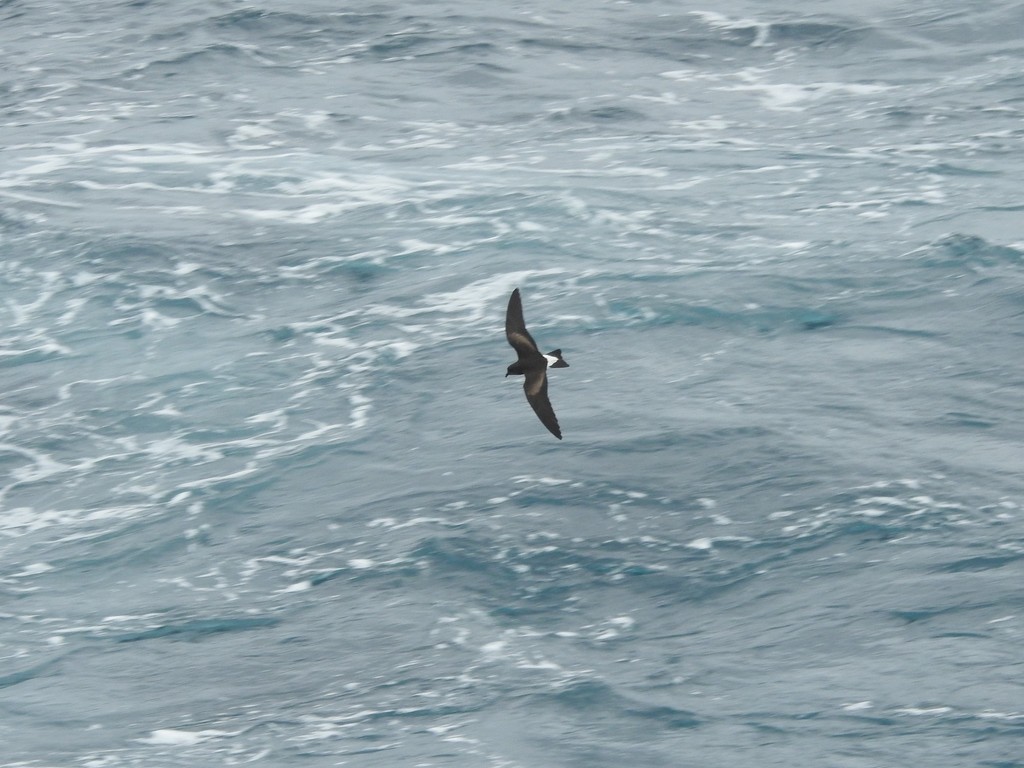
(c) Tristan Jobin, some rights reserved (CC BY) · licence
Family: Hydrobatidae · Class: Aves · Order: Procellariiformes
Oceanodroma tethys (Wedge-rumped Storm-Petrel) is a California animal in the Hydrobatidae family.
The Wedge-rumped Storm-Petrel (Oceanodroma tethys) is a small seabird in the family Hydrobatidae, characterized by its distinctive wedge-shaped tail that gives the species its common name. This storm-petrel measures approximately 18-20 cm (7-8 inches) in length with a wingspan of 43-46 cm (17-18 inches). The plumage is predominantly dark brown to blackish, with a prominent white triangular rump patch that extends onto the upper tail coverts. Unlike many storm-petrel species, the Wedge-rumped Storm-Petrel has a relatively short, wedge-shaped tail rather than a forked tail, which is a key diagnostic feature for field identification. The species has a disjunct distribution in the eastern Pacific Ocean. The primary breeding range extends along the Pacific coast from southern Baja California, Mexico, to northern Chile, with breeding colonies concentrated on islands off central Peru including Chao, Corcovado, Ferrol, Pescadores, and San Gallán islands (Birds of the World). In North American waters, the species occurs along the Pacific coast, particularly in waters off southern and Baja California, where it may be observed during post-breeding dispersal. Wedge-rumped Storm-Petrels inhabit tropical, subtropical, and warm-temperate waters of the eastern North Pacific Ocean. Unlike many storm-petrel species that nest in burrows, this species typically nests in rock crevices and under boulders on offshore islands. The breeding habitat consists of arid or semi-arid islands with rocky terrain, often with sparse vegetation. During the non-breeding season, the species remains pelagic, foraging in open ocean waters over the continental shelf and beyond. Like other storm-petrels, this species feeds primarily on small fish, squid, and planktonic crustaceans, which it captures by surface-skimming and shallow diving while in flight. The species exhibits typical storm-petrel flight behavior, flying low over the water surface with rapid wingbeats interspersed with gliding. Breeding biology remains poorly documented according to the U.S. Fish and Wildlife Service Seabird Conservation Plan. The species is believed to be largely nocturnal at breeding colonies, coming ashore only under cover of darkness to reduce predation risk. The Wedge-rumped Storm-Petrel does not currently hold federal listing status under the Endangered Species Act, nor does it have a California state listing status. However, like many seabird species, it faces threats from habitat disturbance at breeding colonies, introduced predators on nesting islands, marine pollution, and climate change impacts on ocean productivity. The species' breeding ecology and population status require further research to assess conservation needs. Oil spills and plastic pollution in marine environments pose particular risks to this and other pelagic seabird species that spend most of their lives at sea.
Classification
Class: Aves · Order: Procellariiformes · Family: Hydrobatidae
Frequently asked questions
How is Oceanodroma tethys classified?
Oceanodroma tethys belongs to class Aves, order Procellariiformes, family Hydrobatidae.
What family does Oceanodroma tethys belong to?
Oceanodroma tethys is in the Hydrobatidae family.
What is Oceanodroma tethys?
The Wedge-rumped Storm-Petrel (Oceanodroma tethys) is a small seabird in the family Hydrobatidae, characterized by its distinctive wedge-shaped tail that gives the species its common name.
Is Oceanodroma tethys found in California?
Yes. Oceanodroma tethys is recorded in California in The California Species Project's catalogue.
Related species
Other California species in the same genus, family, or bioregion.
Data from The California Species Project — 14,000+ California species with verified data from CNPS, CDFW, USFWS, and more.