Oceanodroma tristrami
Tristram's Storm-Petrel
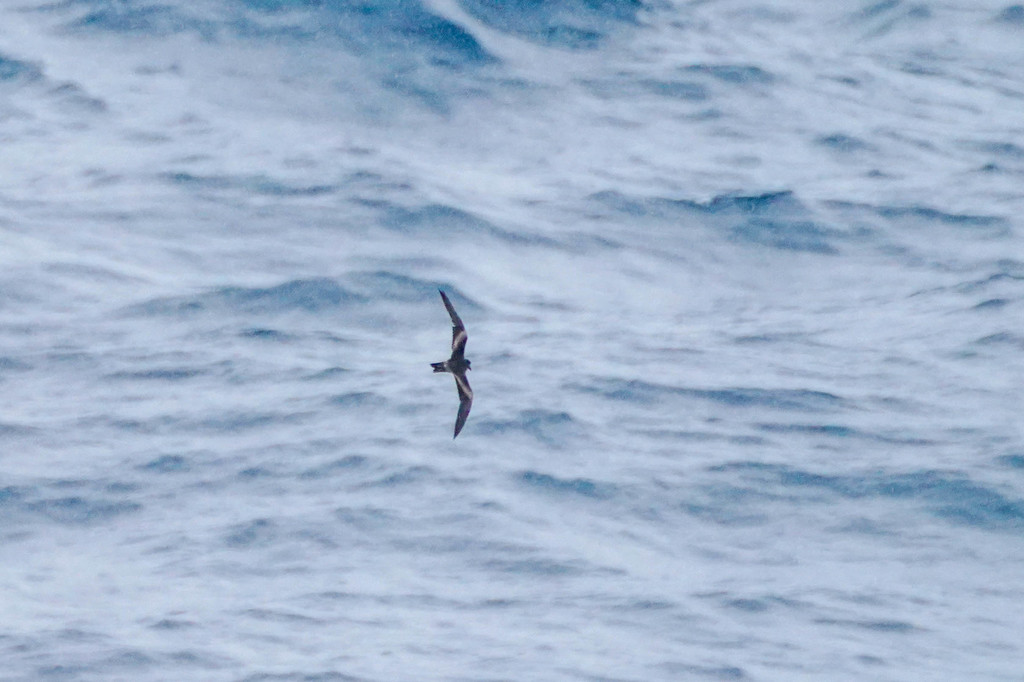
(c) WATANABE Hitoshi 渡辺仁, some rights reserved (CC BY) · licence
Family: Hydrobatidae · Class: Aves · Order: Procellariiformes
Oceanodroma tristrami (Tristram's Storm-Petrel) is a California animal in the Hydrobatidae family.
Tristram's Storm-Petrel (Hydrobates tristrami) is one of the largest storm-petrels, measuring approximately 25 centimeters (10 inches) in length with a wingspan reaching 56 centimeters (22 inches). The species displays predominantly dark brown to blackish plumage with a distinctive white rump patch that extends onto the upper tail coverts. The wings are long and narrow, adapted for dynamic soaring flight patterns typical of pelagic seabirds. The bill is black and hooked, characteristic of the Procellariiformes order. Tristram's Storm-Petrel has an extremely restricted breeding range, nesting only in the remote Northwestern Hawaiian Islands including French Frigate Shoals, Laysan Island, and other atolls in the Papahānaumokuākea Marine National Monument (Birds of the World). The species is rather sedentary compared to other storm-petrels, remaining in waters surrounding the Hawaiian archipelago year-round. During the non-breeding season, individuals are generally detected between the Northwestern Hawaiian Islands and the main Hawaiian islands, though the full extent of their pelagic range remains poorly documented. Breeding habitat consists of sandy areas, coral rubble, and low vegetation on isolated atolls and islands. Nests are constructed in burrows excavated in sand or soil, often under low shrubs or grasses that provide cover from the elements. The species occasionally uses burrows previously excavated by other seabirds, including those abandoned by other petrel species. Colony sites are typically located on higher ground away from wave action but still within easy access to foraging areas. Tristram's Storm-Petrel exhibits typical storm-petrel foraging behavior, feeding primarily on small fish, squid, and marine invertebrates captured from the ocean surface using a distinctive pattering flight pattern. The species is largely nocturnal at breeding colonies, arriving and departing under cover of darkness to avoid aerial predators. Breeding occurs during the boreal summer months, with females laying a single white egg in the burrow nest. Incubation duties are shared between both parents in multi-day shifts. Vocalizations at breeding colonies consist of distinctive calls that help distinguish the species from other Procellariiformes in the area (USFWS). Currently, Tristram's Storm-Petrel does not hold federal or state endangered species listing status. However, the species faces conservation challenges common to many Hawaiian seabirds, including habitat degradation, introduced predators, and climate change impacts on nesting islands. Sea level rise poses a particular threat to low-lying atolls where the species breeds. The remote location of breeding colonies in the Northwestern Hawaiian Islands provides some protection from human disturbance, and these areas are now protected within Papahānaumokuākea Marine National Monument. Population monitoring and research on this species remain limited due to the challenging logistics of accessing remote breeding sites.
Classification
Class: Aves · Order: Procellariiformes · Family: Hydrobatidae
Frequently asked questions
How is Oceanodroma tristrami classified?
Oceanodroma tristrami belongs to class Aves, order Procellariiformes, family Hydrobatidae.
What family does Oceanodroma tristrami belong to?
Oceanodroma tristrami is in the Hydrobatidae family.
What is Oceanodroma tristrami?
Tristram's Storm-Petrel (Hydrobates tristrami) is one of the largest storm-petrels, measuring approximately 25 centimeters (10 inches) in length with a wingspan reaching 56 centimeters (22 inches).
Is Oceanodroma tristrami found in California?
Yes. Oceanodroma tristrami is recorded in California in The California Species Project's catalogue.
Related species
Other California species in the same genus, family, or bioregion.
Data from The California Species Project — 14,000+ California species with verified data from CNPS, CDFW, USFWS, and more.