Ochlodes agricola
Rural Skipper
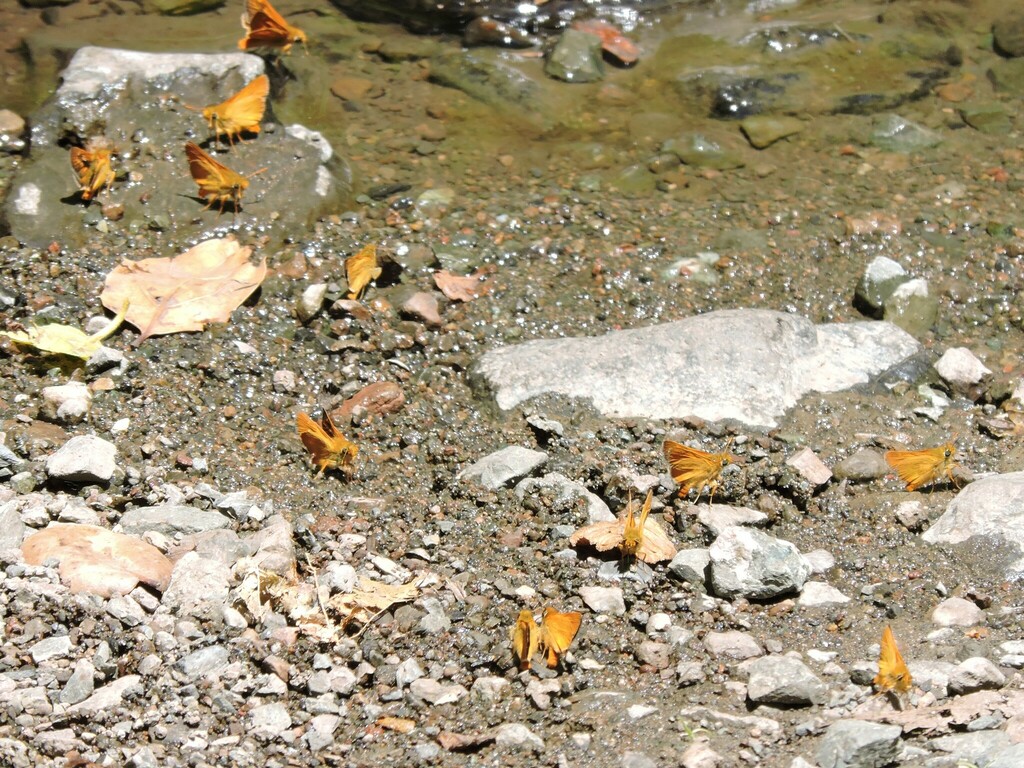
(c) Alex, some rights reserved (CC BY) · licence
Family: Hesperiidae · Class: Insecta · Order: Lepidoptera
Ochlodes agricola (Rural Skipper) is a California animal in the Hesperiidae family.
The Rural Skipper (Ochlodes agricola) is a small to medium-sized butterfly in the skipper family Hesperiidae. Adults have a wingspan of approximately 25 to 32 mm (1.0 to 1.3 inches). Males display orange-brown wings with dark borders and distinctive dark stigma patches on the forewings used for scent dispersal during courtship. Females are typically darker with more subdued coloration, showing brownish-orange wings with lighter spotting. The undersides of both sexes are pale yellow to cream-colored with indistinct lighter markings. The antennae are relatively short with hooked tips, characteristic of the skipper family. At rest, Rural Skippers hold their wings in the typical skipper position with forewings partially raised and hindwings horizontal. The Rural Skipper occurs in California west of the Sierra Nevada Divide, extending south into Baja California Norte, Mexico. Within California, the species is documented from coastal regions and inland valleys at elevations typically below 1,500 meters (4,900 feet). Historical records indicate presence in the San Francisco Bay Area, Central Valley, and southern California coastal regions, though current distribution patterns may be more fragmented due to habitat loss. This species inhabits grassland environments, agricultural areas, and disturbed sites where native and non-native grasses are present. Rural Skippers are typically found in open areas with scattered shrubs, field margins, and areas adjacent to agricultural lands. The species shows tolerance for human-modified landscapes and can persist in areas with moderate disturbance, including pastures and rural residential areas with suitable grass cover. Rural Skippers are dependent on grasses for larval development, with caterpillars feeding on various grass species. Adults are active during warm, sunny conditions and exhibit the rapid, darting flight pattern typical of skippers. Males establish territories in areas with suitable nectar sources and patrol for females. Adults feed on nectar from various flowering plants, including native wildflowers and cultivated species. The species likely produces multiple generations per year in warmer areas of its range, with continuous breeding possible in southern California locations. Larvae construct silk shelters by folding grass blades and pupate within these protected sites. The Rural Skipper currently has no federal or state listing status, indicating it is not considered immediately threatened with extinction. However, like many grassland-dependent species, Rural Skippers face ongoing challenges from habitat conversion, urbanization, and changes in agricultural practices. The conversion of native grasslands to intensive agriculture or urban development represents the primary long-term threat to populations. Climate change may also affect the species through alterations to precipitation patterns and temperature regimes that influence grass growth and phenology. Conservation efforts focused on maintaining grassland habitats and supporting sustainable agricultural practices that preserve field margins and uncultivated areas would benefit this species and other grassland-dependent insects.
Classification
Class: Insecta · Order: Lepidoptera · Family: Hesperiidae
Frequently asked questions
How is Ochlodes agricola classified?
Ochlodes agricola belongs to class Insecta, order Lepidoptera, family Hesperiidae.
What family does Ochlodes agricola belong to?
Ochlodes agricola is in the Hesperiidae family.
What is Ochlodes agricola?
The Rural Skipper (Ochlodes agricola) is a small to medium-sized butterfly in the skipper family Hesperiidae.
Is Ochlodes agricola found in California?
Yes. Ochlodes agricola is recorded in California in The California Species Project's catalogue.
Related species
Other California species in the same genus, family, or bioregion.
Data from The California Species Project — 14,000+ California species with verified data from CNPS, CDFW, USFWS, and more.