Ochlodes sylvanoides
Woodland Skipper
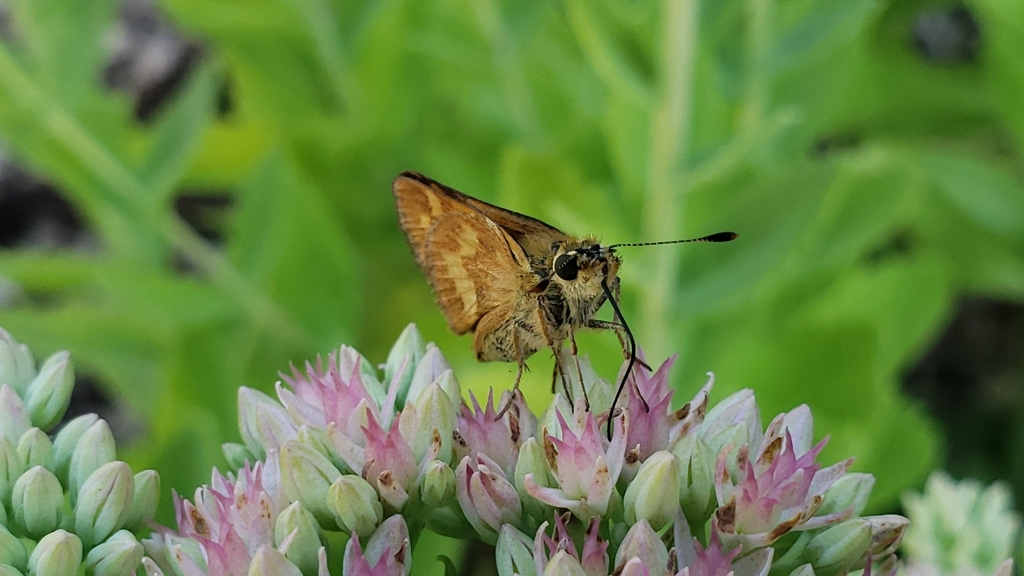
(c) Gavin Slater, some rights reserved (CC BY) · licence
Family: Hesperiidae · Class: Insecta · Order: Lepidoptera
Ochlodes sylvanoides (Woodland Skipper) is a California animal in the Hesperiidae family.
The Woodland Skipper (Ochlodes sylvanoides) is a small butterfly in the family Hesperiidae, characterized by rapid, darting flight patterns typical of skipper butterflies. Adults measure 25 to 32 mm (1.0 to 1.3 inches) in wingspan. Males display orange-brown wings with distinctive dark borders and a prominent dark stigma (scent patch) on the forewings. Females are larger and duller, with mottled brown and orange coloration and less distinct markings. The undersides of the hindwings are pale yellow to orange with light spotting. The antennae are club-shaped with a distinctive hook at the tip, distinguishing skippers from true butterflies. The Woodland Skipper has an extensive range across western North America, from British Columbia south to southern California and extending eastward to Montana, Colorado, and Arizona. In California, the species occurs throughout most of the state, from sea level to montane areas. This wide distribution makes it one of the most commonly encountered skipper species in its range, with stable populations across diverse geographic regions. This species inhabits a variety of open and semi-open habitats including grasslands, meadows, field edges, gardens, parks, and woodland clearings. Adults are frequently observed in areas with abundant nectar sources and nearby grassy areas suitable for larval development. The species adapts well to human-modified landscapes and is commonly found in agricultural areas, suburban gardens, and disturbed sites where host grasses are present. Woodland Skippers are multivoltine, producing two to three broods annually depending on latitude and local climate conditions. Adults are active from late spring through early fall, with peak flight periods occurring in summer months. Males establish territories and engage in perching behavior, defending small areas from which they dart out to investigate potential mates or intruders. Females deposit eggs singly on various grass species, including Bermuda grass (Cynodon dactylon), canary grass (Phalaris species), wildrye (Elymus species), and wheatgrass (Agropyron species). Larvae construct silk shelters by folding grass blades and feed nocturnally, remaining hidden during daylight hours. The species overwinters as larvae in the final instar stage. Adults are active nectar feeders, visiting a wide variety of flowering plants including thistles, asters, mint family plants, and cultivated flowers. Their flight is characterized by rapid, erratic movements interspersed with brief stops on flowers or perching sites. Males are particularly active during warm afternoons, when they engage in territorial displays and mate-seeking behavior. The Woodland Skipper is not federally or state-listed and maintains stable populations throughout its range. The species benefits from its broad host plant requirements and ability to utilize both native and introduced grass species. Its adaptability to human-modified environments and tolerance of disturbance contribute to its continued abundance. Climate change may affect distribution patterns, but the species' broad ecological tolerance suggests resilience to environmental changes. No specific conservation measures are required for this widespread and common species.
Classification
Class: Insecta · Order: Lepidoptera · Family: Hesperiidae
Frequently asked questions
How is Ochlodes sylvanoides classified?
Ochlodes sylvanoides belongs to class Insecta, order Lepidoptera, family Hesperiidae.
What family does Ochlodes sylvanoides belong to?
Ochlodes sylvanoides is in the Hesperiidae family.
What is Ochlodes sylvanoides?
The Woodland Skipper (Ochlodes sylvanoides) is a small butterfly in the family Hesperiidae, characterized by rapid, darting flight patterns typical of skipper butterflies.
Is Ochlodes sylvanoides found in California?
Yes. Ochlodes sylvanoides is recorded in California in The California Species Project's catalogue.
Related species
Other California species in the same genus, family, or bioregion.
Data from The California Species Project — 14,000+ California species with verified data from CNPS, CDFW, USFWS, and more.