Ochlodes yuma
Yuma Skipper
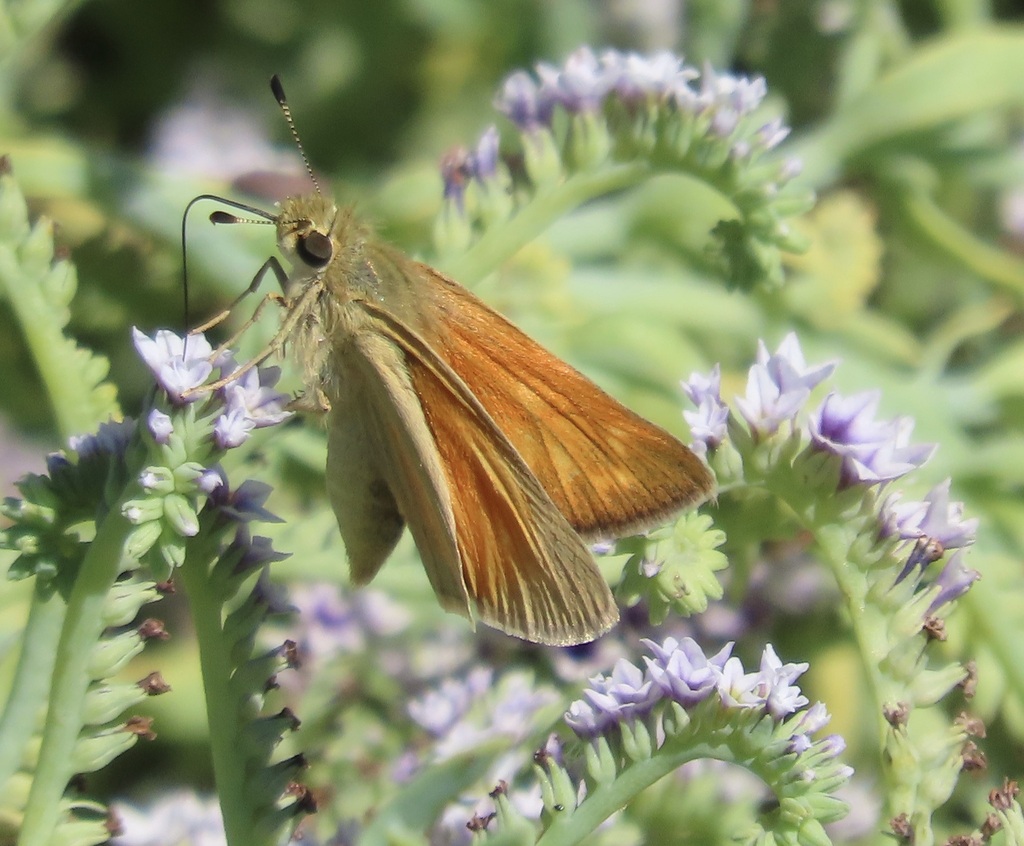
(c) John Hibbard, some rights reserved (CC BY) · licence
Family: Hesperiidae · Class: Insecta · Order: Lepidoptera
Ochlodes yuma (Yuma Skipper) is a California animal in the Hesperiidae family.
The Yuma skipper is a small to medium-sized butterfly in the family Hesperiidae, with adults measuring approximately 25 to 32 mm (1.0 to 1.3 inches) in wingspan. Males display orange-brown forewings with dark borders and distinctive dark stigma patches used in courtship displays. Females are typically darker, with more muted orange-brown coloration and less prominent markings. The hindwings of both sexes are pale orange-brown with indistinct lighter spots. The antennae are relatively short with curved clubs, characteristic of skipper butterflies. The body is robust and densely covered with scales, appearing brownish-orange dorsally and lighter ventrally. The Yuma skipper occurs in California, Nevada, Utah, Colorado, northern New Mexico, and Arizona, where it is common within its specialized habitat requirements. In California, populations are found primarily in desert regions and along the Colorado River corridor. The species shows a patchy distribution pattern corresponding to the availability of suitable host plants and wetland habitats in otherwise arid landscapes. This species inhabits riparian areas, marshes, irrigation ditches, and other wetland margins where its obligate host plant, common reed (Phragmites australis), grows abundantly. Yuma skippers are typically found from near sea level to elevations of approximately 1,200 meters (4,000 feet). The butterflies require areas with dense reed stands that provide both larval food sources and adult nectar resources. Adults are often observed along canal banks, pond edges, and slow-moving waterways where reed beds are well-established. Adults are active fliers during warm daylight hours, typically from late spring through early fall, with peak activity occurring during summer months. Males establish territories within reed beds and engage in rapid, darting flight patterns to patrol their domains and locate receptive females. Mating occurs among the host plants, with females depositing single eggs on reed stems and leaves. Larvae are leaf rollers that create silk-lined shelters within folded reed leaves, feeding internally on leaf tissue. The species likely produces two to three broods annually in warmer portions of its range. Caterpillars overwinter in reed stems, pupating in spring within the larval shelter. Adults nectar on various flowering plants including saltbush, rabbitbrush, and other desert wildflowers. The Yuma skipper is not federally or state listed and appears to maintain stable populations where suitable habitat persists. However, the species faces ongoing habitat pressures from water management practices, urban development, and invasive plant species that compete with or replace native reed stands. Drought conditions and altered hydrology in riparian systems pose additional challenges. Conservation efforts focus on maintaining healthy wetland corridors and managing water resources to support native plant communities. The species benefits from restoration projects that establish or enhance reed bed habitats in appropriate locations within its range.
Classification
Class: Insecta · Order: Lepidoptera · Family: Hesperiidae
Frequently asked questions
How is Ochlodes yuma classified?
Ochlodes yuma belongs to class Insecta, order Lepidoptera, family Hesperiidae.
What family does Ochlodes yuma belong to?
Ochlodes yuma is in the Hesperiidae family.
What is Ochlodes yuma?
The Yuma skipper is a small to medium-sized butterfly in the family Hesperiidae, with adults measuring approximately 25 to 32 mm (1.0 to 1.3 inches) in wingspan.
Is Ochlodes yuma found in California?
Yes. Ochlodes yuma is recorded in California in The California Species Project's catalogue.
Related species
Other California species in the same genus, family, or bioregion.
Data from The California Species Project — 14,000+ California species with verified data from CNPS, CDFW, USFWS, and more.