Octogomphus specularis
Grappletail
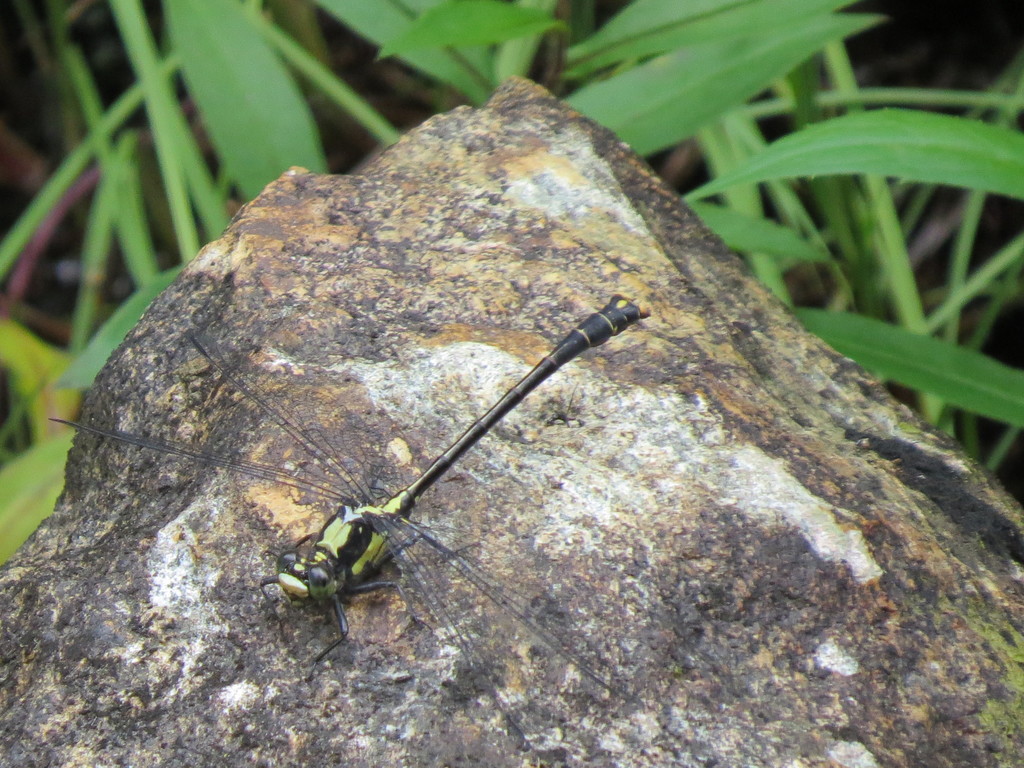
(c) Rob Foster, some rights reserved (CC BY) · licence
Family: Gomphidae · Class: Insecta · Order: Odonata
Octogomphus specularis (Grappletail) is a California animal in the Gomphidae family.
The grappletail (Octogomphus specularis) is a medium-sized dragonfly in the family Gomphidae, commonly known as clubtails. Adults typically measure 45-55 mm (1.8-2.2 inches) in body length with a wingspan of approximately 65-75 mm (2.6-3.0 inches). The species displays the characteristic clubtail body plan with a relatively slender abdomen that expands into a club-like terminus in males. The thorax is typically brownish-black with yellowish stripes, while the abdomen shows alternating dark and pale banding patterns. Males develop prominent terminal appendages that give the species its common name, appearing as grappling hooks when viewed from above. The eyes are widely separated, distinguishing clubtails from other dragonfly families. Octogomphus specularis occurs primarily in western North America, with its range extending from British Columbia south through Washington, Oregon, and into northern California. Within California, the species is documented from mountainous regions of the northern counties, including areas of the Cascade Range and Sierra Nevada foothills. The species appears to have a relatively restricted distribution compared to other clubtail species in the region. Grappletails inhabit clean, well-oxygenated streams and small rivers, typically in forested or partially forested watersheds. Adults are commonly found along rocky streams with moderate to swift current flow, often in areas with cobble or gravel substrates. The species shows a preference for shaded waterways with overhanging vegetation, particularly in elevations ranging from approximately 300 to 1,500 meters (1,000 to 4,900 feet). Larvae develop in the sandy or silty bottom sediments of these stream systems, where they burrow and remain partially buried during development. Adult grappletails are active predators, capturing flying insects including mosquitoes, midges, and small flies. Males establish territories along stream corridors, typically perching on exposed rocks or low vegetation near the water's edge. Mating occurs during late spring and early summer, with females depositing eggs by striking the water surface in swift-flowing sections of streams. The larval stage lasts approximately two to three years, during which nymphs feed on aquatic invertebrates including mayfly larvae, caddisfly larvae, and small crustaceans. Adults typically emerge in May through July, with peak activity occurring during warm afternoon hours. According to NatureServe, Octogomphus specularis maintains a global conservation status of G4, indicating the species is apparently secure globally but may have some localized concerns (NatureServe 2016). The species faces potential threats from habitat degradation due to logging activities, water diversions, and sedimentation in stream systems. Climate change may affect the species through altered precipitation patterns and increased water temperatures in montane stream habitats. While not currently listed under federal or state endangered species legislation, monitoring of population trends remains important given the species' somewhat restricted range and dependence on high-quality aquatic habitats.
Classification
Class: Insecta · Order: Odonata · Family: Gomphidae
Frequently asked questions
How is Octogomphus specularis classified?
Octogomphus specularis belongs to class Insecta, order Odonata, family Gomphidae.
What family does Octogomphus specularis belong to?
Octogomphus specularis is in the Gomphidae family.
What is Octogomphus specularis?
The grappletail (Octogomphus specularis) is a medium-sized dragonfly in the family Gomphidae, commonly known as clubtails.
Is Octogomphus specularis found in California?
Yes. Octogomphus specularis is recorded in California in The California Species Project's catalogue.
Related species
Other California species in the same genus, family, or bioregion.
Data from The California Species Project — 14,000+ California species with verified data from CNPS, CDFW, USFWS, and more.