Octopus bimaculoides
Lesser Two-spot Octopus
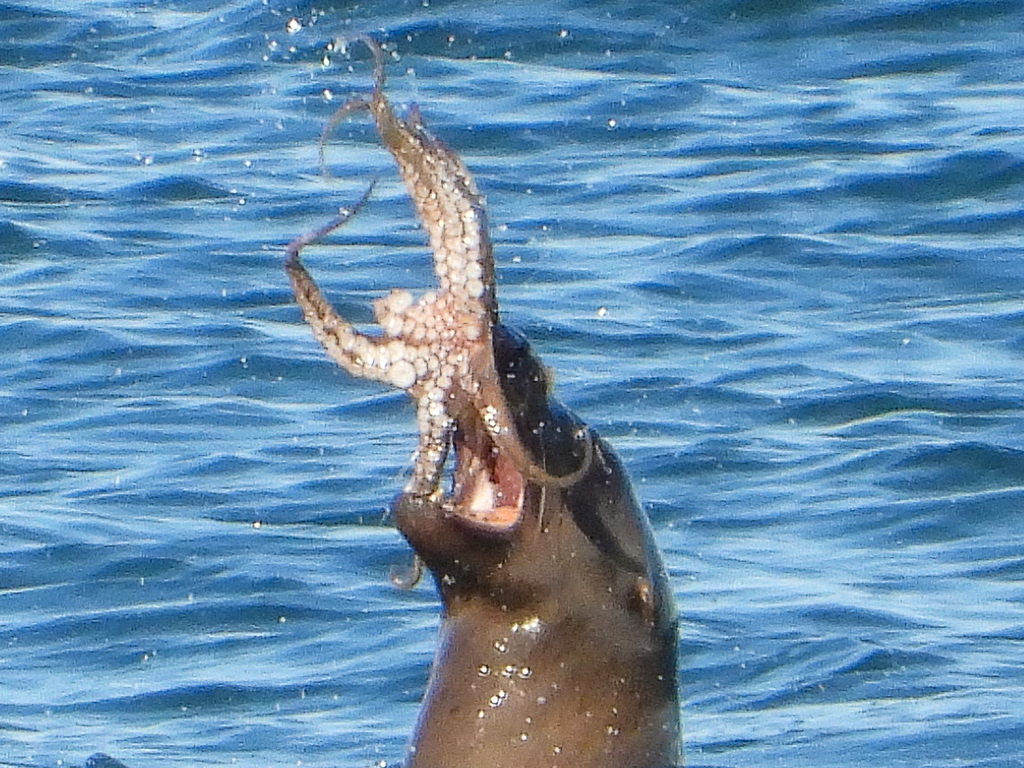
(c) James M. Maley, some rights reserved (CC BY) · licence
Family: Octopodidae · Class: Cephalopoda · Order: Octopoda
Octopus bimaculoides (Lesser Two-spot Octopus) is a California animal in the Octopodidae family.
The lesser two-spot octopus is a small cephalopod mollusk endemic to the eastern Pacific coast. Adults typically reach a mantle length of 70-100 mm (2.8-3.9 inches), with arms extending to approximately 200 mm (7.9 inches). The species is characterized by two prominent blue-ringed spots located behind each eye, which serve as distinguishing features. Like other octopods, this species possesses eight arms lined with two rows of suckers and can rapidly change color and texture through specialized chromatophores in its skin (Animal Diversity Web). The lesser two-spot octopus ranges from Northern California south to Baja California, Mexico, along the Pacific coast (Animal Diversity Web). In California waters, the species occurs throughout the Channel Islands region, including documented populations at Casino Point and Lover's Cove marine protected areas off Catalina Island. The species maintains a continuous distribution along suitable rocky coastlines within this range. This octopus inhabits rocky reef environments in both intertidal and subtidal zones, extending to depths of approximately 15 meters (49 feet) (Animal Diversity Web). The species shows a strong preference for rocky substrates that provide crevices and caves for shelter during daylight hours. Kelp forest ecosystems provide optimal habitat, offering both protective cover and abundant prey resources. The species can be found from the low intertidal zone down through the shallow subtidal rocky reef environment. The lesser two-spot octopus exhibits primarily nocturnal behavior, leaving its den at night to hunt and mate (Animal Diversity Web). The species feeds on a diverse array of invertebrates including snails, crustaceans, bivalves, and limpets. Hunting strategies include both active foraging and ambush predation, where individuals remain camouflaged among rocks waiting for prey to approach. Once captured with its arms, prey is manipulated by the suckers and processed using the species' beak and radula. The octopus grows and matures rapidly due to its short lifespan of 12-18 months in the wild, though captive individuals may survive up to two years (Animal Diversity Web). Reproduction can occur throughout the year but peaks during warmer summer months when water temperatures increase (Animal Diversity Web). Males transfer sperm packets to females using specialized arms and typically die shortly after mating. Females brood eggs for 150-210 days, during which they remain in their dens providing protection and oxygenation (Animal Diversity Web). After hatching, planktonic larvae drift with currents before settling and beginning benthic development. Natural predators include moray eels, sea lions, and harbor seals (Animal Diversity Web). The lesser two-spot octopus currently holds no special conservation status. The species faces typical marine threats including habitat modification, pollution, and incidental capture in fishing operations, though it is not specifically targeted by commercial fisheries. Populations appear stable throughout the species' range, benefiting from marine protected areas established along the California coast.
Classification
Class: Cephalopoda · Order: Octopoda · Family: Octopodidae
Frequently asked questions
How is Octopus bimaculoides classified?
Octopus bimaculoides belongs to class Cephalopoda, order Octopoda, family Octopodidae.
What family does Octopus bimaculoides belong to?
Octopus bimaculoides is in the Octopodidae family.
What is Octopus bimaculoides?
The lesser two-spot octopus is a small cephalopod mollusk endemic to the eastern Pacific coast.
Is Octopus bimaculoides found in California?
Yes. Octopus bimaculoides is recorded in California in The California Species Project's catalogue.
Related species
Other California species in the same genus, family, or bioregion.
Data from The California Species Project — 14,000+ California species with verified data from CNPS, CDFW, USFWS, and more.