Octopus rubescens
East Pacific Red Octopus
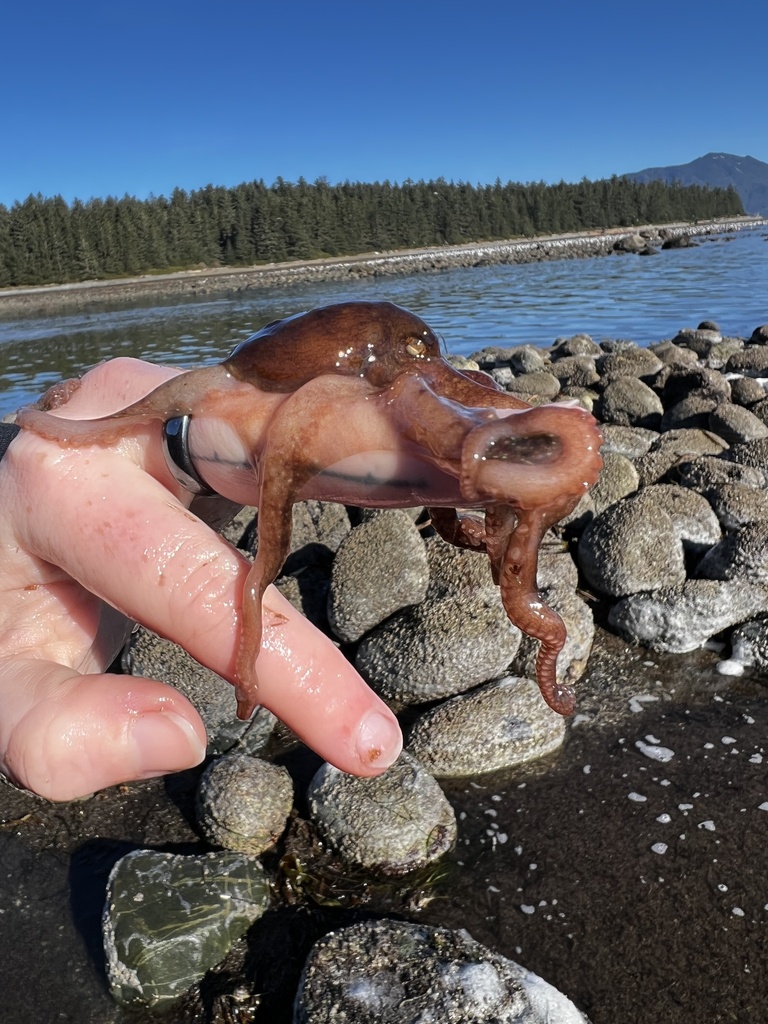
(c) Aiva Noringseth, some rights reserved (CC BY) · licence
Family: Octopodidae · Class: Cephalopoda · Order: Octopoda
Octopus rubescens (East Pacific Red Octopus) is a California animal in the Octopodidae family.
The East Pacific red octopus (Octopus rubescens) is a medium-sized cephalopod species native to the eastern Pacific Ocean. Adults typically measure 10 to 15 centimeters (4 to 6 inches) in mantle length, with arms extending up to 60 centimeters (24 inches). The species exhibits variable coloration, ranging from reddish-brown to dark red, with the ability to rapidly change color and texture for camouflage. The mantle is relatively smooth, and like all octopuses, it possesses eight arms lined with two rows of suckers. Octopus rubescens occurs along the Pacific coast from British Columbia, Canada, south to Baja California, Mexico. In California waters, the species is distributed from shallow intertidal zones to depths of approximately 200 meters (650 feet). The species inhabits rocky reefs, kelp forests, and areas with complex bottom structure that provide shelter and hunting opportunities. This octopus prefers rocky substrates where it can utilize crevices, caves, and cervices for protection. According to SeaLifeBase, the species occupies habitats from the low intertidal zone to depths of 200 meters, typically in areas with adequate rock cover and prey availability. The complex three-dimensional structure of kelp forests and rocky reefs provides both shelter from predators and abundant hunting grounds. Octopus rubescens is a solitary, primarily nocturnal predator that feeds on a variety of benthic invertebrates including crabs, shrimp, mollusks, and small fish. Research documented in the California Fish and Wildlife Journal indicates the species also feeds on euphausiids (Laidig & Adams 1989). During reproduction, males use a specialized arm called a hectocotylus to transfer sperm packets to females. According to SeaLifeBase, during copulation, the male grasps the female and inserts the hectocotylus into the female's mantle cavity where fertilization occurs. Like most octopus species, adults typically die after reproduction, following a semelparous life cycle. Females lay clusters of small, white eggs in protected crevices and guard them until hatching. The East Pacific red octopus serves as prey for various marine predators. Animal Diversity Web reports that California sea lions (Zalophus californianus) commonly consume red octopus as part of their diet. The species faces typical threats associated with nearshore marine environments, including habitat degradation, pollution, and fishing pressure, though it currently lacks special conservation status. Climate change may affect prey availability and ocean chemistry conditions that could impact the species' calcium carbonate-dependent prey base. The species plays an important ecological role as both predator and prey in Pacific coastal marine ecosystems, contributing to energy transfer between benthic communities and higher trophic levels.
Classification
Class: Cephalopoda · Order: Octopoda · Family: Octopodidae
Frequently asked questions
How is Octopus rubescens classified?
Octopus rubescens belongs to class Cephalopoda, order Octopoda, family Octopodidae.
What family does Octopus rubescens belong to?
Octopus rubescens is in the Octopodidae family.
What is Octopus rubescens?
The East Pacific red octopus (Octopus rubescens) is a medium-sized cephalopod species native to the eastern Pacific Ocean.
Is Octopus rubescens found in California?
Yes. Octopus rubescens is recorded in California in The California Species Project's catalogue.
Related species
Other California species in the same genus, family, or bioregion.
Data from The California Species Project — 14,000+ California species with verified data from CNPS, CDFW, USFWS, and more.