Oedaleonotus enigma
Valley Grasshopper
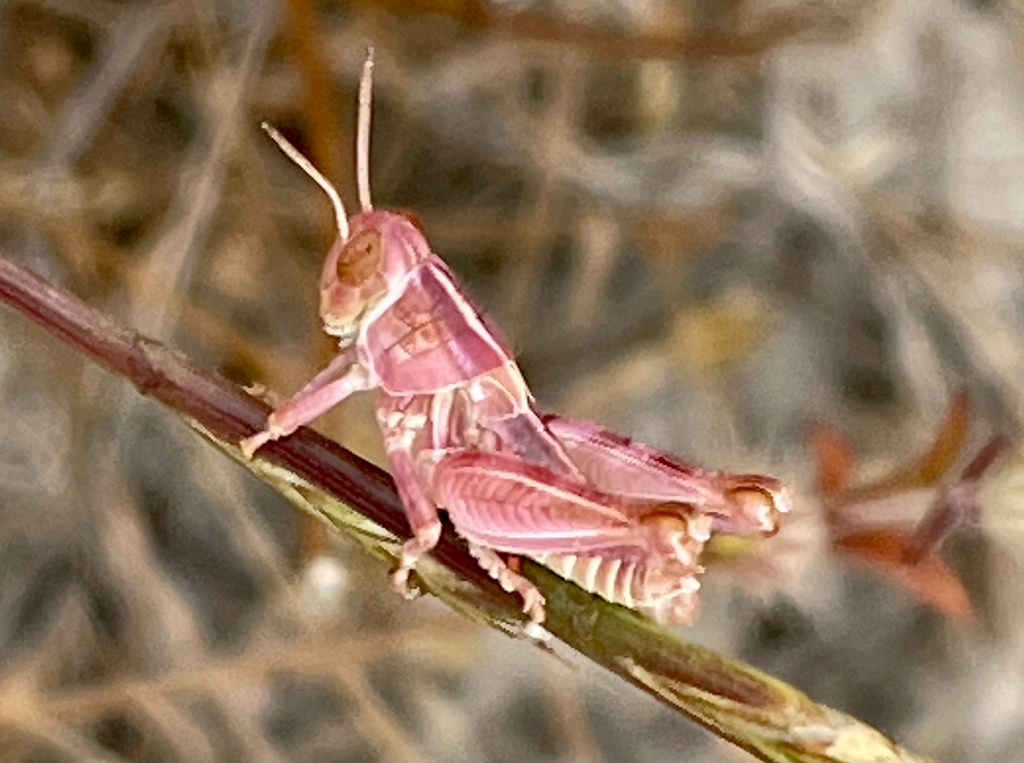
no rights reserved · CC0
Family: Acrididae · Class: Insecta · Order: Orthoptera
Oedaleonotus enigma (Valley Grasshopper) is a California animal in the Acrididae family.
The Valley grasshopper is a medium-sized orthopteran measuring approximately 2.5 cm (1 inch) in body length. Adults exhibit sexual dimorphism in wing development, with males typically displaying long wings capable of flight, while females usually possess short, rounded tegmina (forewings) that are well separated and do not cover the entire abdomen (BugGuide 2011). The species displays a distinctive "shiny" appearance with contrasting patterns and a characteristic herringbone design on the hind femur. The hind tibiae are typically blue in coloration, distinguishing this species from related grasshoppers that lack the glossy appearance and contrasting patterns. The Valley grasshopper has a broad western distribution, ranging from Idaho and western Utah south through California to northern Baja California, Mexico. The species occurs west of the Rocky Mountains, extending to the Cascade and Coast Ranges, and reaches the Pacific coast in southern California (BugGuide 2007). In California, documented populations include Santa Barbara County on Figueroa Mountain and San Luis Obispo County at Chimineas Ranch, indicating presence throughout much of the state's grassland regions. This species inhabits grassland ecosystems, often in areas with scattered shrubs and forbs, particularly those in the Asteraceae family. Valley grasshoppers are commonly found in habitats that border chaparral vegetation, creating ecotonal environments that provide both open grassland foraging areas and adjacent woody cover (BugGuide 2011). The species appears to prefer areas with varied topography and plant community interfaces rather than uniform grassland monocultures. Adult Valley grasshoppers are active from late spring through fall, with peak activity occurring during summer months. Males utilize their well-developed wings for dispersal and mate-seeking behavior, while the typically short-winged females are more sedentary. Like most grasshoppers in the family Acrididae, this species likely overwinters in the egg stage, with nymphs emerging in spring to develop through multiple molts before reaching sexual maturity. The species' association with Asteraceae plants suggests these may serve as important food sources, though specific dietary preferences require further documentation. Currently, the Valley grasshopper does not hold federal or state conservation status listings. However, according to NatureServe, the species faces potential risks from housing development pressures and experiences continuing habitat quality decline due to recreational activities (NatureServe 2025). California's ongoing urbanization and conversion of native grasslands pose long-term threats to grasshopper populations that depend on intact grassland ecosystems. The species' broad distribution across multiple states suggests relatively stable regional populations, though local habitat fragmentation may impact specific populations, particularly in rapidly developing areas of California's Central Valley and coastal regions.
Classification
Class: Insecta · Order: Orthoptera · Family: Acrididae
Frequently asked questions
How is Oedaleonotus enigma classified?
Oedaleonotus enigma belongs to class Insecta, order Orthoptera, family Acrididae.
What family does Oedaleonotus enigma belong to?
Oedaleonotus enigma is in the Acrididae family.
What is Oedaleonotus enigma?
The Valley grasshopper is a medium-sized orthopteran measuring approximately 2.5 cm (1 inch) in body length.
Is Oedaleonotus enigma found in California?
Yes. Oedaleonotus enigma is recorded in California in The California Species Project's catalogue.
Related species
Other California species in the same genus, family, or bioregion.
Data from The California Species Project — 14,000+ California species with verified data from CNPS, CDFW, USFWS, and more.