Oedemasia salicis
Western Red-Humped Caterpillar Moth
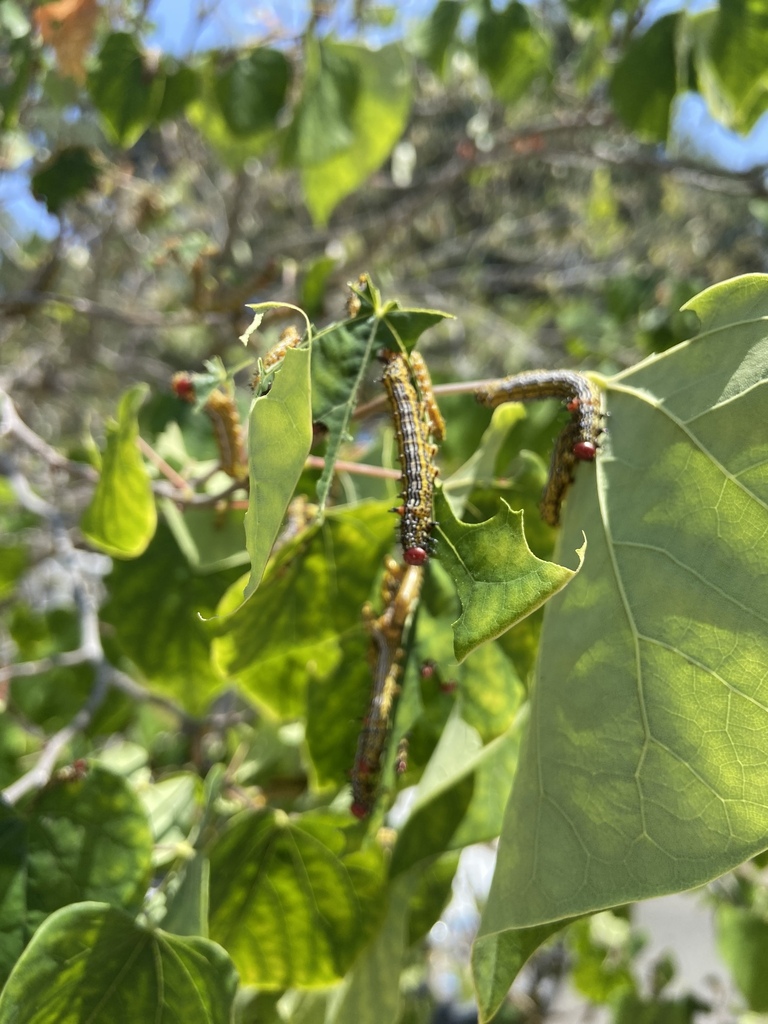
(c) klicklo, some rights reserved (CC BY) · licence
Family: Notodontidae · Class: Insecta · Order: Lepidoptera
Oedemasia salicis (Western Red-Humped Caterpillar Moth) is a California animal in the Notodontidae family.
The Western Red-humped Caterpillar Moth (Oedemasia salicis) is a medium-sized prominent moth in the family Notodontidae. Adults display typical notodontid characteristics with forewings that often exhibit muted brown and gray coloration patterns. The species was originally described by Edwards in 1877 as Heterocampa salicis from specimens collected at Mount Shasta, California (Moth Photographers Group). The Western Red-humped Caterpillar Moth occurs across western North America, with its range extending from California northward through the Pacific Northwest. In California, documented records include localities from the Coast Ranges and Sierra Nevada, with historical collections from Mount Shasta and the Napa Valley region. The species appears to have a more restricted western distribution compared to its eastern relative O. concinna (BugGuide). This moth inhabits forested and woodland environments where its host plants occur. Adult flight periods and specific habitat preferences within its range require further documentation, though the species likely follows typical notodontid patterns of preferring areas with suitable deciduous tree species for larval development. Elevation ranges and specific microhabitat requirements have not been comprehensively documented in the available literature. Larval biology and host plant relationships for O. salicis remain poorly documented in scientific literature. The common name "Red-humped Caterpillar Moth" suggests that larvae likely possess the characteristic dorsal humps typical of many Oedemasia species caterpillars. Adult moths are presumably nocturnal like other members of the genus, attracted to artificial lights during their flight season. Specific details regarding breeding behavior, seasonal timing, and number of generations per year require additional research and documentation. The Western Red-humped Caterpillar Moth does not currently hold any federal or state conservation listing status. According to NatureServe, the species has a global conservation rank that suggests stable populations, though specific population trend data are not available (NatureServe Explorer). As with many lesser-studied moth species, comprehensive population surveys and ecological research would benefit conservation planning efforts. Proper species identification remains fundamental to effective conservation strategies within this taxonomically complex group. Detailed ecological studies of this species remain limited. The above information synthesizes available data from taxonomic databases and regional checklists. Additional research on host plant relationships, life history timing, and habitat requirements would significantly enhance understanding of this western North American species.
Classification
Class: Insecta · Order: Lepidoptera · Family: Notodontidae
Frequently asked questions
How is Oedemasia salicis classified?
Oedemasia salicis belongs to class Insecta, order Lepidoptera, family Notodontidae.
What family does Oedemasia salicis belong to?
Oedemasia salicis is in the Notodontidae family.
What is Oedemasia salicis?
The Western Red-humped Caterpillar Moth (Oedemasia salicis) is a medium-sized prominent moth in the family Notodontidae.
Is Oedemasia salicis found in California?
Yes. Oedemasia salicis is recorded in California in The California Species Project's catalogue.
Related species
Other California species in the same genus, family, or bioregion.
Data from The California Species Project — 14,000+ California species with verified data from CNPS, CDFW, USFWS, and more.