Oegoconia novimundi
Four-spotted Yellowneck
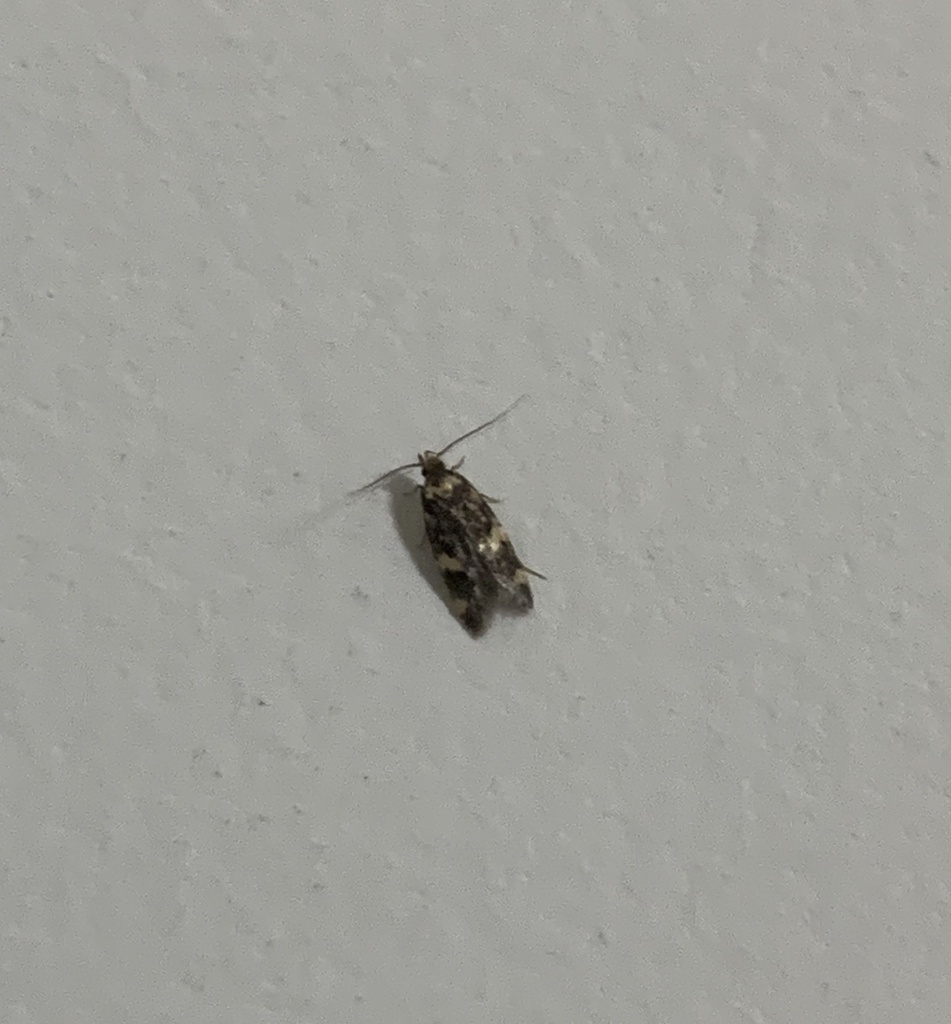
(c) Ashwin Srinivasan, some rights reserved (CC BY) · licence
Family: Autostichidae · Class: Insecta · Order: Lepidoptera
Oegoconia novimundi (Four-spotted Yellowneck) is a California animal in the Autostichidae family.
The Four-spotted Yellowneck (Oegoconia novimundi) is a small moth in the family Autostichidae, characterized by its distinctive yellow coloration on the neck region and four prominent spots on the forewings. This species belongs to a genus of concealer moths that typically measure 8-12 mm in wingspan when fully extended. The forewings display a mottled pattern of brown and gray scales with four distinct darker spots that give the species its common name. The hindwings are typically pale gray to whitish, and the thorax exhibits the characteristic yellowish coloration that extends to the base of the neck region. The Four-spotted Yellowneck has a limited distribution in North America, with records primarily from California. Specific distributional data for this species remains incomplete, though it appears to be associated with Mediterranean climate regions of the state. The species' range may extend beyond California, but comprehensive surveys are needed to determine its full geographic extent. Habitat requirements for Oegoconia novimundi are not well-documented in the current literature. Like other members of the Autostichidae family, this species likely inhabits areas with suitable host plants and may be associated with specific plant communities. The family Autostichidae typically includes species that develop in various microhabitats, often in association with herbaceous plants or shrubs. Elevation preferences and specific vegetation associations require further study. Behavioral and ecological information for the Four-spotted Yellowneck is limited. Adult moths are presumed to be nocturnal, following the pattern typical of most Autostichidae species. Life cycle details, including larval host plants, development time, and seasonal flight periods, have not been thoroughly documented. The larvae likely feed on plant material, potentially developing within stems, leaves, or other plant structures, but specific feeding behaviors and host plant relationships remain unknown. Reproductive biology, including mating behaviors and egg-laying preferences, requires additional research. The conservation status of Oegoconia novimundi has not been formally assessed by federal or state agencies. The species does not appear on the U.S. Fish and Wildlife Service's list of threatened or endangered species, nor is it designated under California's Endangered Species Act as of December 2025. The lack of comprehensive distributional and ecological data makes it difficult to assess population trends or identify specific conservation threats. Potential threats may include habitat loss from urbanization and agricultural conversion, particularly in California's Mediterranean climate regions. Climate change may also pose risks through altered precipitation patterns and temperature regimes. Additional surveys and taxonomic research are needed to better understand the species' distribution, ecology, and conservation needs. The limited available information highlights the importance of continued research on lesser-known lepidopteran species to inform future conservation planning.
Classification
Class: Insecta · Order: Lepidoptera · Family: Autostichidae
Frequently asked questions
How is Oegoconia novimundi classified?
Oegoconia novimundi belongs to class Insecta, order Lepidoptera, family Autostichidae.
What family does Oegoconia novimundi belong to?
Oegoconia novimundi is in the Autostichidae family.
What is Oegoconia novimundi?
The Four-spotted Yellowneck (Oegoconia novimundi) is a small moth in the family Autostichidae, characterized by its distinctive yellow coloration on the neck region and four prominent spots on the forewings.
Is Oegoconia novimundi found in California?
Yes. Oegoconia novimundi is recorded in California in The California Species Project's catalogue.
Related species
Other California species in the same genus, family, or bioregion.
Data from The California Species Project — 14,000+ California species with verified data from CNPS, CDFW, USFWS, and more.