Ofatulena luminosa
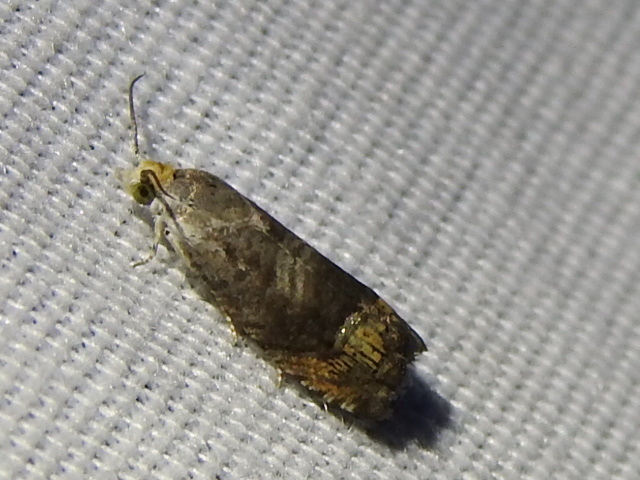
(c) Sam Kieschnick, some rights reserved (CC BY) · licence
Family: Tortricidae · Class: Insecta · Order: Lepidoptera
Ofatulena luminosa is a California animal in the Tortricidae family.
Ofatulena luminosa is a small tortricid moth in the family Tortricidae, subfamily Olethreutinae, tribe Grapholitini. This species was described by Heinrich in 1926 and is assigned Hodges number 3445 in the standardized North American moth catalog system (BugGuide). Adult moths are characterized by forewings that display the typical tortricid pattern, though specific morphological details remain poorly documented in the scientific literature. Ofatulena luminosa occurs across a broad range from southern California eastward to southern Texas, extending south into Baja California, Mexico. Within California, documented records include Riverside County, where specimens have been collected in the Cabazon area (BugGuide). The species' distribution suggests adaptation to arid and semi-arid environments characteristic of the southwestern United States and northwestern Mexico. Like most tortricid moths, O. luminosa likely inhabits areas with suitable host plants, though specific host plant associations have not been documented in available literature. Tortricidae typically prefer shrubland, desert scrub, and chaparral habitats where their larval food plants occur. The species' range suggests it occupies Lower Sonoran and Upper Sonoran life zones, potentially at elevations from sea level to several thousand feet. As with many tortricid species, adult moths are presumably nocturnal and attracted to light sources. Flight period data remains limited, though June records from California suggest activity during late spring and early summer months. Larvae likely develop within rolled leaves, shoots, or other plant tissues, following the typical tortricid life cycle pattern. Specific details regarding mating behavior, oviposition sites, larval development time, and overwintering strategies have not been documented. Ofatulena luminosa does not appear on any federal or state conservation lists and lacks formal conservation status assessments. The species' broad geographic range across multiple states and into Mexico suggests relatively stable populations, though specific population trends have not been studied. Like many small moth species, O. luminosa may face localized threats from habitat conversion, urban development, and agricultural intensification within its range. Climate change could potentially affect the species through shifts in host plant distributions and altered precipitation patterns in arid southwestern ecosystems. Scientific documentation for this species remains extremely limited despite its relatively broad distribution. Available information comes primarily from taxonomic databases and specimen records rather than detailed ecological studies. The information presented here synthesizes available observations from BugGuide and other entomological databases. Enhanced field studies focusing on host plant relationships, life cycle timing, and habitat requirements would significantly improve understanding of this southwestern tortricid moth.
Classification
Class: Insecta · Order: Lepidoptera · Family: Tortricidae
Frequently asked questions
How is Ofatulena luminosa classified?
Ofatulena luminosa belongs to class Insecta, order Lepidoptera, family Tortricidae.
What family does Ofatulena luminosa belong to?
Ofatulena luminosa is in the Tortricidae family.
What is Ofatulena luminosa?
Ofatulena luminosa is a small tortricid moth in the family Tortricidae, subfamily Olethreutinae, tribe Grapholitini.
Is Ofatulena luminosa found in California?
Yes. Ofatulena luminosa is recorded in California in The California Species Project's catalogue.
Related species
Other California species in the same genus, family, or bioregion.
Data from The California Species Project — 14,000+ California species with verified data from CNPS, CDFW, USFWS, and more.