Oinophila v flava
Yellow V Moth
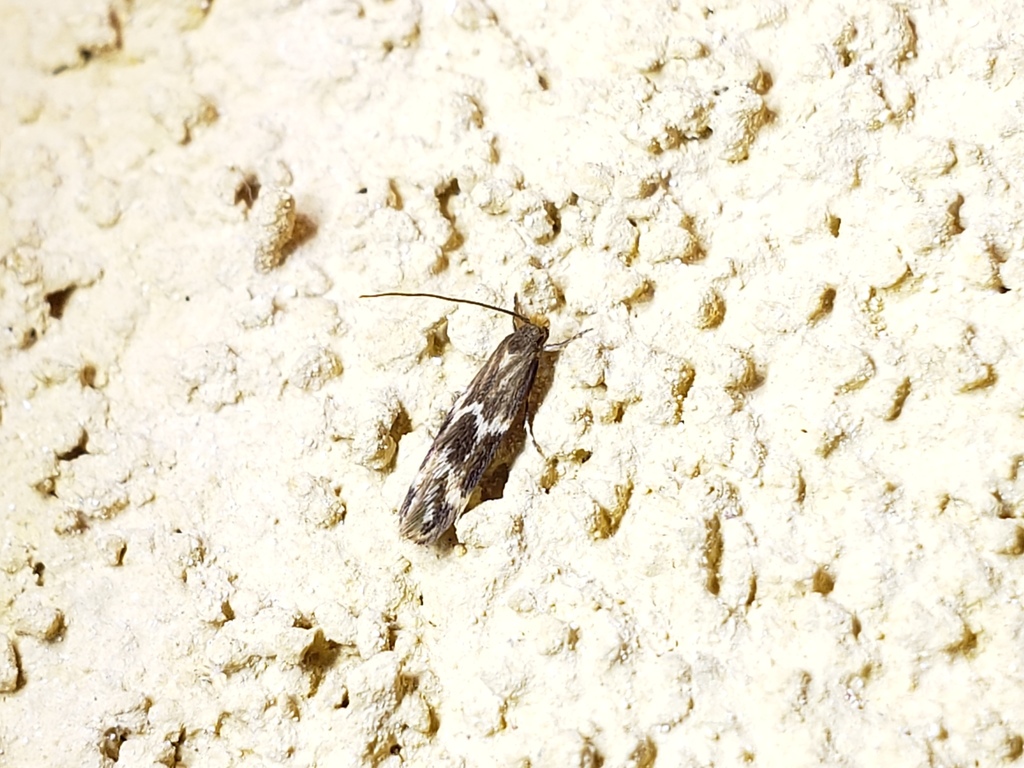
(c) Tyler Bishop, some rights reserved (CC BY) · licence
Family: Tineidae · Class: Insecta · Order: Lepidoptera
Oinophila v flava (Yellow V Moth) is a California animal in the Tineidae family.
The Yellow V Moth (Oinophila v-flava) is a small microlepidopteran belonging to the family Tineidae, commonly known as fungus moths or tineid moths. This species represents one of the lesser-studied moths within California's diverse lepidopteran fauna. The common name derives from the distinctive yellow V-shaped marking visible on the forewings, though detailed morphological descriptions of this species remain limited in the scientific literature. The Yellow V Moth belongs to the genus Oinophila, which comprises a small group of tineid moths distributed across North America. Adult moths in this family are typically small, with wingspans ranging from 8 to 20 millimeters, though specific measurements for O. v-flava have not been extensively documented. The forewings display the characteristic yellow V-marking that distinguishes this species from closely related taxa within the genus. The current distribution and range of the Yellow V Moth in California requires further documentation through systematic surveys. Tineidae moths are found throughout the state, occupying diverse habitats from coastal areas to montane regions. Many species in this family have restricted distributions and specific habitat requirements, making comprehensive range mapping essential for understanding their conservation needs. Habitat preferences for the Yellow V Moth remain poorly characterized. Most tineid moths are associated with specific microhabitats related to their larval feeding requirements. Many species in the family develop in fungal substrates, decaying organic matter, or specialized plant materials. Some Oinophila species are known to utilize plant detritus or fungi as larval food sources, but the specific ecological requirements of O. v-flava have not been thoroughly studied. The life cycle and behavioral ecology of the Yellow V Moth follow typical patterns for tineid moths, with complete metamorphosis including egg, larval, pupal, and adult stages. Adult flight periods and reproductive timing remain undocumented for this species. Larval development likely occurs within organic substrates, possibly including fungal material or plant detritus, consistent with feeding patterns observed in related species. Adult moths are typically active during evening or nighttime hours and may be attracted to artificial light sources. The conservation status of the Yellow V Moth has not been formally assessed at federal or state levels. The species lacks official listing status under the Endangered Species Act or California Endangered Species Act. Limited distributional data and ecological information make it difficult to evaluate population trends or conservation needs. Many microlepidoptera face threats from habitat modification, urbanization, and climate change, but specific threats to O. v-flava remain uncharacterized. Comprehensive surveys and taxonomic research are needed to better understand the species' distribution, abundance, and conservation requirements within California's lepidopteran communities.
Classification
Class: Insecta · Order: Lepidoptera · Family: Tineidae
Frequently asked questions
How is Oinophila v flava classified?
Oinophila v flava belongs to class Insecta, order Lepidoptera, family Tineidae.
What family does Oinophila v flava belong to?
Oinophila v flava is in the Tineidae family.
What is Oinophila v flava?
The Yellow V Moth (Oinophila v-flava) is a small microlepidopteran belonging to the family Tineidae, commonly known as fungus moths or tineid moths.
Is Oinophila v flava found in California?
Yes. Oinophila v flava is recorded in California in The California Species Project's catalogue.
Related species
Other California species in the same genus, family, or bioregion.
Data from The California Species Project — 14,000+ California species with verified data from CNPS, CDFW, USFWS, and more.