Okanagana bella
Mountain Cicada
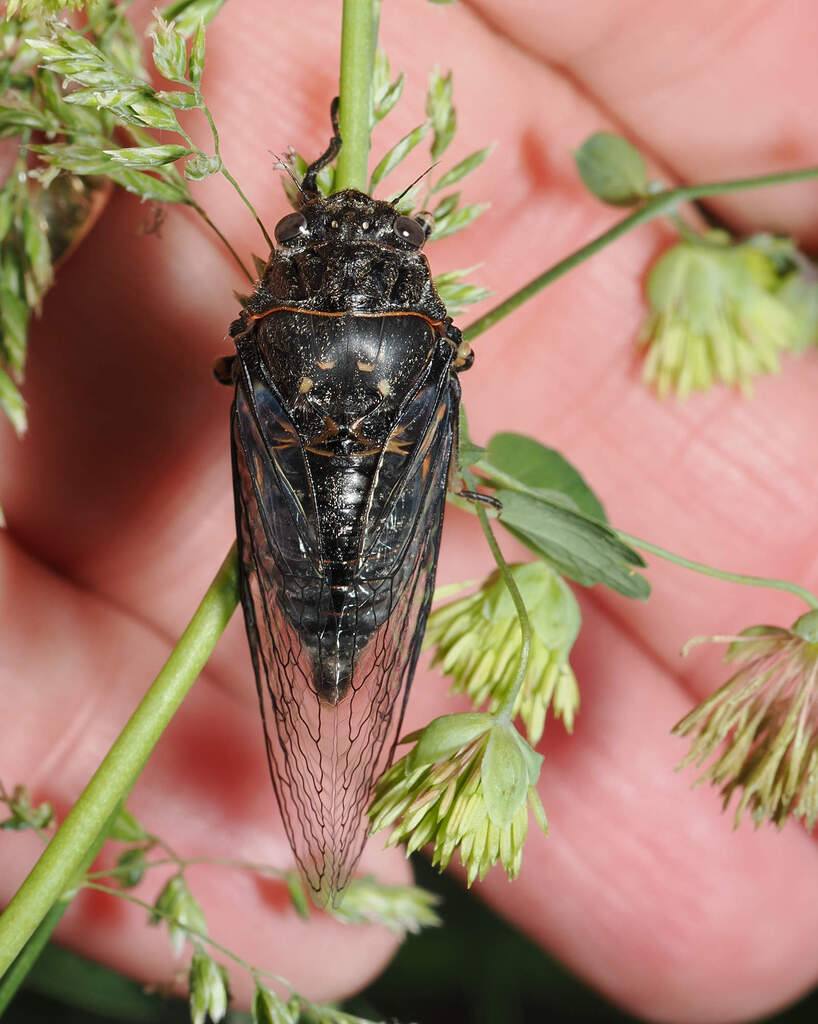
(c) Wendy McCrady, some rights reserved (CC BY) · licence
Family: Cicadidae · Class: Insecta · Order: Hemiptera
Okanagana bella (Mountain Cicada) is a California animal in the Cicadidae family.
The mountain cicada is a medium-sized cicada belonging to the western North American genus Okanagana. Like other members of this genus, mountain cicadas are characterized by their robust bodies and distinctive wing venation patterns typical of the family Cicadidae. Adults possess prominent compound eyes and short antennae, with males typically featuring specialized sound-producing organs called tymbals used for acoustic communication. Okanagana bella occurs in mountainous regions of western North America, with its range extending through parts of the Pacific Northwest and intermountain regions. The species is associated with higher elevation habitats, distinguishing it from lowland cicada species. Specific distribution records indicate presence in montane areas of the western United States, though detailed county-level occurrence data requires further documentation. The mountain cicada inhabits montane forest and woodland ecosystems, typically at moderate to high elevations where coniferous trees predominate. According to Sanborn and Phillips (2013), cicada distribution patterns in western North America are closely tied to specific habitat requirements and elevation zones. The species likely requires particular host trees for nymphal development, as cicada nymphs spend multiple years underground feeding on root systems before emerging as adults. Like other Okanagana species, mountain cicadas follow a multiyear life cycle with extended nymphal development underground. Nymphs feed on tree roots using piercing-sucking mouthparts, extracting xylem fluids over a period of several years before reaching maturity. Adult emergence typically occurs during summer months when males produce species-specific calling songs to attract females for mating. After mating, females use their ovipositors to insert eggs into tree bark or twigs, where they overwinter before hatching the following spring. Adult mountain cicadas are primarily active during the warmest part of summer days, with peak activity often coinciding with maximum daily temperatures. Males aggregate in favorable acoustic environments where their calls can effectively reach potential mates. The species likely has specific phenological timing that synchronizes with optimal environmental conditions in montane habitats. Currently, Okanagana bella does not appear on federal or state endangered species lists, and comprehensive population assessments have not been conducted. However, like many montane specialist species, mountain cicadas may face conservation challenges from habitat modification, climate change impacts on high-elevation ecosystems, and potential shifts in forest composition. The limited distributional range typical of montane endemic species could make populations vulnerable to localized threats. Systematic research on Okanagana species has been conducted by various entomologists, with Simons (1954) providing foundational taxonomic work on California cicadas. More recent biogeographic analyses by Sanborn and Phillips (2013) have examined distribution patterns across western North American cicada fauna. However, detailed ecological studies specifically focusing on O. bella remain limited, and additional research is needed to fully document the species' habitat requirements, population status, and conservation needs.
Classification
Class: Insecta · Order: Hemiptera · Family: Cicadidae
Frequently asked questions
How is Okanagana bella classified?
Okanagana bella belongs to class Insecta, order Hemiptera, family Cicadidae.
What family does Okanagana bella belong to?
Okanagana bella is in the Cicadidae family.
What is Okanagana bella?
The mountain cicada is a medium-sized cicada belonging to the western North American genus Okanagana.
Is Okanagana bella found in California?
Yes. Okanagana bella is recorded in California in The California Species Project's catalogue.
Related species
Other California species in the same genus, family, or bioregion.
Data from The California Species Project — 14,000+ California species with verified data from CNPS, CDFW, USFWS, and more.