Okanagana tristis
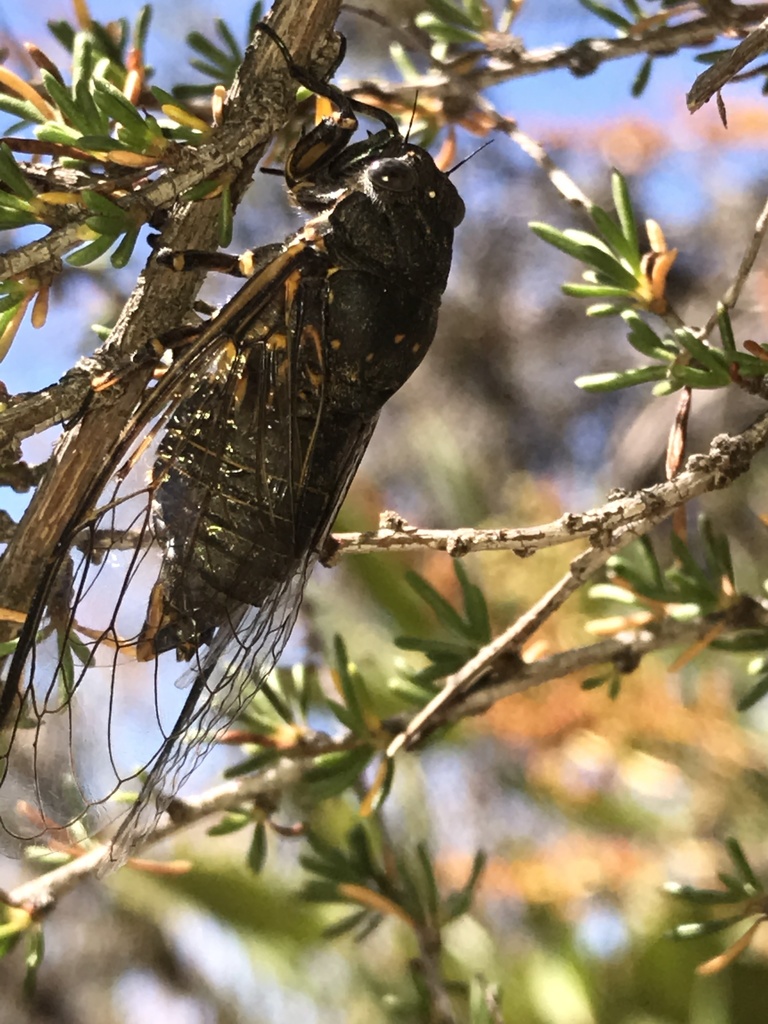
(c) LJ Moore-McClelland, some rights reserved (CC BY) · licence
Family: Cicadidae · Class: Insecta · Order: Hemiptera
Okanagana tristis is a California animal in the Cicadidae family.
Okanagana tristis is a cicada species belonging to the tribe Tibicinini within the family Cicadidae. This species represents one of numerous cicadas in the genus Okanagana, which comprises periodical and annual cicadas distributed across western North America. The subspecies Okanagana tristis tristis has been documented in taxonomic records maintained by the U.S. Fish and Wildlife Service. Physical characteristics of O. tristis follow the typical cicada body plan, with a robust thorax, prominent compound eyes, and membranous wings. Like other Okanagana species, adults likely possess the characteristic sound-producing organs called tymbals, used by males for acoustic communication. Specific morphological details distinguishing this species from closely related Okanagana cicadas have not been well documented in accessible literature. The range and distribution of O. tristis appears connected to the Okanagan region, as suggested by the generic name Okanagana. This biogeographic area spans parts of British Columbia, Canada, and extends into Washington state. The Okanagan-Similkameen region has been identified as a biodiversity hotspot for endemic species in western North America, supporting numerous specialized insects adapted to the area's unique climatic and topographic conditions. Habitat requirements for O. tristis likely include the semi-arid environments characteristic of the Okanagan Valley region. This area features dry grasslands, open woodlands, and shrubsteppe communities at various elevations. Cicadas typically require specific host plants for larval development, as nymphs spend multiple years underground feeding on root systems before emerging to complete their life cycle. The particular plant associations and soil requirements for O. tristis have not been thoroughly documented. Behavioral ecology of O. tristis presumably follows patterns common to other Okanagana cicadas. Adults likely emerge during summer months, with males producing species-specific acoustic calls to attract females for mating. After mating, females deposit eggs in woody plant tissues using their ovipositors. Eggs hatch into nymphs that drop to the ground and burrow into soil, where they feed on plant roots for several years before emerging as adults. The exact development period and seasonal timing for O. tristis remain undocumented. Conservation status information for O. tristis is notably absent from federal and state listing databases. The species lacks formal conservation rankings from agencies such as the U.S. Fish and Wildlife Service, California Department of Fish and Wildlife, or international organizations like IUCN. This absence of status information may reflect either stable populations requiring no special protection, or insufficient scientific study to determine conservation needs. Scientific documentation for this cicada species remains extremely limited. The information presented here synthesizes available taxonomic records from federal databases and general knowledge of Okanagana cicada ecology. Detailed studies of O. tristis biology, distribution, host plant relationships, and population status are lacking. We welcome contributions of verified scientific data, photographs, or field observations to enhance this species account.
Classification
Class: Insecta · Order: Hemiptera · Family: Cicadidae
Frequently asked questions
How is Okanagana tristis classified?
Okanagana tristis belongs to class Insecta, order Hemiptera, family Cicadidae.
What family does Okanagana tristis belong to?
Okanagana tristis is in the Cicadidae family.
What is Okanagana tristis?
Okanagana tristis is a cicada species belonging to the tribe Tibicinini within the family Cicadidae.
Is Okanagana tristis found in California?
Yes. Okanagana tristis is recorded in California in The California Species Project's catalogue.
Related species
Other California species in the same genus, family, or bioregion.
Data from The California Species Project — 14,000+ California species with verified data from CNPS, CDFW, USFWS, and more.