Okanagana vandykei
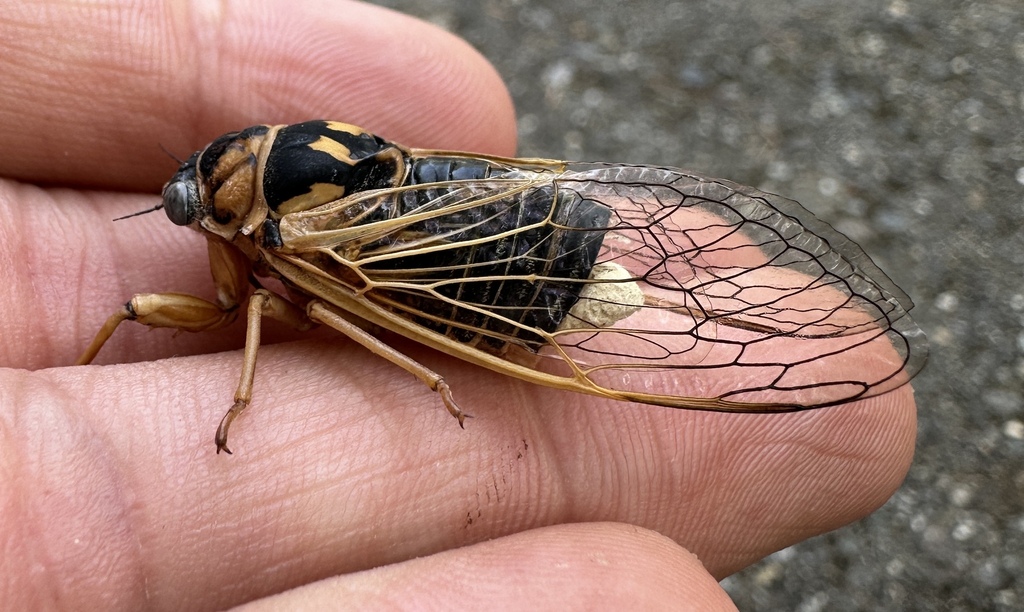
(c) Matt Berger, some rights reserved (CC BY) · licence
Family: Cicadidae · Class: Insecta · Order: Hemiptera
Okanagana vandykei is a California animal in the Cicadidae family.
Okanagana vandykei is a large cicada species endemic to the western United States. Adults measure approximately 20-35 mm in body length with a wingspan reaching 50-80 mm, making it notably larger than related species such as O. synodica (BugGuide). The species displays distinctive identifying features including two prominent dark marks on the dorsum and an orange pronotum, characteristics that immediately distinguish it from other Okanagana species. This cicada occurs in mountainous regions of the western United States, with documented populations in California's Sierra Nevada. Specific records include specimens collected at Beardsley Grade in Plumas County, California, indicating the species' presence in the northern Sierra Nevada at mid-elevations (BugGuide). The species appears to have a limited distribution compared to more widespread Okanagana species, though comprehensive range mapping remains incomplete. Okanagana vandykei inhabits montane forest environments, particularly areas with mixed coniferous forests typical of the Sierra Nevada. Based on collection records, the species occurs at moderate to high elevations where it likely utilizes various tree species as hosts during its extended larval development. Like other cicadas, adults emerge from underground burrows where nymphs spend multiple years feeding on tree root systems. Adult cicadas emerge during summer months, with documented activity in July based on collection records from California (BugGuide). Males produce species-specific calls to attract females for mating, a behavior characteristic of all Okanagana species. Recent research has demonstrated that mate recognition within cicada emergences is mediated by critical song distances, allowing species discrimination even when multiple cicada species emerge simultaneously (Chatfield-Taylor & Cole 2019). After mating, females deposit eggs in tree branches, and the resulting nymphs drop to the ground to begin their multi-year underground development. The conservation status of Okanagana vandykei has not been formally assessed by state or federal agencies. The species does not appear on current threatened or endangered species lists, though its apparently restricted range and specialized habitat requirements may warrant monitoring. Limited scientific documentation exists for this species, with most information derived from taxonomic studies and citizen science observations through platforms like BugGuide and iNaturalist. Primary threats to the species likely include habitat modification through logging, development, and climate change effects on montane forest ecosystems. Forest management practices that alter tree species composition or remove large mature trees could impact both adult emergence sites and the root systems that support developing nymphs. The species' dependence on specific elevation ranges and forest types may make it vulnerable to climate-driven habitat shifts, though specific population trend data are not available. Scientific study of O. vandykei remains limited, with most information coming from taxonomic descriptions and scattered collection records. Enhanced research on population distribution, habitat requirements, and ecological relationships would improve understanding of this western cicada species and inform potential conservation needs.
Classification
Class: Insecta · Order: Hemiptera · Family: Cicadidae
Frequently asked questions
How is Okanagana vandykei classified?
Okanagana vandykei belongs to class Insecta, order Hemiptera, family Cicadidae.
What family does Okanagana vandykei belong to?
Okanagana vandykei is in the Cicadidae family.
What is Okanagana vandykei?
Okanagana vandykei is a large cicada species endemic to the western United States.
Is Okanagana vandykei found in California?
Yes. Okanagana vandykei is recorded in California in The California Species Project's catalogue.
Related species
Other California species in the same genus, family, or bioregion.
Data from The California Species Project — 14,000+ California species with verified data from CNPS, CDFW, USFWS, and more.