Oliarces clara
Cheeseweed Owlfly (cheeseweed Moth Lacewing)
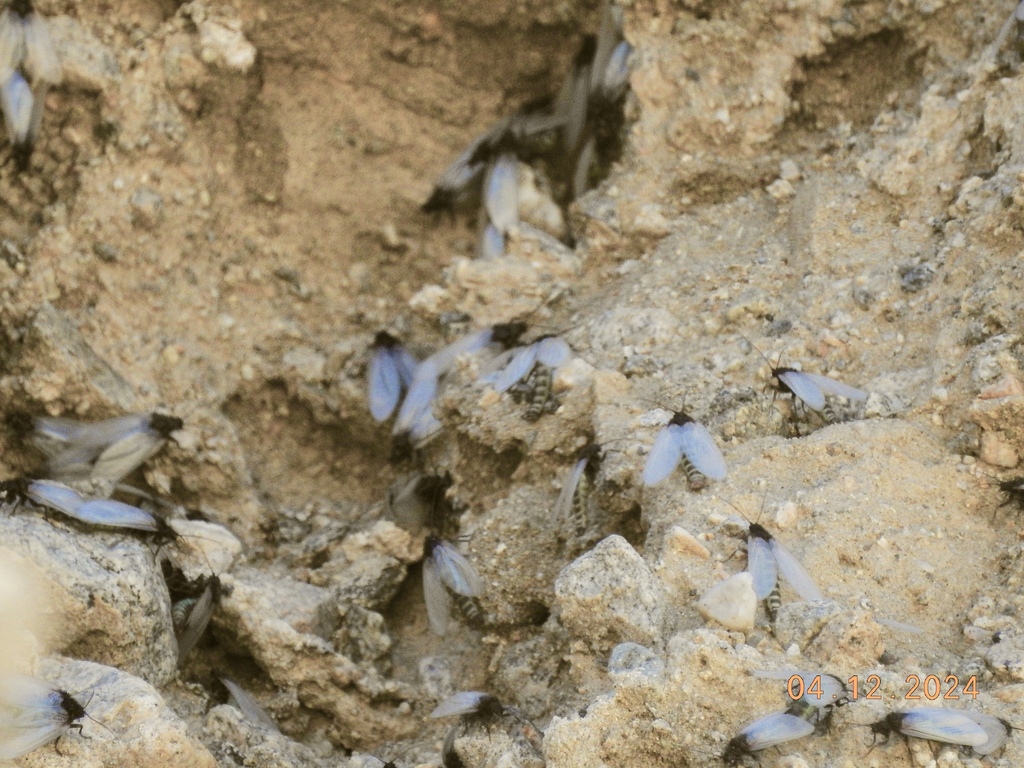
(c) Diana, some rights reserved (CC BY) · licence
Family: Ithonidae · Class: Insecta · Order: Neuroptera
Conservation status: G1G3 S2
Oliarces clara (Cheeseweed Owlfly (cheeseweed Moth Lacewing)) is a California animal in the Ithonidae family.
The cheeseweed owlfly is a distinctive neuropteran insect belonging to the family Ithonidae, the moth lacewings. Adults measure approximately 18 mm in body length with forewings reaching 16 mm long and 5 mm wide, producing a wingspan of 35-40 mm (Johnson 1992). The species exhibits typical neuropteran characteristics with four membranous wings held roof-like over the body when at rest, distinguishing it from true moths despite its common name. Oliarces clara has an extremely limited distribution, occurring only in southern California and adjacent portions of Nevada and Arizona. The species is known from approximately 10 isolated populations scattered across this range (Arizona Game and Fish Department). In California, the species has been documented in desert regions including the Arica Mountains, where it co-occurs with other sensitive species such as desert tortoise and kit fox. The U.S. Fish and Wildlife Service recognizes the species as occurring in both Arizona and California. The cheeseweed owlfly inhabits arid environments, particularly areas on or near bajadas - the gently sloping debris fans that extend from mountain bases into desert valleys. Populations are associated with desert scrub communities where the larval host plant, cheeseweed (Malva parviflora), occurs. Adults demonstrate unique mating behavior by aggregating at local topographic high points during reproductive periods (Johnson 1992). The species exhibits highly synchronized reproductive ecology, with adult emergence occurring from mid-April to mid-May. During peak emergence events, population densities can reach very high levels, with estimates of up to 250,000 individuals per acre documented during large-scale emergences (Johnson 1992). Larvae are associated with the root systems of their host plant, cheeseweed, where they likely feed on root exudates or associated microorganisms. The synchronous emergence pattern suggests the species may have evolved specific adaptations to desert environmental conditions and resource availability. Oliarces clara holds conservation significance as the only extant North American representative of the family Ithonidae. The species carries a global rank of G1G3, indicating it is critically imperiled to vulnerable globally, and a California state rank of S2, denoting it is imperiled within the state. The U.S. Fish and Wildlife Service currently classifies the cheeseweed owlfly as a Species of Concern. The species faces threats common to desert-dwelling insects, including habitat fragmentation, urbanization, and climate change impacts on desert ecosystems. The limited number of known populations and restricted geographic range make the species particularly vulnerable to local extinction events. Conservation efforts focus on protecting remaining habitat and monitoring known population sites to track population trends and identify emerging threats to this unique desert neuropteran.
Classification
Class: Insecta · Order: Neuroptera · Family: Ithonidae
Conservation status
G1G3 S2
Frequently asked questions
How is Oliarces clara classified?
Oliarces clara belongs to class Insecta, order Neuroptera, family Ithonidae.
What family does Oliarces clara belong to?
Oliarces clara is in the Ithonidae family.
Is Oliarces clara protected or of conservation concern?
Oliarces clara carries the following status: G1G3 S2.
What is Oliarces clara?
The cheeseweed owlfly is a distinctive neuropteran insect belonging to the family Ithonidae, the moth lacewings.
Is Oliarces clara found in California?
Yes. Oliarces clara is recorded in California in The California Species Project's catalogue.
Related species
Other California species in the same genus, family, or bioregion.
Data from The California Species Project — 14,000+ California species with verified data from CNPS, CDFW, USFWS, and more.