Oligia violacea
Violet Brocade Moth
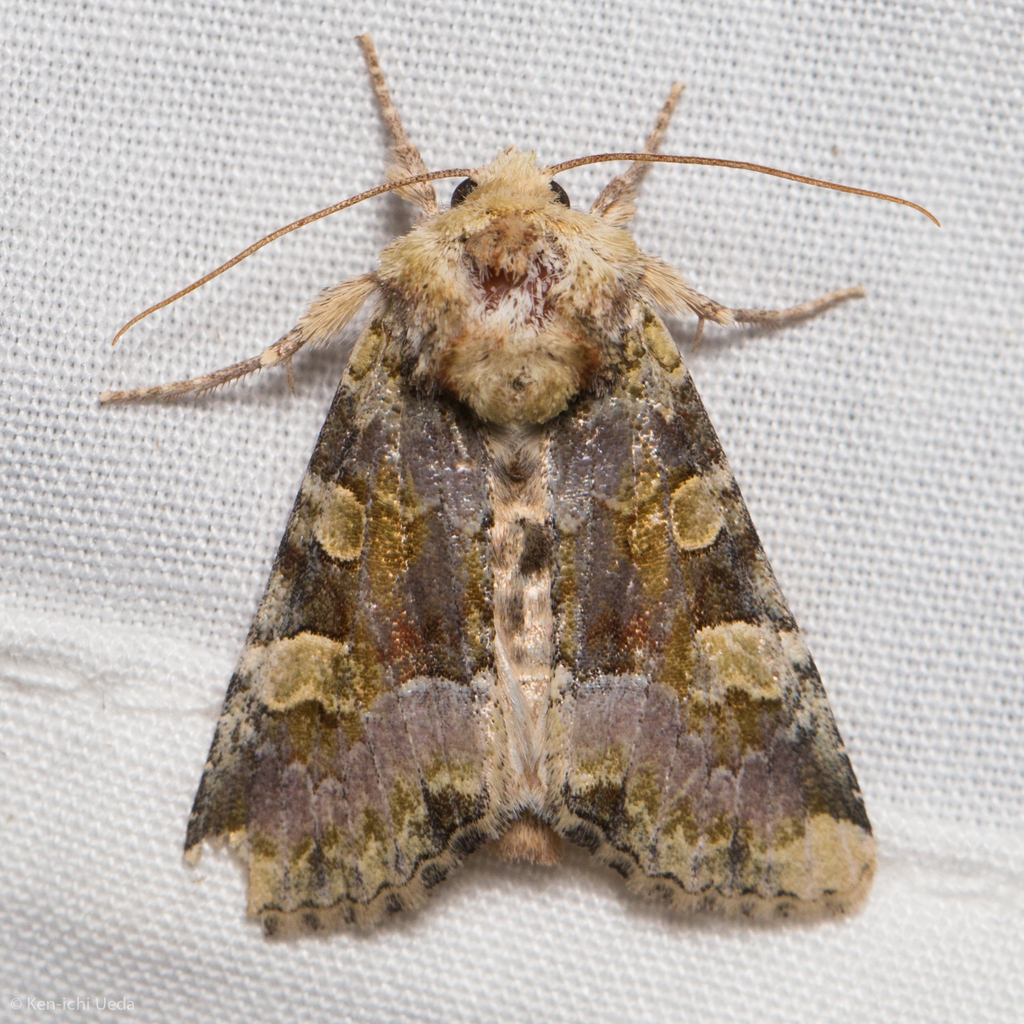
(c) Ken-ichi Ueda, some rights reserved (CC BY) · licence
Family: Noctuidae · Class: Insecta · Order: Lepidoptera
Oligia violacea (Violet Brocade Moth) is a California animal in the Noctuidae family.
The Violet Brocade Moth (Oligia violacea) is a member of the family Noctuidae, belonging to the tribe Apameini. This species is part of a complex group of noctuid moths that present taxonomic challenges for identification. Physical characteristics specific to this species have not been well documented in available scientific literature, though members of the genus Oligia are typically small to medium-sized moths with cryptic coloration patterns that provide camouflage during daylight hours. The distribution of Oligia violacea appears to be limited within North America, though specific range documentation remains incomplete. The species has been recorded in select eastern states, with occurrence data suggesting a restricted geographic distribution. According to available records, populations may be present in New York and Louisiana, where the species has been identified as a Species of Greatest Conservation Need in state wildlife action plans. However, comprehensive range mapping and population surveys have not been conducted. Habitat preferences for this species have not been thoroughly studied. Like other members of the genus Oligia, the Violet Brocade Moth likely inhabits areas with suitable host vegetation, though specific plant associations remain undocumented. The species may occur in wetland margins, grasslands, or areas with herbaceous vegetation, based on general habitat patterns observed in related species within the genus. Ecological information for Oligia violacea is extremely limited. Adult flight periods, larval development, and specific host plant relationships have not been documented in accessible scientific literature. The species likely follows typical noctuid life cycle patterns with egg, larval, pupal, and adult stages, though seasonal timing and voltinism remain unknown. Larval feeding habits and adult nectar sources have not been recorded for this species. Conservation status information indicates potential concern for this species. The inclusion of Oligia violacea in Species of Greatest Conservation Need lists for New York and Louisiana suggests declining populations or habitat threats, though specific population trends have not been quantified. The U.S. Fish and Wildlife Service maintains taxonomic records for the species (TSN: 939663), but no federal conservation status has been assigned. Limited occurrence data and potential habitat restrictions may contribute to conservation concerns, though comprehensive status assessments have not been completed. The lack of detailed biological and ecological information for Oligia violacea reflects broader knowledge gaps common among less-studied noctuid moth species. Current understanding is based primarily on taxonomic records and state-level species assessments rather than focused research studies. Additional field surveys, taxonomic work, and ecological studies would be valuable for better understanding this species' biology, distribution, and conservation needs.
Classification
Class: Insecta · Order: Lepidoptera · Family: Noctuidae
Frequently asked questions
How is Oligia violacea classified?
Oligia violacea belongs to class Insecta, order Lepidoptera, family Noctuidae.
What family does Oligia violacea belong to?
Oligia violacea is in the Noctuidae family.
What is Oligia violacea?
The Violet Brocade Moth (Oligia violacea) is a member of the family Noctuidae, belonging to the tribe Apameini.
Is Oligia violacea found in California?
Yes. Oligia violacea is recorded in California in The California Species Project's catalogue.
Related species
Other California species in the same genus, family, or bioregion.
Data from The California Species Project — 14,000+ California species with verified data from CNPS, CDFW, USFWS, and more.