Oligocentria semirufescens
Red-washed Prominent
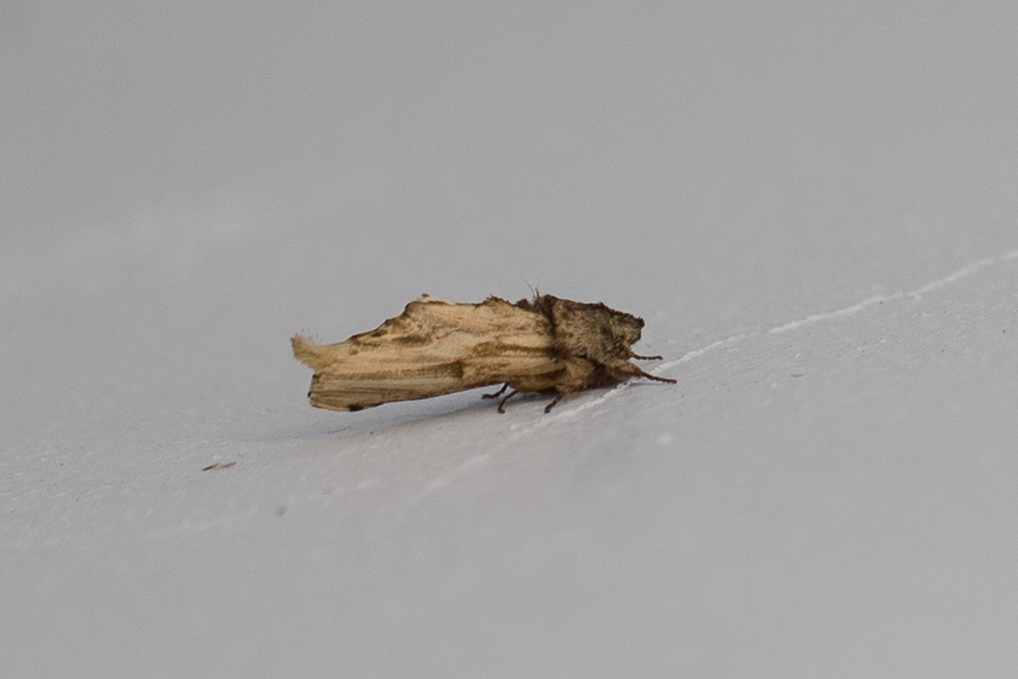
no rights reserved · CC0
Family: Notodontidae · Class: Insecta · Order: Lepidoptera
Oligocentria semirufescens (Red-washed Prominent) is a California animal in the Notodontidae family.
The Red-washed Prominent (Oligocentria semirufescens) is a medium-sized moth in the family Notodontidae, characterized by its distinctive reddish-brown coloration and robust build. Adults typically measure 35 to 45 mm (1.4 to 1.8 inches) in wingspan. The forewings display a mottled pattern of reddish-brown, gray, and darker brown markings, with subtle cross-lines and a prominent reniform spot. The hindwings are typically paler, ranging from light brown to grayish-white. At rest, the moth holds its wings in a tent-like position, creating a triangular profile that helps distinguish it from other prominent moths. This species exhibits a transcontinental distribution across North America. The range extends from Nova Scotia to British Columbia in Canada, and in the United States from Maine south to southern Florida and west to Minnesota and eastern Texas in wooded areas. Western populations occur in Washington, Idaho, Oregon, California, northwestern Colorado, and southwestern South Dakota. This broad distribution suggests the species is relatively adaptable to various climatic conditions across different biogeographic regions. The Red-washed Prominent inhabits deciduous and mixed woodlands, particularly areas dominated by oak species. The moth shows a strong preference for mature forest habitats with dense canopy cover. In California, populations are typically found in oak woodlands and mixed evergreen forests at elevations ranging from sea level to approximately 1,500 meters (4,900 feet). The species requires areas with suitable host plants and adequate moisture retention during the larval development period. Adult moths are primarily nocturnal and are attracted to artificial lights during their flight period, which typically extends from late spring through early fall, with peak activity occurring in summer months. Larvae feed on various oak species (Quercus spp.) and are occasionally found on other deciduous trees. The caterpillars are notable for their distinctive appearance, featuring prominent humps and tubercles along their dorsal surface. Development is typically univoltine in northern portions of the range, with larvae overwintering as pupae in soil chambers or leaf litter. In warmer southern regions, the species may produce two generations per year. The Red-washed Prominent is not federally listed and appears to maintain stable populations across much of its range. However, like many forest-dependent species, it faces potential threats from habitat fragmentation, deforestation, and forest management practices that reduce canopy cover or eliminate mature oak stands. Urban development and conversion of woodland habitat pose localized threats, particularly in rapidly developing areas of California. Climate change may affect the species' distribution, potentially causing range shifts northward or to higher elevations. The moth's dependence on oak ecosystems makes it vulnerable to diseases affecting oak trees, such as sudden oak death syndrome in California coastal regions.
Classification
Class: Insecta · Order: Lepidoptera · Family: Notodontidae
Frequently asked questions
How is Oligocentria semirufescens classified?
Oligocentria semirufescens belongs to class Insecta, order Lepidoptera, family Notodontidae.
What family does Oligocentria semirufescens belong to?
Oligocentria semirufescens is in the Notodontidae family.
What is Oligocentria semirufescens?
The Red-washed Prominent (Oligocentria semirufescens) is a medium-sized moth in the family Notodontidae, characterized by its distinctive reddish-brown coloration and robust build.
Is Oligocentria semirufescens found in California?
Yes. Oligocentria semirufescens is recorded in California in The California Species Project's catalogue.
Related species
Other California species in the same genus, family, or bioregion.
Data from The California Species Project — 14,000+ California species with verified data from CNPS, CDFW, USFWS, and more.