Oncorhynchus clarkii
Cutthroat trout
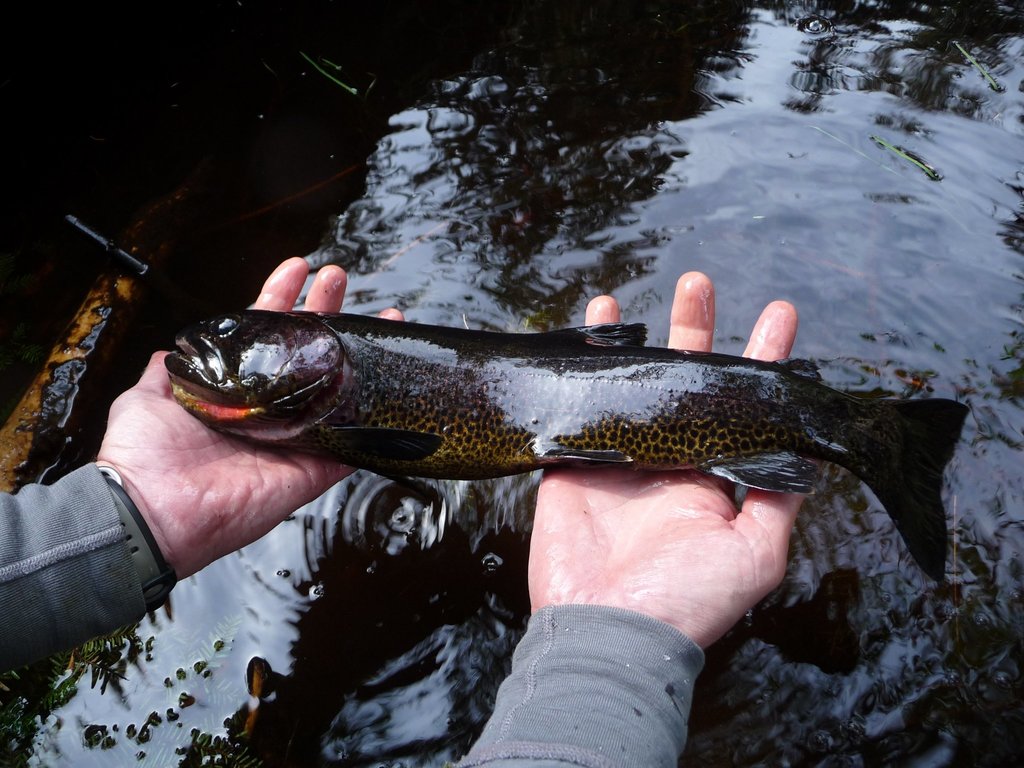
(c) Bruce Deagle, some rights reserved (CC BY) · licence
Family: Salmonidae · Class: Actinopterygii · Order: Salmoniformes
Oncorhynchus clarkii (Cutthroat trout) is a California animal in the Salmonidae family.
Cutthroat trout are medium-sized salmonids distinguished by characteristic red or orange slashes beneath the jaw that give the species its common name. Adults typically measure 300 to 400 mm (12 to 16 inches) in length, though some populations can reach 610 mm (24 inches) or more. The body is streamlined and laterally compressed, with coloration varying significantly among subspecies and populations. Most display olive-green to blue-green backs with silvery sides and numerous small black spots scattered across the body, head, and fins. The distinctive red markings on the lower jaw are most prominent in spawning adults. Historically, cutthroat trout occupied coastal drainages from Alaska to northern California, with inland populations throughout the western United States. In California, native populations were found in the Klamath River system, coastal streams from the Oregon border south to the Eel River, and the Lake Tahoe basin. Today, many California populations have been extirpated or significantly reduced due to habitat loss, water diversions, and hybridization with introduced rainbow trout. The Paiute cutthroat trout, endemic to the eastern Sierra Nevada, represents one of the most geographically restricted subspecies. Cutthroat trout inhabit cold, well-oxygenated waters including streams, rivers, and alpine lakes. They prefer water temperatures below 20°C (68°F) and require clean gravel substrates for spawning. In California, populations occur at elevations ranging from sea level in coastal streams to over 3,000 meters (10,000 feet) in high mountain lakes. Stream-dwelling populations typically occupy pools and runs with overhead cover, while lake populations utilize both shallow nearshore areas and deeper waters depending on season and life stage. Cutthroat trout are opportunistic predators feeding on aquatic and terrestrial insects, crustaceans, small fish, and occasionally amphibians. Diet composition varies with habitat, season, and fish size. Spawning occurs in spring when water temperatures reach 4 to 10°C (39 to 50°F). Females construct redds in gravel substrates where they deposit 1,000 to 7,000 eggs, depending on body size. Eggs incubate for 4 to 7 months, with fry emerging in late spring or early summer. Some populations are anadromous, migrating to saltwater to feed before returning to freshwater to spawn. While the species as a whole is not federally listed, several subspecies face conservation challenges. The Paiute cutthroat trout was listed as threatened under the Endangered Species Act but was delisted in 2006 following successful recovery efforts. Primary threats to California populations include habitat degradation from logging and grazing, water diversions, introduced species, and climate change effects on water temperature and flow regimes. Hybridization with non-native rainbow trout poses a significant genetic threat to pure cutthroat populations. Conservation efforts focus on habitat restoration, removal of migration barriers, and maintenance of genetically pure populations through selective breeding and translocation programs.
Classification
Class: Actinopterygii · Order: Salmoniformes · Family: Salmonidae
Frequently asked questions
How is Oncorhynchus clarkii classified?
Oncorhynchus clarkii belongs to class Actinopterygii, order Salmoniformes, family Salmonidae.
What family does Oncorhynchus clarkii belong to?
Oncorhynchus clarkii is in the Salmonidae family.
What is Oncorhynchus clarkii?
Cutthroat trout are medium-sized salmonids distinguished by characteristic red or orange slashes beneath the jaw that give the species its common name.
Is Oncorhynchus clarkii found in California?
Yes. Oncorhynchus clarkii is recorded in California in The California Species Project's catalogue.
Related species
Other California species in the same genus, family, or bioregion.
Data from The California Species Project — 14,000+ California species with verified data from CNPS, CDFW, USFWS, and more.