Oncorhynchus clarkii clarkii
Coast cutthroat trout
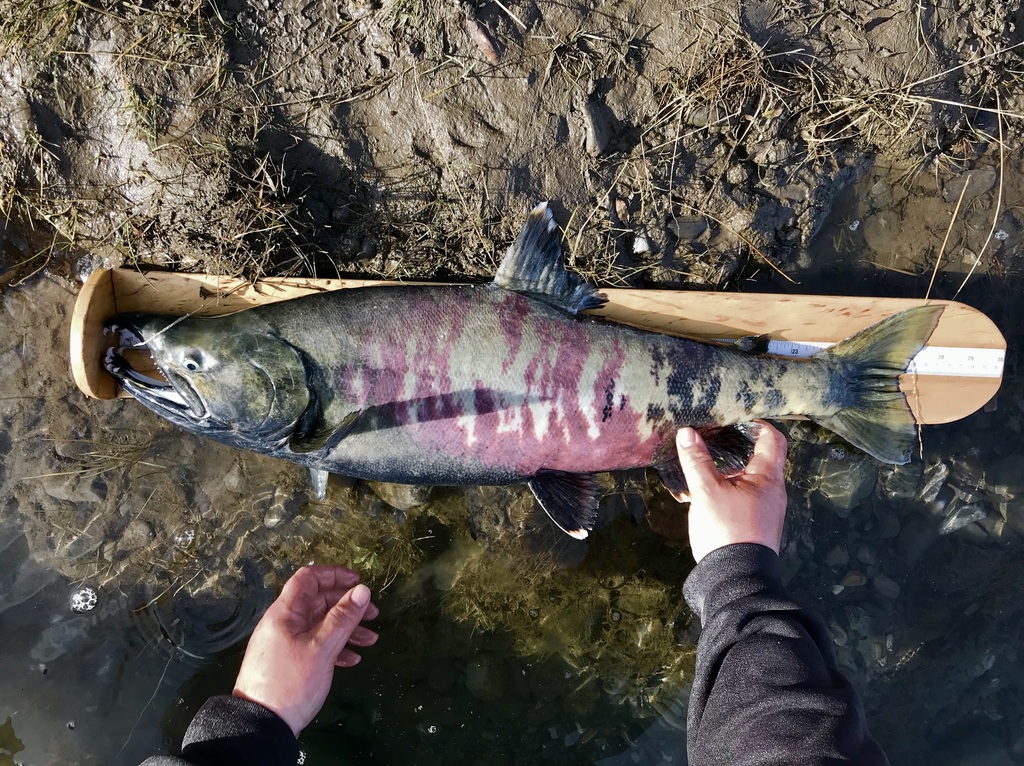
(c) Kevin Brix, some rights reserved (CC BY-SA) · licence
Family: Salmonidae · Class: Actinopterygii · Order: Salmoniformes
Conservation status: G4T4 S3
Oncorhynchus clarkii clarkii (Coast cutthroat trout) is a California animal in the Salmonidae family.
The coast cutthroat trout is a subspecies of cutthroat trout native to coastal watersheds from northern California to Alaska. Adults typically measure 30 to 45 cm (12 to 18 inches) in length, though sea-run populations can exceed 60 cm (24 inches). The species displays characteristic red or orange slashes beneath the jaw, giving cutthroat trout their common name. Body coloration varies considerably among populations and life history forms, ranging from silvery in anadromous individuals to olive-green or yellowish in resident freshwater forms. Small black spots are scattered across the back, sides, and dorsal and caudal fins. Breeding males develop more pronounced coloration and slightly hooked jaws. Historically, coast cutthroat trout ranged along the Pacific coast from the Eel River in northern California north to Prince William Sound, Alaska. In California, the subspecies occurs in coastal streams from Humboldt County north to the Oregon border, including tributaries to the Klamath River system. Current distribution has been reduced from historical levels due to habitat degradation, water diversions, and interactions with hatchery fish. The species maintains populations in the Smith River, lower Klamath River, and several smaller coastal watersheds including Redwood Creek and the Mad River. Coast cutthroat trout inhabit a variety of aquatic environments throughout their life cycle. Juveniles rear in freshwater streams with cool temperatures, typically below 18°C (64°F), and require clean gravels for spawning and early development. Adults may remain in freshwater throughout their lives or migrate to estuarine and near-shore marine environments. Sea-run populations utilize estuaries as transition zones and feed in shallow coastal waters, rarely venturing far from shore. Essential habitat features include instream cover such as large woody debris, undercut banks, and deep pools. The species exhibits complex life history patterns, with some individuals remaining resident in freshwater while others become anadromous. Spawning occurs from December through May, with peak activity in February and March. Females construct redds in gravel substrates in stream headwaters and tributaries. Fecundity ranges from 1,000 to 4,500 eggs depending on female size. Coast cutthroat trout are opportunistic predators, feeding on aquatic and terrestrial insects, crustaceans, small fish, and salmon eggs when available. Anadromous forms consume marine invertebrates and small fish during their ocean residence. The coast cutthroat trout is not federally listed but is considered a species of concern in California. The subspecies receives a state ranking of S3, indicating vulnerability to extirpation. Primary threats include habitat loss from logging, agricultural development, and urbanization, water diversions that reduce stream flows, sedimentation from land use practices, and competition with introduced species. Climate change poses additional risks through altered precipitation patterns and increased water temperatures. Conservation efforts focus on watershed restoration, fish passage improvement, and protection of remaining intact habitats.
Classification
Class: Actinopterygii · Order: Salmoniformes · Family: Salmonidae
Conservation status
G4T4 S3
Frequently asked questions
How is Oncorhynchus clarkii clarkii classified?
Oncorhynchus clarkii clarkii belongs to class Actinopterygii, order Salmoniformes, family Salmonidae.
What family does Oncorhynchus clarkii clarkii belong to?
Oncorhynchus clarkii clarkii is in the Salmonidae family.
Is Oncorhynchus clarkii clarkii protected or of conservation concern?
Oncorhynchus clarkii clarkii carries the following status: G4T4 S3.
What is Oncorhynchus clarkii clarkii?
The coast cutthroat trout is a subspecies of cutthroat trout native to coastal watersheds from northern California to Alaska.
Is Oncorhynchus clarkii clarkii found in California?
Yes. Oncorhynchus clarkii clarkii is recorded in California in The California Species Project's catalogue.
Related species
Other California species in the same genus, family, or bioregion.
Data from The California Species Project — 14,000+ California species with verified data from CNPS, CDFW, USFWS, and more.