Oncorhynchus clarkii henshawi
Lahontan cutthroat trout
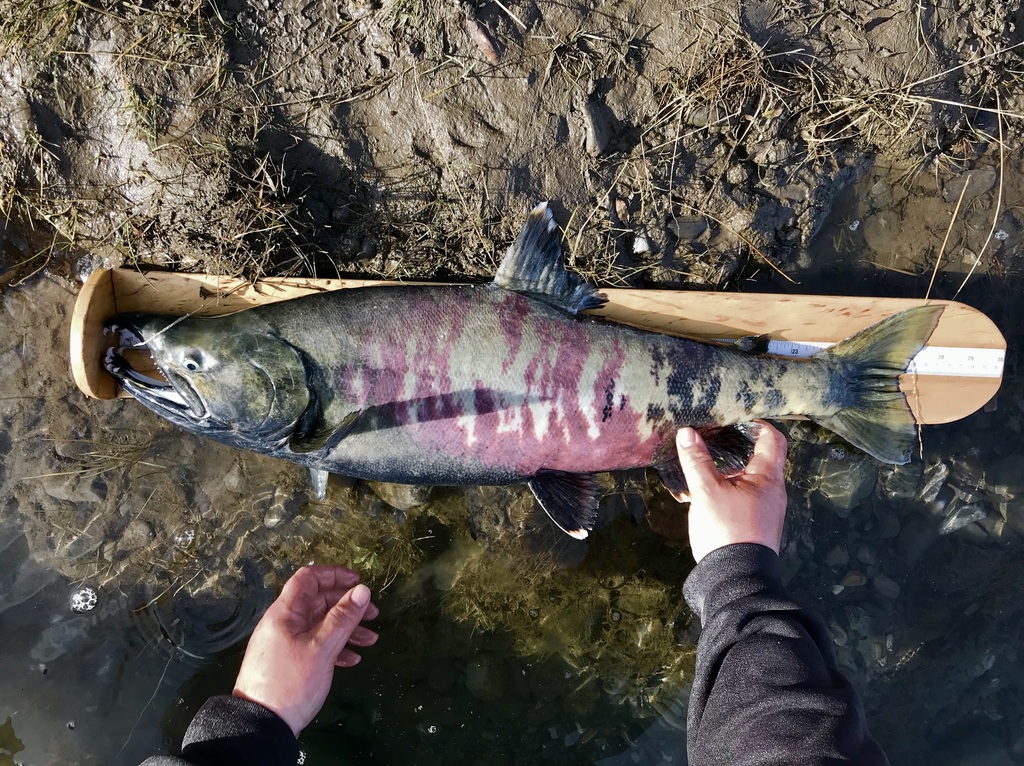
(c) Kevin Brix, some rights reserved (CC BY-SA) · licence
Family: Salmonidae · Class: Actinopterygii · Order: Salmoniformes
Conservation status: Threatened · G4T3 S2
Oncorhynchus clarkii henshawi (Lahontan cutthroat trout) is a California animal in the Salmonidae family.
The Lahontan cutthroat trout is a large freshwater fish native to the Lahontan basin of Nevada, California, and Utah. Adults typically measure 300 to 600 mm (12 to 24 inches) in length, though historically some individuals exceeded 1 meter (39 inches). The species exhibits distinctive reddish-orange slash marks beneath the jaw, characteristic of cutthroat trout. Body coloration varies from olive-green to bronze on the dorsal surface with silvery sides, and numerous small black spots scattered across the head, body, and fins. The spots extend below the lateral line, distinguishing this subspecies from other cutthroat trout. Historically, Lahontan cutthroat trout occupied the Lahontan basin, including Pyramid Lake and Lake Tahoe in Nevada and California, plus numerous tributary streams and smaller lakes. The species once ranged throughout the Truckee, Carson, and Walker river systems. Currently, the native range has been severely reduced, with populations persisting in isolated stream segments and some lakes in Nevada, northeastern California, and southeastern Oregon. In California, remnant populations exist in tributary streams of the eastern Sierra Nevada. Lahontan cutthroat trout inhabit cool, clear streams and lakes at elevations ranging from 1,200 to 3,000 meters (4,000 to 9,800 feet). Stream populations prefer areas with cobble and gravel substrates, undercut banks, and adequate cover from overhanging vegetation or large rocks. Lake populations utilize deeper waters during summer months and move to tributary streams or shallow areas for spawning. Water temperatures between 10 to 18°C (50 to 64°F) are optimal for growth and reproduction. Adult Lahontan cutthroat trout are opportunistic predators, feeding on aquatic insects, crustaceans, and smaller fish. In lake environments, they consume zooplankton, amphipods, and other fish species. Spawning occurs from April through June, depending on elevation and water temperature. Adults migrate to tributary streams or shallow lake areas to spawn over gravel beds. Females excavate redds and deposit 2,000 to 4,000 eggs, which incubate for 4 to 7 months depending on water temperature. The U.S. Fish and Wildlife Service listed the Lahontan cutthroat trout as threatened under the Endangered Species Act in 1975. According to the California Department of Fish and Wildlife, the species was originally listed by USFWS under the scientific name Salmo clarki henshawi. Primary threats include habitat degradation from livestock grazing, water diversions, and competition with non-native trout species. Hybridization with rainbow trout has compromised genetic integrity of some populations. Recovery efforts focus on habitat restoration, removal of non-native species, and reestablishment of populations in suitable waters through captive breeding programs. The Nevada Department of Wildlife and other agencies maintain broodstock populations to support ongoing restoration efforts throughout the species' historical range.
Classification
Class: Actinopterygii · Order: Salmoniformes · Family: Salmonidae
Conservation status
Threatened · G4T3 S2
Frequently asked questions
How is Oncorhynchus clarkii henshawi classified?
Oncorhynchus clarkii henshawi belongs to class Actinopterygii, order Salmoniformes, family Salmonidae.
What family does Oncorhynchus clarkii henshawi belong to?
Oncorhynchus clarkii henshawi is in the Salmonidae family.
Is Oncorhynchus clarkii henshawi protected or of conservation concern?
Oncorhynchus clarkii henshawi carries the following status: Threatened · G4T3 S2.
What is Oncorhynchus clarkii henshawi?
The Lahontan cutthroat trout is a large freshwater fish native to the Lahontan basin of Nevada, California, and Utah.
Is Oncorhynchus clarkii henshawi found in California?
Yes. Oncorhynchus clarkii henshawi is recorded in California in The California Species Project's catalogue.
Related species
Other California species in the same genus, family, or bioregion.
Data from The California Species Project — 14,000+ California species with verified data from CNPS, CDFW, USFWS, and more.