Oncorhynchus clarkii pleuriticus
Colorado River cutthroat trout
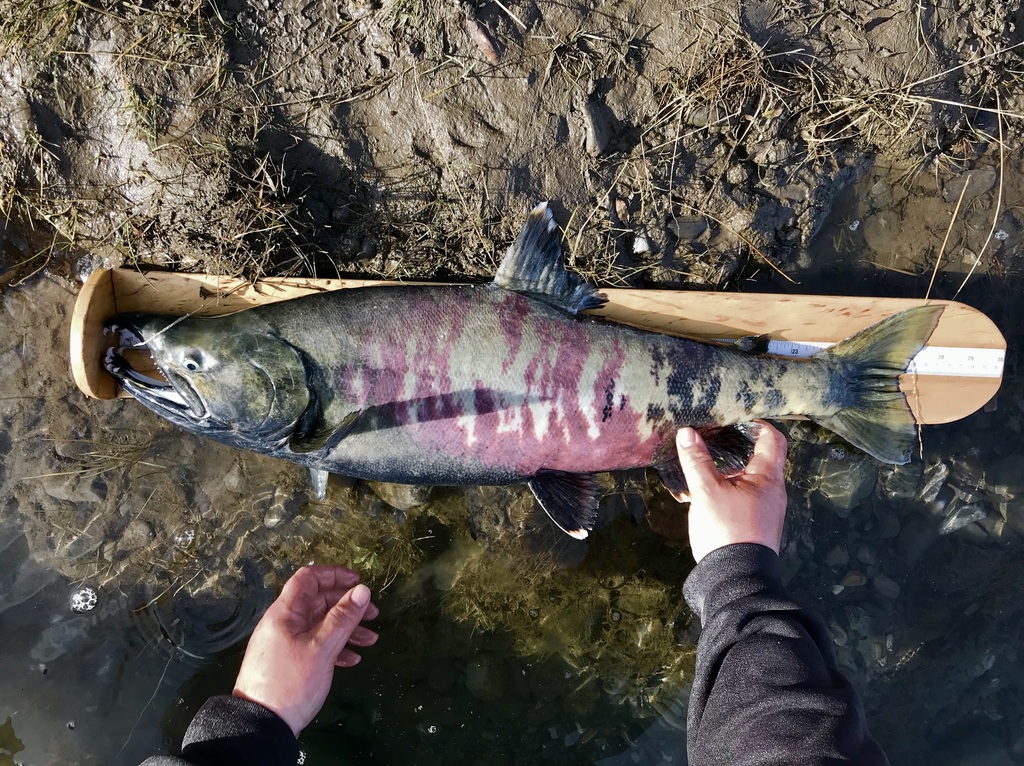
(c) Kevin Brix, some rights reserved (CC BY-SA) · licence
Family: Salmonidae · Class: Actinopterygii · Order: Salmoniformes
Oncorhynchus clarkii pleuriticus (Colorado River cutthroat trout) is a California animal in the Salmonidae family.
The Colorado River cutthroat trout is a subspecies of cutthroat trout native to the upper Colorado River basin. Adults typically measure 200 to 356 mm (8 to 14 inches) in length, though exceptional specimens can reach 610 mm (24 inches). The body displays a golden-olive to greenish coloration on the dorsal surface, transitioning to silvery-yellow on the sides and white to pale yellow on the ventral surface. Distinguished by prominent red or orange slashes beneath the jaw that give cutthroat trout their common name, this subspecies exhibits 9 to 11 parr marks along the lateral line that may persist into adulthood. The body is covered with small, round black spots concentrated on the dorsal surface, dorsal fin, and adipose fin, with fewer spots below the lateral line compared to other cutthroat subspecies. Historically, Colorado River cutthroat trout occupied tributaries throughout the upper Colorado River basin across portions of Colorado, Utah, Wyoming, Arizona, and New Mexico. The subspecies has been extirpated from California waters, though it was likely present in eastern tributaries of the Colorado River system before diversions and habitat modifications. Current populations exist primarily in high-elevation streams and lakes in Colorado, Utah, and Wyoming, with the largest self-sustaining populations found in Colorado's Rocky Mountain National Park and surrounding wilderness areas. Colorado River cutthroat trout inhabit cold, clear mountain streams and alpine lakes at elevations typically ranging from 1,830 to 3,660 meters (6,000 to 12,000 feet). The subspecies requires well-oxygenated water with temperatures rarely exceeding 20°C (68°F). Preferred habitat includes pools and runs with gravel or cobble substrates, overhead cover from undercut banks or woody debris, and adequate riparian vegetation. Young-of-year and juvenile fish utilize shallow riffle areas and stream margins with fine substrate. This subspecies exhibits typical salmonid feeding behavior, consuming aquatic and terrestrial insects, crustaceans, and small fish. Adults are opportunistic predators, feeding heavily on mayflies, caddisflies, midges, and terrestrial insects during summer months. Spawning occurs from April to July, depending on elevation and water temperature, with peak activity typically in May and June. Females construct redds in gravel substrates, depositing 200 to 4,400 eggs depending on body size. Sexual maturity occurs at 2 to 4 years of age. The Colorado River cutthroat trout is not federally listed but is considered a species of conservation concern. According to the U.S. Forest Service, pure populations occupy less than 10 percent of the subspecies' historical range. Primary threats include hybridization with introduced rainbow trout and other cutthroat subspecies, habitat degradation from livestock grazing and mining, water diversions, and competition with non-native brook trout. The Colorado River Cutthroat Trout Conservation Agreement guides restoration efforts across the subspecies' range, including genetic testing, habitat improvement, and removal of non-native species. Successful restoration projects have reestablished populations in previously occupied waters through careful broodstock selection and habitat restoration.
Classification
Class: Actinopterygii · Order: Salmoniformes · Family: Salmonidae
Frequently asked questions
How is Oncorhynchus clarkii pleuriticus classified?
Oncorhynchus clarkii pleuriticus belongs to class Actinopterygii, order Salmoniformes, family Salmonidae.
What family does Oncorhynchus clarkii pleuriticus belong to?
Oncorhynchus clarkii pleuriticus is in the Salmonidae family.
What is Oncorhynchus clarkii pleuriticus?
The Colorado River cutthroat trout is a subspecies of cutthroat trout native to the upper Colorado River basin.
Is Oncorhynchus clarkii pleuriticus found in California?
Yes. Oncorhynchus clarkii pleuriticus is recorded in California in The California Species Project's catalogue.
Related species
Other California species in the same genus, family, or bioregion.
Data from The California Species Project — 14,000+ California species with verified data from CNPS, CDFW, USFWS, and more.