Oncorhynchus clarkii seleniris
Paiute cutthroat trout
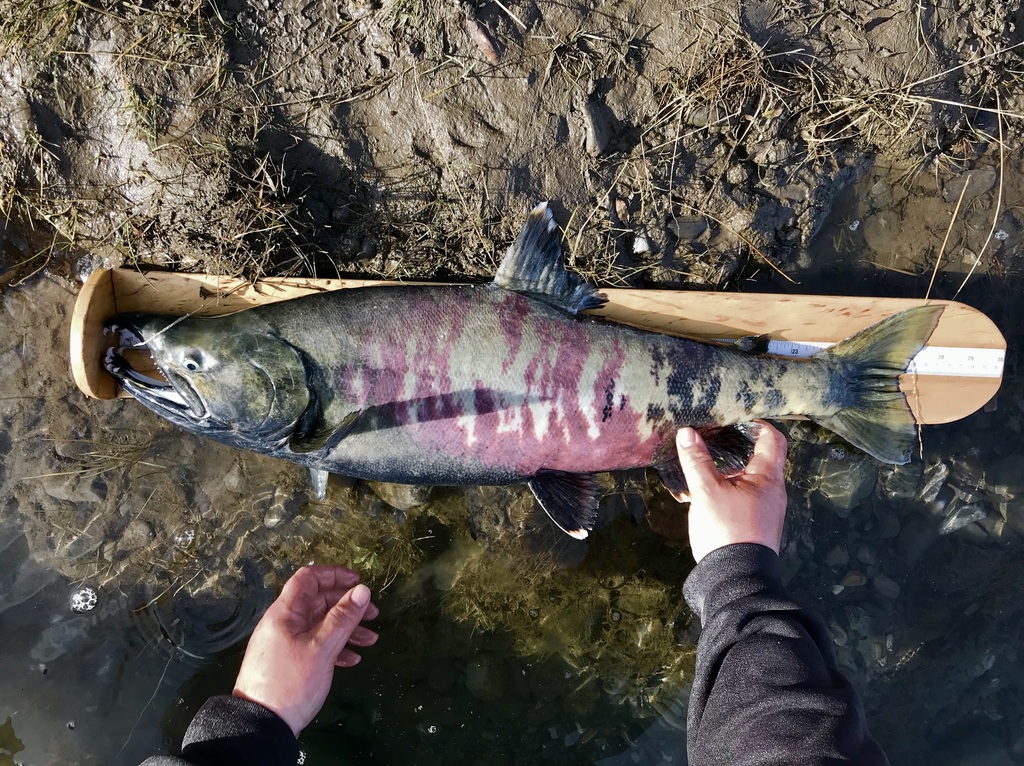
(c) Kevin Brix, some rights reserved (CC BY-SA) · licence
Family: Salmonidae · Class: Actinopterygii · Order: Salmoniformes
Conservation status: Threatened · G4T1T2 S1S2
Oncorhynchus clarkii seleniris (Paiute cutthroat trout) is a California animal in the Salmonidae family.
The Paiute cutthroat trout is a subspecies of cutthroat trout endemic to the eastern Sierra Nevada of California. Adults typically measure 150 to 250 mm (6 to 10 inches) in length, though individuals in optimal habitat can reach 300 mm (12 inches). The species exhibits the characteristic cutthroat trout coloration with olive-green to bronze dorsal surfaces, silver to yellow sides, and pale yellow to white ventral areas. Red or orange slashes beneath the jaw give cutthroat trout their distinctive name. Paiute cutthroat trout display relatively large black spots concentrated on the posterior half of the body and caudal fin, with fewer spots on the head and anterior body compared to other cutthroat subspecies. Historically, Paiute cutthroat trout were native to the Truckee River drainage in the Sierra Nevada, including tributaries in Alpine and Mono counties, California. The subspecies originally inhabited Silver King Creek and its tributaries above Llewellyn Falls. Current populations are restricted to approximately 13 kilometers of stream habitat in the Silver King Creek drainage within the Humboldt-Toiyabe National Forest. Small populations have been established in several other high-elevation streams through translocation efforts. Paiute cutthroat trout inhabit clear, cold mountain streams at elevations between 1,800 and 3,000 meters (5,900 to 9,800 feet). The species requires water temperatures below 20°C (68°F) with high dissolved oxygen levels. Preferred habitat includes pools and runs with rocky substrates, undercut banks, and overhead cover from riparian vegetation. Stream gradients typically range from 2 to 8 percent, with flows remaining relatively stable throughout the year. As opportunistic carnivores, Paiute cutthroat trout feed primarily on aquatic invertebrates including mayfly nymphs, caddisfly larvae, stonefly nymphs, and midges. Terrestrial insects become important food sources during summer months. Spawning occurs from May through July, depending on elevation and water temperature. Females construct redds in gravel substrates, depositing 300 to 800 eggs depending on body size. Sexual maturity occurs at 2 to 3 years of age. The U.S. Fish and Wildlife Service listed the Paiute cutthroat trout as threatened in 1967, making it one of the first fish species protected under federal legislation. According to the California Department of Fish and Wildlife, the subspecies was originally listed under the scientific name Salmo clarki seleniris. Population estimates indicate fewer than 5,000 individuals remain across all habitats. Primary threats include habitat degradation from livestock grazing, water diversions, introduced predators, and hybridization with other trout species. Climate change poses additional risks through increased water temperatures and altered precipitation patterns. Recovery efforts focus on habitat restoration, removal of non-native trout species, and establishment of additional populations through careful translocation programs.
Classification
Class: Actinopterygii · Order: Salmoniformes · Family: Salmonidae
Conservation status
Threatened · G4T1T2 S1S2
Frequently asked questions
How is Oncorhynchus clarkii seleniris classified?
Oncorhynchus clarkii seleniris belongs to class Actinopterygii, order Salmoniformes, family Salmonidae.
What family does Oncorhynchus clarkii seleniris belong to?
Oncorhynchus clarkii seleniris is in the Salmonidae family.
Is Oncorhynchus clarkii seleniris protected or of conservation concern?
Oncorhynchus clarkii seleniris carries the following status: Threatened · G4T1T2 S1S2.
What is Oncorhynchus clarkii seleniris?
The Paiute cutthroat trout is a subspecies of cutthroat trout endemic to the eastern Sierra Nevada of California.
Is Oncorhynchus clarkii seleniris found in California?
Yes. Oncorhynchus clarkii seleniris is recorded in California in The California Species Project's catalogue.
Related species
Other California species in the same genus, family, or bioregion.
Data from The California Species Project — 14,000+ California species with verified data from CNPS, CDFW, USFWS, and more.