Oncorhynchus gorbuscha
Pink salmon
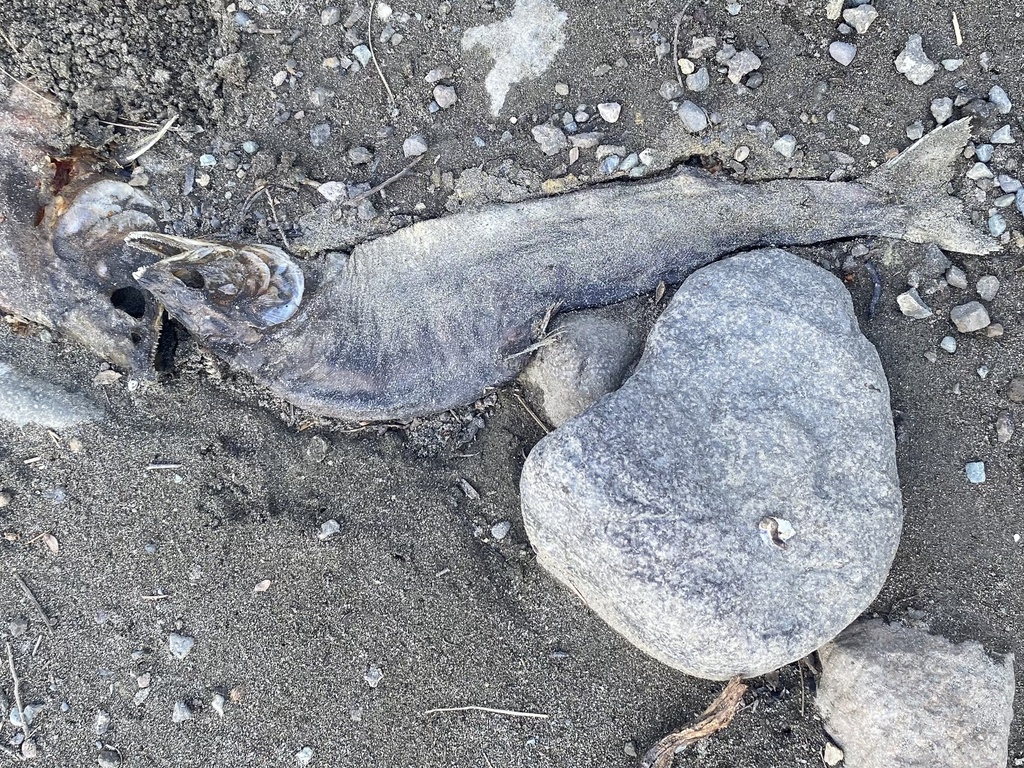
(c) Z, some rights reserved (CC BY) · licence
Family: Salmonidae · Class: Actinopterygii · Order: Salmoniformes
Conservation status: G5 S1
Oncorhynchus gorbuscha (Pink salmon) is a California animal in the Salmonidae family.
The pink salmon is the smallest and most abundant Pacific salmon species, with adults typically measuring 450 to 650 mm (18 to 26 inches) in length and weighing 1.4 to 2.3 kg (3 to 5 pounds). During spawning, males develop a pronounced dorsal hump and hooked jaws (kype), while females retain a more streamlined profile. Ocean-phase fish display bright silver sides with small black spots on the back and tail, transitioning to pale pink or olive-green coloration with darker sides during spawning migration. The species is distinguished from other Pacific salmon by its relatively small size, large oval black spots on the tail fin, and the characteristic two-year life cycle. Pink salmon have the most extensive natural range of any Pacific salmon, occurring throughout the North Pacific Ocean and adjacent freshwater systems from California to Alaska and across to Asia. In California, pink salmon represent the southern limit of their range and are considered extremely rare (S1 ranking). Historical records document occasional runs in northern California rivers, particularly during years when large populations from Pacific Northwest rivers stray southward. The species is anadromous, spending most of its life in marine waters before returning to freshwater to spawn. Marine habitat includes nearshore coastal waters and the open North Pacific, where pink salmon form large schools in the upper water column. During freshwater spawning phases, the species utilizes gravel-bottomed streams and rivers, typically selecting areas with moderate current and water temperatures below 15°C (59°F). Spawning sites are usually located in the lower reaches of coastal rivers and streams, often within 100 km of the ocean. Pink salmon exhibit a rigid two-year life cycle, spending approximately 18 months in marine waters before returning to spawn. Ocean diet consists primarily of zooplankton, small fish, and crustaceans, with feeding concentrated in the upper 150 meters of the water column. Spawning occurs from late summer through early fall, with females excavating redds (nests) in gravel substrates and depositing 1,200 to 1,900 eggs. Unlike other salmon species, pink salmon die immediately after spawning, with the entire adult population replaced every two years. Juveniles emerge from gravel in spring and migrate directly to saltwater without an extended freshwater residence period. In California, pink salmon are not federally or state listed but are considered critically imperiled due to their S1 state ranking, indicating extreme rarity with typically fewer than five known populations or occurrences. The species faces threats from climate change affecting ocean conditions, habitat degradation in spawning streams, and competition with hatchery fish. Ocean warming and acidification may alter prey availability and marine survival rates. The irregular occurrence of pink salmon in California waters appears linked to population cycles in Pacific Northwest stocks, with straying individuals occasionally establishing temporary runs during peak abundance years.
Classification
Class: Actinopterygii · Order: Salmoniformes · Family: Salmonidae
Conservation status
G5 S1
Frequently asked questions
How is Oncorhynchus gorbuscha classified?
Oncorhynchus gorbuscha belongs to class Actinopterygii, order Salmoniformes, family Salmonidae.
What family does Oncorhynchus gorbuscha belong to?
Oncorhynchus gorbuscha is in the Salmonidae family.
Is Oncorhynchus gorbuscha protected or of conservation concern?
Oncorhynchus gorbuscha carries the following status: G5 S1.
What is Oncorhynchus gorbuscha?
The pink salmon is the smallest and most abundant Pacific salmon species, with adults typically measuring 450 to 650 mm (18 to 26 inches) in length and weighing 1.4 to 2.3 kg (3 to 5 pounds).
Is Oncorhynchus gorbuscha found in California?
Yes. Oncorhynchus gorbuscha is recorded in California in The California Species Project's catalogue.
Related species
Other California species in the same genus, family, or bioregion.
Data from The California Species Project — 14,000+ California species with verified data from CNPS, CDFW, USFWS, and more.