Oncorhynchus keta
Chum salmon
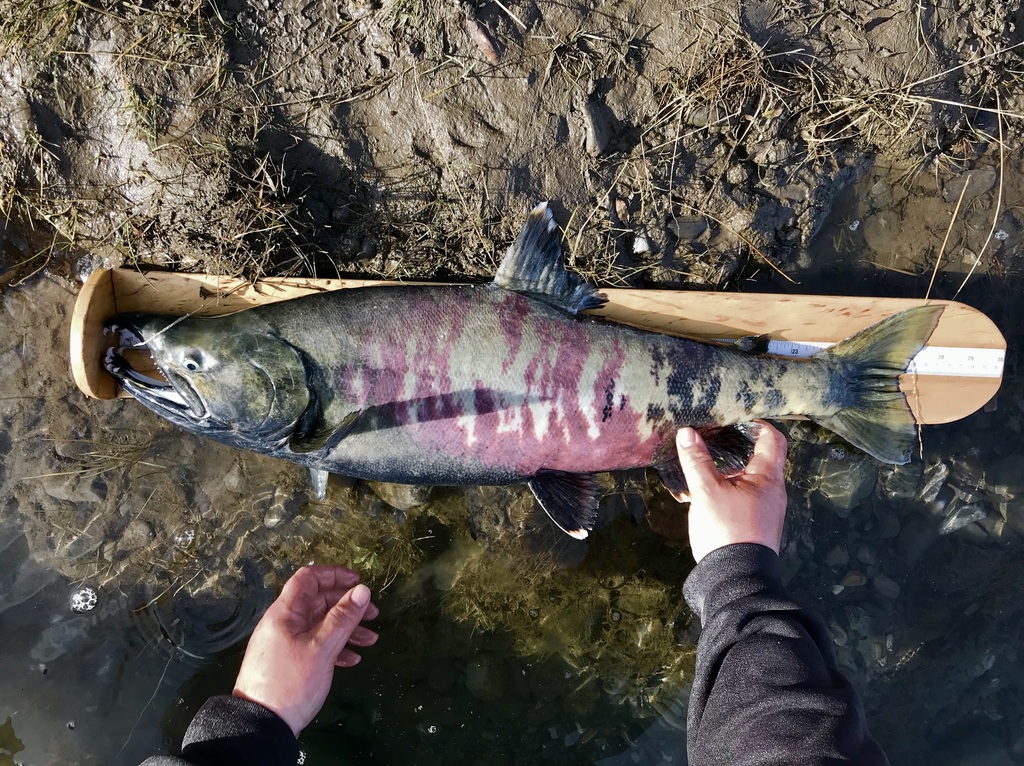
(c) Kevin Brix, some rights reserved (CC BY-SA) · licence
Family: Salmonidae · Class: Actinopterygii · Order: Salmoniformes
Conservation status: Threatened · G5 S1
Oncorhynchus keta (Chum salmon) is a California animal in the Salmonidae family.
The chum salmon is a large anadromous fish and the most widely distributed Pacific salmon species. Adults typically measure 60 to 71 cm (24 to 28 inches) in length and weigh 4.5 to 7.3 kg (10 to 16 pounds). During their oceanic phase, chum salmon display a metallic blue-green back with fine black speckles and silver sides. Spawning adults undergo dramatic transformation, developing olive-green coloration with dark vertical bars and red-tipped fins. Males develop pronounced hooked snouts (kypes) and enlarged teeth during spawning season. Chum salmon have the most extensive natural range of any Pacific salmon, historically occurring from California to Alaska in North America and from Korea to the Arctic Ocean in Asia. In California, chum salmon were documented in the Sacramento and San Joaquin river systems but are now considered extirpated from the state. The Hood Canal summer-run Evolutionarily Significant Unit (ESU) in Washington represents the southernmost remaining population in the contiguous United States and is federally listed as threatened under the Endangered Species Act. Chum salmon spawn in lower river reaches and tributaries, typically within 100 km of the ocean. They prefer areas with upwelling groundwater, gravel substrates ranging from 1.3 to 10.2 cm in diameter, and water temperatures between 4 and 14 degrees Celsius. Unlike other Pacific salmon species, chum salmon generally do not require deep pools or extensive freshwater rearing habitat, as juveniles migrate to sea shortly after emerging from spawning gravels. Adult chum salmon spend 2 to 7 years in the ocean before returning to natal streams to spawn. The Hood Canal summer-run population exhibits unique timing, with adults entering freshwater from September through November and spawning from October through January. Females excavate redds in gravel substrates and deposit 2,000 to 4,000 eggs. Juveniles emerge in spring and migrate directly to estuarine waters, where they feed on zooplankton, small fish, and crustaceans. Ocean-phase adults consume squid, fish, and marine invertebrates. The Hood Canal summer-run ESU was listed as threatened in 1999 due to significant population declines. According to NOAA Fisheries, this population has declined from historical runs of approximately 20,000 fish to fewer than 2,000 spawners in recent years. Primary threats include habitat degradation, particularly loss of riparian cover and altered stream flows, as well as reduced marine survival linked to changing ocean conditions. Hatchery operations have historically impacted genetic integrity through interbreeding with hatchery-origin fish. Recovery efforts focus on habitat restoration, water temperature management, and reducing human impacts in spawning watersheds. The Hood Canal Salmon Enhancement Group coordinates restoration projects to improve spawning and rearing conditions for this threatened population.
Classification
Class: Actinopterygii · Order: Salmoniformes · Family: Salmonidae
Conservation status
Threatened · G5 S1
Frequently asked questions
How is Oncorhynchus keta classified?
Oncorhynchus keta belongs to class Actinopterygii, order Salmoniformes, family Salmonidae.
What family does Oncorhynchus keta belong to?
Oncorhynchus keta is in the Salmonidae family.
Is Oncorhynchus keta protected or of conservation concern?
Oncorhynchus keta carries the following status: Threatened · G5 S1.
What is Oncorhynchus keta?
The chum salmon is a large anadromous fish and the most widely distributed Pacific salmon species.
Is Oncorhynchus keta found in California?
Yes. Oncorhynchus keta is recorded in California in The California Species Project's catalogue.
Related species
Other California species in the same genus, family, or bioregion.
Data from The California Species Project — 14,000+ California species with verified data from CNPS, CDFW, USFWS, and more.