Oncorhynchus mykiss
Rainbow trout
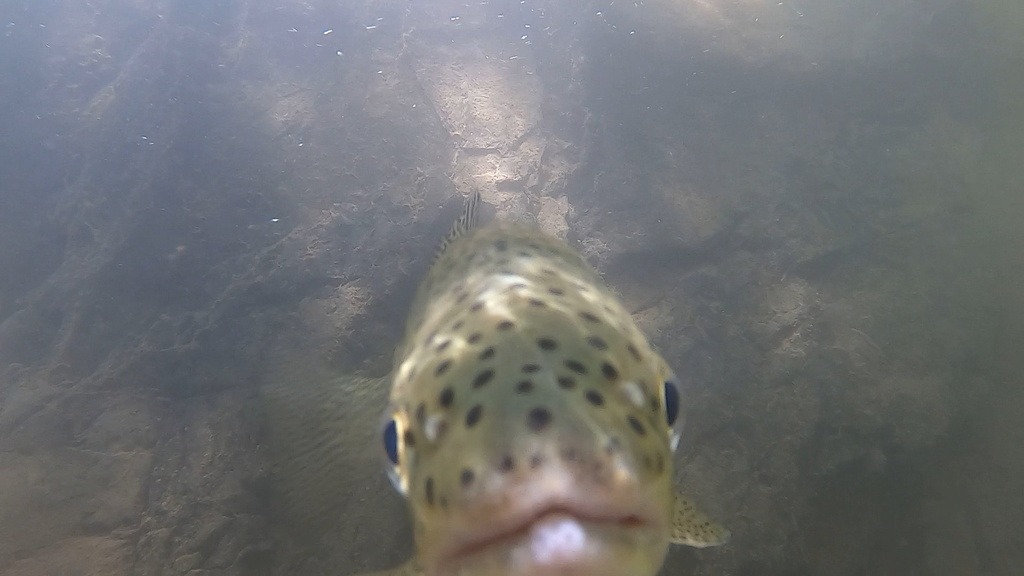
(c) Mike Heine, some rights reserved (CC BY) · licence
Family: Salmonidae · Class: Actinopterygii · Order: Salmoniformes
Oncorhynchus mykiss (Rainbow trout) is a California animal in the Salmonidae family.
Rainbow trout (Oncorhynchus mykiss) are medium-sized salmonids native to the Pacific drainages of North America. Adults typically measure 300 to 400 mm (12 to 16 inches) in length and weigh 0.9 to 2.3 kg (2 to 5 pounds), though individuals in optimal habitat can exceed 760 mm (30 inches) and 4.5 kg (10 pounds). The species displays variable coloration depending on life stage and environment. Stream-dwelling individuals exhibit olive-green to blue-gray dorsal surfaces with silver sides and white bellies. A distinctive pink to red lateral stripe extends from the gill cover to the tail, particularly prominent in spawning adults. The body is covered with small black spots that extend onto the dorsal and adipose fins and tail. Rainbow trout occur naturally throughout Pacific coastal drainages from Alaska to northern Mexico, including much of California. Native populations are found in coastal streams from the Russian River north to the Oregon border, the Sacramento-San Joaquin river system, and select southern California watersheds including the Kern River. The species has been extensively introduced throughout California and now occurs in suitable habitat statewide, from sea level to elevations exceeding 3,050 meters (10,000 feet). Both resident freshwater and anadromous (steelhead) forms exist, with steelhead populations native to most major coastal river systems. Rainbow trout inhabit clear, cold, well-oxygenated waters with temperatures rarely exceeding 21°C (70°F). Stream populations prefer areas with rocky or gravel substrates, moderate to swift current, and abundant cover from overhanging vegetation, undercut banks, or large woody debris. Lake populations utilize deeper, cooler water during summer months and move to shallower areas for feeding and spawning. Optimal habitat includes water temperatures between 10 to 16°C (50 to 61°F) and dissolved oxygen levels above 7 parts per million. Rainbow trout are opportunistic predators feeding on aquatic and terrestrial insects, crustaceans, fish eggs, and small fish. Adults consume mayflies, caddisflies, midges, and terrestrial insects that fall into the water. Larger individuals increasingly feed on smaller fish, including sculpins, dace, and juvenile salmonids. Spawning occurs from December through June, with peak activity from February to May depending on water temperature and flow conditions. Females excavate redds (nests) in gravel substrates where they deposit 2,000 to 8,000 eggs. Eggs incubate for 4 to 7 months before hatching, with juveniles remaining in gravel for several additional weeks. Rainbow trout populations face numerous conservation challenges throughout their range. Habitat degradation from logging, agriculture, urbanization, and water diversions has reduced suitable spawning and rearing areas. Water temperature increases from climate change and altered flow regimes threaten cold-water habitat requirements. Native steelhead runs have experienced severe declines, with several California populations listed under the Endangered Species Act, including Central California Coast and South-Central California Coast distinct population segments. Hatchery supplementation programs operate throughout the state to support both wild populations and recreational fisheries, though genetic impacts on native stocks remain a concern.
Classification
Class: Actinopterygii · Order: Salmoniformes · Family: Salmonidae
Frequently asked questions
How is Oncorhynchus mykiss classified?
Oncorhynchus mykiss belongs to class Actinopterygii, order Salmoniformes, family Salmonidae.
What family does Oncorhynchus mykiss belong to?
Oncorhynchus mykiss is in the Salmonidae family.
What is Oncorhynchus mykiss?
Rainbow trout (Oncorhynchus mykiss) are medium-sized salmonids native to the Pacific drainages of North America.
Is Oncorhynchus mykiss found in California?
Yes. Oncorhynchus mykiss is recorded in California in The California Species Project's catalogue.
Related species
Other California species in the same genus, family, or bioregion.
Data from The California Species Project — 14,000+ California species with verified data from CNPS, CDFW, USFWS, and more.