Oncorhynchus mykiss gilberti
Kern River rainbow trout
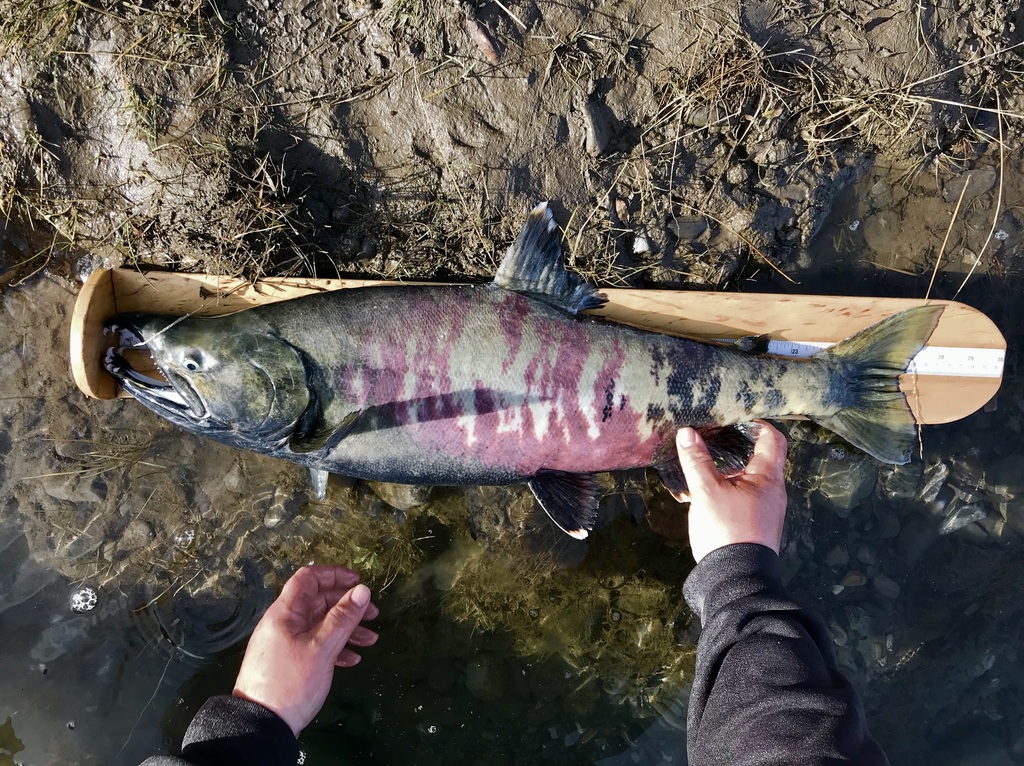
(c) Kevin Brix, some rights reserved (CC BY-SA) · licence
Family: Salmonidae · Class: Actinopterygii · Order: Salmoniformes
Conservation status: G5T1Q S1
Oncorhynchus mykiss gilberti (Kern River rainbow trout) is a California animal in the Salmonidae family.
The Kern River rainbow trout is a subspecies of rainbow trout endemic to the Kern River system in the southern Sierra Nevada of California. Adults typically measure 200 to 300 mm (8 to 12 inches) in total length, with some individuals reaching up to 400 mm (16 inches). The subspecies exhibits the characteristic rainbow trout coloration with a greenish-blue back, silvery sides, and a distinctive pink to red lateral stripe. The body displays scattered black spots on the back, sides, and dorsal fin, with spots typically extending below the lateral line. Gill covers show a reddish coloration, and breeding males develop more pronounced coloration and a hooked jaw. Historically, the Kern River rainbow trout occupied approximately 300 kilometers of the upper Kern River watershed above what is now Lake Isabella in Kern County, California. The subspecies was found throughout the mainstem Kern River and its tributaries, including the South Fork Kern River and numerous smaller creeks within the drainage. Current distribution is severely restricted to fragmented populations in the upper reaches of the watershed, primarily above major dams and diversions. The subspecies inhabits cool, well-oxygenated waters of mountain streams and rivers at elevations ranging from approximately 700 to 2,100 meters (2,300 to 6,900 feet). Preferred habitat includes pools, runs, and riffles with rocky or gravel substrates, abundant cover from overhanging vegetation or undercut banks, and water temperatures typically below 20°C (68°F). Riparian vegetation provides essential shade and terrestrial insect inputs that support the aquatic food web. Kern River rainbow trout are opportunistic feeders, consuming aquatic and terrestrial insects, small crustaceans, and occasionally small fish. Diet varies seasonally, with terrestrial insects becoming more important during summer months when they fall into streams from overhanging vegetation. Spawning occurs from March through May, coinciding with snowmelt and increased stream flows. Females construct redds in gravel substrates where they deposit 800 to 1,200 eggs. Juveniles emerge after 6 to 8 weeks and remain in shallow, protected areas until reaching maturity at 2 to 3 years of age. The Kern River rainbow trout faces critical conservation challenges and is considered one of California's most imperiled native fish subspecies. The Global/State Rank of G5T1Q S1 indicates the subspecies is critically imperiled in California and globally. Primary threats include habitat fragmentation from dams and diversions, water extraction for agricultural and municipal uses, hybridization with hatchery rainbow trout, and competition from introduced species. Climate change poses additional risks through altered precipitation patterns, increased water temperatures, and reduced snowpack. Conservation efforts focus on habitat restoration, removal of non-native species, and establishing genetic refugia to prevent further population decline. The subspecies' taxonomic status carries a qualifier (Q), indicating some uncertainty in classification that may affect conservation prioritization.
Classification
Class: Actinopterygii · Order: Salmoniformes · Family: Salmonidae
Conservation status
G5T1Q S1
Frequently asked questions
How is Oncorhynchus mykiss gilberti classified?
Oncorhynchus mykiss gilberti belongs to class Actinopterygii, order Salmoniformes, family Salmonidae.
What family does Oncorhynchus mykiss gilberti belong to?
Oncorhynchus mykiss gilberti is in the Salmonidae family.
Is Oncorhynchus mykiss gilberti protected or of conservation concern?
Oncorhynchus mykiss gilberti carries the following status: G5T1Q S1.
What is Oncorhynchus mykiss gilberti?
The Kern River rainbow trout is a subspecies of rainbow trout endemic to the Kern River system in the southern Sierra Nevada of California.
Is Oncorhynchus mykiss gilberti found in California?
Yes. Oncorhynchus mykiss gilberti is recorded in California in The California Species Project's catalogue.
Related species
Other California species in the same genus, family, or bioregion.
Data from The California Species Project — 14,000+ California species with verified data from CNPS, CDFW, USFWS, and more.