Oncorhynchus mykiss irideus
Steelhead (coastal rainbow trout) - southern California DPS
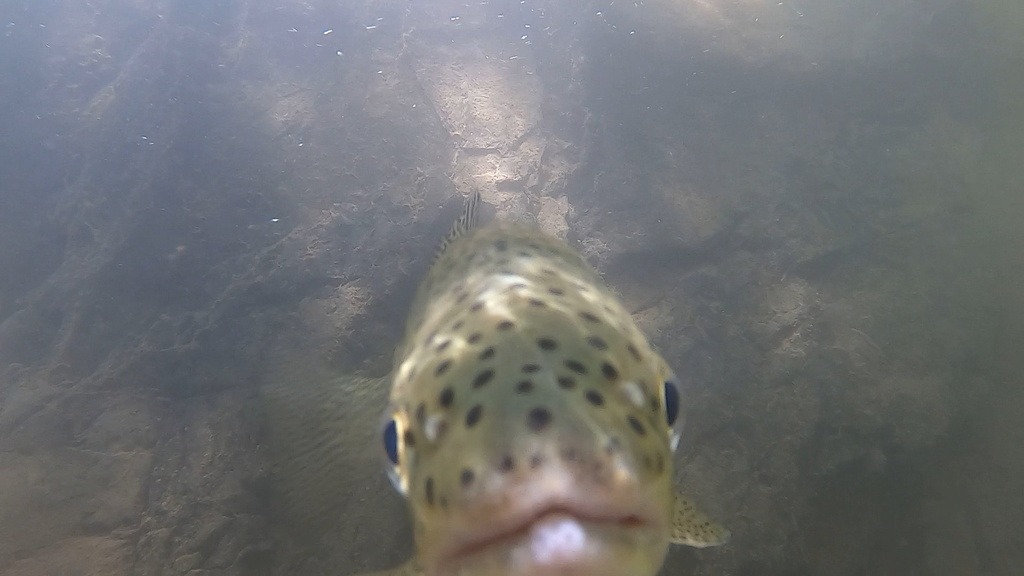
(c) Mike Heine, some rights reserved (CC BY) · licence
Family: Salmonidae · Class: Actinopterygii · Order: Salmoniformes
Conservation status: Endangered · G5T1Q S1
Oncorhynchus mykiss irideus (Steelhead (coastal rainbow trout) - southern California DPS) is a California animal in the Salmonidae family.
The southern California distinct population segment (DPS) of steelhead represents the endangered anadromous form of coastal rainbow trout (Oncorhynchus mykiss irideus). Adults typically measure 55-75 cm (22-30 inches) in length, with sea-run individuals displaying a metallic silver coloration with a blue-green back and small black spots scattered across the body, head, and fins. The adipose fin is present and the mouth extends beyond the eye. Stream-resident rainbow trout of the same subspecies are smaller and more colorful, with a distinctive pink lateral stripe and darker parr marks. The southern California steelhead DPS occurs in coastal basins from the Santa Maria River in Santa Barbara County south to the U.S.-Mexico border, encompassing watersheds in Santa Barbara, Ventura, Los Angeles, Orange, and San Diego counties. According to NOAA Fisheries, this represents the southernmost range of steelhead on the Pacific coast. Historically, steelhead were distributed throughout these coastal watersheds, but current populations are severely fragmented and reduced. Steelhead inhabit cool, well-oxygenated streams and rivers with gravel substrates suitable for spawning. Adults require unimpeded access between freshwater spawning areas and the Pacific Ocean. Spawning typically occurs in winter and spring in upper watershed reaches, with juveniles rearing in freshwater for 1-3 years before smolting and migrating to sea. The resident rainbow trout form persists primarily in headwater areas of the four national forests in southern California, serving as important drought refugia. Steelhead are anadromous, spending their adult lives in marine environments before returning to natal streams to spawn. They feed on aquatic and terrestrial insects as juveniles and switch to a diet of small fish, crustaceans, and squid in the ocean. Stream-resident rainbow trout remain in freshwater throughout their lives, feeding primarily on aquatic invertebrates. Spawning occurs from December through June, with females creating redds in gravel substrates where they deposit 2,000-5,000 eggs. The southern California steelhead DPS was listed as endangered under the Endangered Species Act, with NOAA Fisheries confirming this status in their 2023 five-year review. According to NOAA Fisheries, these populations are now the rarest and most critically endangered steelhead on the West Coast. During recent extended droughts, anadromous steelhead have nearly disappeared from most watersheds, with only the resident rainbow trout form persisting in upper watershed refugia. Primary threats include habitat fragmentation from dams and barriers, water diversions, urbanization, drought, wildfires, and climate change. The California Department of Fish and Wildlife lists the species as a candidate for state listing. Recovery efforts focus on dam removal, including planned removal of Matilija Dam and Rindge Dam, fish passage restoration, habitat rehabilitation, and flow restoration. NOAA Fisheries notes that recent research indicates the sea-run form can potentially be reconstituted from resident rainbow trout populations in suitable habitats.
Classification
Class: Actinopterygii · Order: Salmoniformes · Family: Salmonidae
Conservation status
Endangered · G5T1Q S1
Frequently asked questions
How is Oncorhynchus mykiss irideus classified?
Oncorhynchus mykiss irideus belongs to class Actinopterygii, order Salmoniformes, family Salmonidae.
What family does Oncorhynchus mykiss irideus belong to?
Oncorhynchus mykiss irideus is in the Salmonidae family.
Is Oncorhynchus mykiss irideus protected or of conservation concern?
Oncorhynchus mykiss irideus carries the following status: Endangered · G5T1Q S1.
What is Oncorhynchus mykiss irideus?
The southern California distinct population segment (DPS) of steelhead represents the endangered anadromous form of coastal rainbow trout (Oncorhynchus mykiss irideus).
Is Oncorhynchus mykiss irideus found in California?
Yes. Oncorhynchus mykiss irideus is recorded in California in The California Species Project's catalogue.
Related species
Other California species in the same genus, family, or bioregion.
Data from The California Species Project — 14,000+ California species with verified data from CNPS, CDFW, USFWS, and more.