Oncorhynchus mykiss ssp. 2
McCloud River redband trout
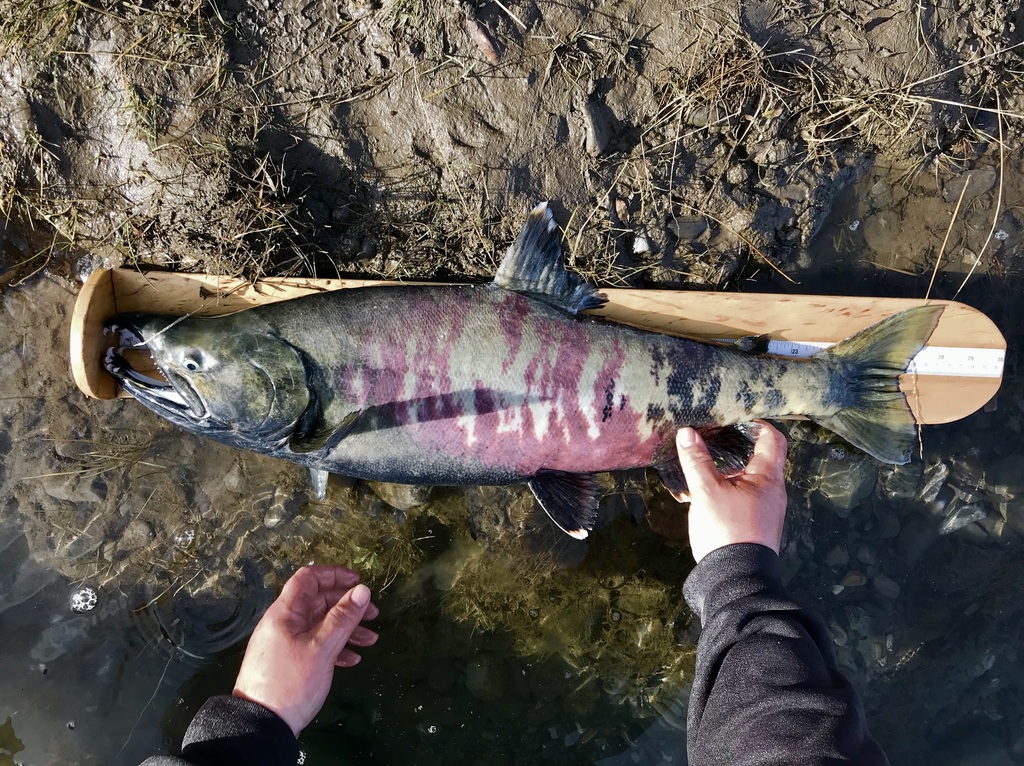
(c) Kevin Brix, some rights reserved (CC BY-SA) · licence
Family: Salmonidae · Class: Actinopterygii · Order: Salmoniformes
Conservation status: G5T1 S1S2
Oncorhynchus mykiss ssp. 2 (McCloud River redband trout) is a California animal in the Salmonidae family.
The McCloud River redband trout (Oncorhynchus mykiss ssp. 2, formerly O. m. stonei) is a distinct subspecies of rainbow trout endemic to the McCloud River system in northern California. Adults typically measure 200 to 400 mm (8 to 16 inches) in total length, though individuals can reach up to 500 mm (20 inches). The subspecies exhibits the characteristic redband coloration with a pronounced reddish band along the lateral line, particularly vibrant during spawning. The body displays olive-green to bronze dorsal coloration with silver sides and numerous small black spots scattered across the head, body, and fins. Spawning males develop intensified red coloration and a pronounced kype. Historically, McCloud River redband trout occupied the entire McCloud River drainage in Shasta County, California, from the headwaters downstream to Shasta Lake. The subspecies was endemic to this single watershed system, representing one of the most geographically restricted salmonid taxa in California. Current distribution is severely reduced from historical range, with populations now restricted to upper watershed areas above major dams and diversions. The subspecies inhabits cold, well-oxygenated streams and rivers with gravel and cobble substrates. Optimal habitat includes pool-riffle sequences with water temperatures remaining below 20°C (68°F) during summer months. Adults prefer deeper pools and runs with overhead cover from riparian vegetation, while juveniles utilize shallow riffle areas and stream margins. Spawning occurs in gravel beds with appropriate flow conditions for egg incubation and fry emergence. McCloud River redband trout are opportunistic predators feeding primarily on aquatic and terrestrial insects, including mayflies, caddisflies, stoneflies, and dipterans. Diet also includes small crustaceans, worms, and occasionally small fish. Spawning typically occurs from March through May, depending on water temperature and flow conditions. Females construct redds in gravel substrates, depositing 800 to 3,000 eggs depending on body size. Sexual maturity is reached at 2 to 3 years of age. The McCloud River redband trout carries a global rank of G5T1 (critically imperiled subspecies of a secure species) and a state rank of S1S2 (critically imperiled to imperiled in California). The subspecies faces severe conservation challenges due to its extremely limited range and small population size. Primary threats include habitat fragmentation from dam construction, water diversions, logging impacts, cattle grazing, and introduced fish species. The construction of Shasta Dam in 1945 eliminated access to significant portions of historical spawning and rearing habitat. Climate change poses additional threats through altered precipitation patterns and increased water temperatures. Hybridization with hatchery rainbow trout represents a significant genetic threat to the subspecies' integrity. Current population estimates suggest fewer than 1,000 individuals remain in the wild, making this one of California's most imperiled native trout subspecies.
Classification
Class: Actinopterygii · Order: Salmoniformes · Family: Salmonidae
Conservation status
G5T1 S1S2
Frequently asked questions
How is Oncorhynchus mykiss ssp. 2 classified?
Oncorhynchus mykiss ssp. 2 belongs to class Actinopterygii, order Salmoniformes, family Salmonidae.
What family does Oncorhynchus mykiss ssp. 2 belong to?
Oncorhynchus mykiss ssp. 2 is in the Salmonidae family.
Is Oncorhynchus mykiss ssp. 2 protected or of conservation concern?
Oncorhynchus mykiss ssp. 2 carries the following status: G5T1 S1S2.
What is Oncorhynchus mykiss ssp. 2?
The McCloud River redband trout (Oncorhynchus mykiss ssp.
Is Oncorhynchus mykiss ssp. 2 found in California?
Yes. Oncorhynchus mykiss ssp. 2 is recorded in California in The California Species Project's catalogue.
Related species
Other California species in the same genus, family, or bioregion.
Data from The California Species Project — 14,000+ California species with verified data from CNPS, CDFW, USFWS, and more.