Oncorhynchus mykiss ssp. 3
Warner Valley redband trout
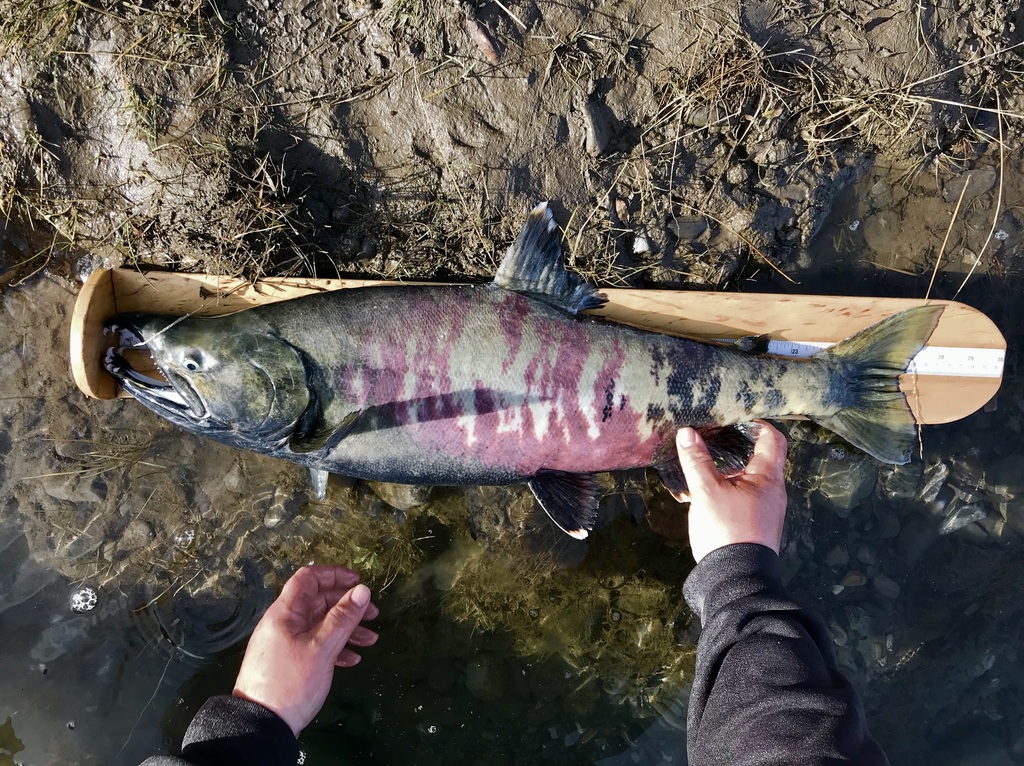
(c) Kevin Brix, some rights reserved (CC BY-SA) · licence
Family: Salmonidae · Class: Actinopterygii · Order: Salmoniformes
Conservation status: G5T2Q S1?
Oncorhynchus mykiss ssp. 3 (Warner Valley redband trout) is a California animal in the Salmonidae family.
The Warner Valley redband trout is a subspecies of rainbow trout endemic to the Warner Valley basin in south-central Oregon, with limited distribution extending into extreme northeastern California. This coldwater salmonid exhibits the characteristic body form of rainbow trout, typically measuring 150 to 300 millimeters (6 to 12 inches) in length at maturity. The species displays the distinctive redband coloration pattern, with pronounced reddish bands along the lateral line and distinctive red slash marks beneath the jaw. The body coloration ranges from olive-green to bronze dorsally, with silver sides marked by small, dark spots. The dorsal, adipose, and caudal fins often show orange to red coloration, particularly pronounced during spawning periods. Historically, Warner Valley redband trout occupied multiple lake and stream systems throughout the Warner Valley basin. The current range is severely restricted compared to historical distribution, with populations now confined to a few isolated stream systems in the Warner Mountains. In California, the subspecies occurs in streams draining into Warner Valley from the eastern slopes of the Warner Mountains in Modoc County. The California populations represent the southernmost extent of the subspecies' range and are geographically isolated from Oregon populations. This subspecies inhabits clear, cold mountain streams and associated lake systems at elevations ranging from 1,400 to 2,100 meters (4,600 to 6,900 feet). Preferred habitat includes streams with temperatures below 20°C (68°F), adequate riparian cover, and diverse substrate composition including gravel beds suitable for spawning. The species requires well-oxygenated water and is sensitive to temperature increases and habitat degradation. Warner Valley redband trout typically occupy pools and runs in small to medium-sized streams with moderate gradients. Warner Valley redband trout are opportunistic feeders, consuming terrestrial and aquatic insects, small crustaceans, and occasionally small fish. Spawning occurs in spring, typically from April through June, depending on water temperature and flow conditions. Females construct redds in gravel substrates, depositing 800 to 3,000 eggs depending on body size. The species exhibits typical salmonid reproductive behavior, with males developing pronounced breeding coloration and hooked jaws (kypes) during spawning season. Juveniles remain in natal streams for one to three years before reaching sexual maturity. The Warner Valley redband trout is not federally listed but carries a Global/State Rank of G5T2Q S1?, indicating extreme rarity in California and uncertainty regarding taxonomic status. The subspecies faces significant conservation challenges including habitat fragmentation, water diversions, cattle grazing impacts, and introduction of non-native trout species that may hybridize with native populations. Climate change poses additional threats through increased stream temperatures and altered precipitation patterns. The California populations are particularly vulnerable due to their small size and geographic isolation. Conservation efforts focus on habitat protection, water quality maintenance, and preventing further introductions of non-native species into remaining habitats.
Classification
Class: Actinopterygii · Order: Salmoniformes · Family: Salmonidae
Conservation status
G5T2Q S1?
Frequently asked questions
How is Oncorhynchus mykiss ssp. 3 classified?
Oncorhynchus mykiss ssp. 3 belongs to class Actinopterygii, order Salmoniformes, family Salmonidae.
What family does Oncorhynchus mykiss ssp. 3 belong to?
Oncorhynchus mykiss ssp. 3 is in the Salmonidae family.
Is Oncorhynchus mykiss ssp. 3 protected or of conservation concern?
Oncorhynchus mykiss ssp. 3 carries the following status: G5T2Q S1?.
What is Oncorhynchus mykiss ssp. 3?
The Warner Valley redband trout is a subspecies of rainbow trout endemic to the Warner Valley basin in south-central Oregon, with limited distribution extending into extreme northeastern California.
Is Oncorhynchus mykiss ssp. 3 found in California?
Yes. Oncorhynchus mykiss ssp. 3 is recorded in California in The California Species Project's catalogue.
Related species
Other California species in the same genus, family, or bioregion.
Data from The California Species Project — 14,000+ California species with verified data from CNPS, CDFW, USFWS, and more.