Oncorhynchus nerka
Sockeye salmon
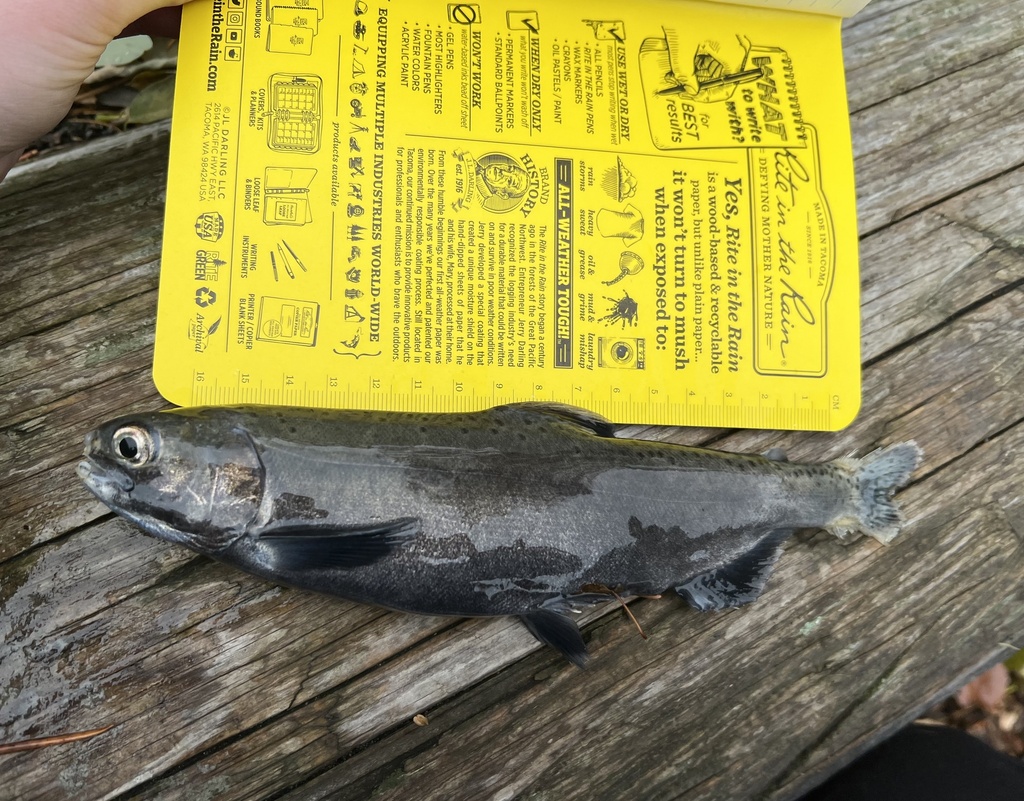
(c) Aiva Noringseth, some rights reserved (CC BY) · licence
Family: Salmonidae · Class: Actinopterygii · Order: Salmoniformes
Oncorhynchus nerka (Sockeye salmon) is a California animal in the Salmonidae family.
Sockeye salmon are anadromous fish that undergo dramatic physical changes during their life cycle. Adults in freshwater spawning condition display bright red bodies with green heads, while ocean-phase adults are blue-backed with silver sides. Spawning males develop pronounced hooked jaws called kypes and humped backs. Adults typically measure 60 to 84 cm (24 to 33 inches) in length and weigh 2.3 to 7 kg (5 to 15 pounds). Juveniles in freshwater are silvery with dark parr marks along their sides. In California, sockeye salmon historically occurred in the Sacramento River system, but the population is now extinct. The species was extirpated from California waters by the 1950s due to dam construction and habitat degradation. Currently, sockeye salmon are found primarily in Alaska, British Columbia, Washington, Oregon, and Idaho. The southernmost naturally reproducing populations exist in the Columbia River basin. Sockeye salmon require access to both freshwater spawning areas and marine feeding grounds. Adults spawn in lakes with suitable tributary streams or in river systems connected to lakes. Spawning occurs in areas with gravel substrates and upwelling groundwater. Juveniles typically rear in lakes for one to three years before migrating to the ocean. Ocean-phase adults inhabit the North Pacific, ranging from California to Alaska and across to Asia. Sockeye salmon are semelparous, meaning they spawn once and then die. Adults return to their natal streams after two to six years in the ocean, typically during summer and fall. Females excavate redds in gravel substrates where they deposit 2,000 to 5,000 eggs. Juveniles feed on zooplankton, aquatic insects, and small crustaceans in freshwater. Ocean-phase adults consume primarily zooplankton, small fish, and squid. The species exhibits precise homing ability, returning to spawn in the same lake systems where they were born. The Sacramento River winter-run sockeye salmon, once found in California, is considered extinct. According to the National Marine Fisheries Service, this population was eliminated by the construction of Shasta Dam in 1943, which blocked access to spawning grounds in the upper Sacramento River basin. Snake River sockeye salmon are listed as endangered under the Endangered Species Act as of December 2025. Major threats to remaining populations include habitat loss from dam construction, climate change affecting ocean conditions, overfishing, and water diversions that alter stream flows and temperatures.
Classification
Class: Actinopterygii · Order: Salmoniformes · Family: Salmonidae
Frequently asked questions
How is Oncorhynchus nerka classified?
Oncorhynchus nerka belongs to class Actinopterygii, order Salmoniformes, family Salmonidae.
What family does Oncorhynchus nerka belong to?
Oncorhynchus nerka is in the Salmonidae family.
What is Oncorhynchus nerka?
Sockeye salmon are anadromous fish that undergo dramatic physical changes during their life cycle.
Is Oncorhynchus nerka found in California?
Yes. Oncorhynchus nerka is recorded in California in The California Species Project's catalogue.
Related species
Other California species in the same genus, family, or bioregion.
Data from The California Species Project — 14,000+ California species with verified data from CNPS, CDFW, USFWS, and more.