Oncorhynchus tshawytscha pop. 13
Chinook salmon - Central Valley fall run ESU
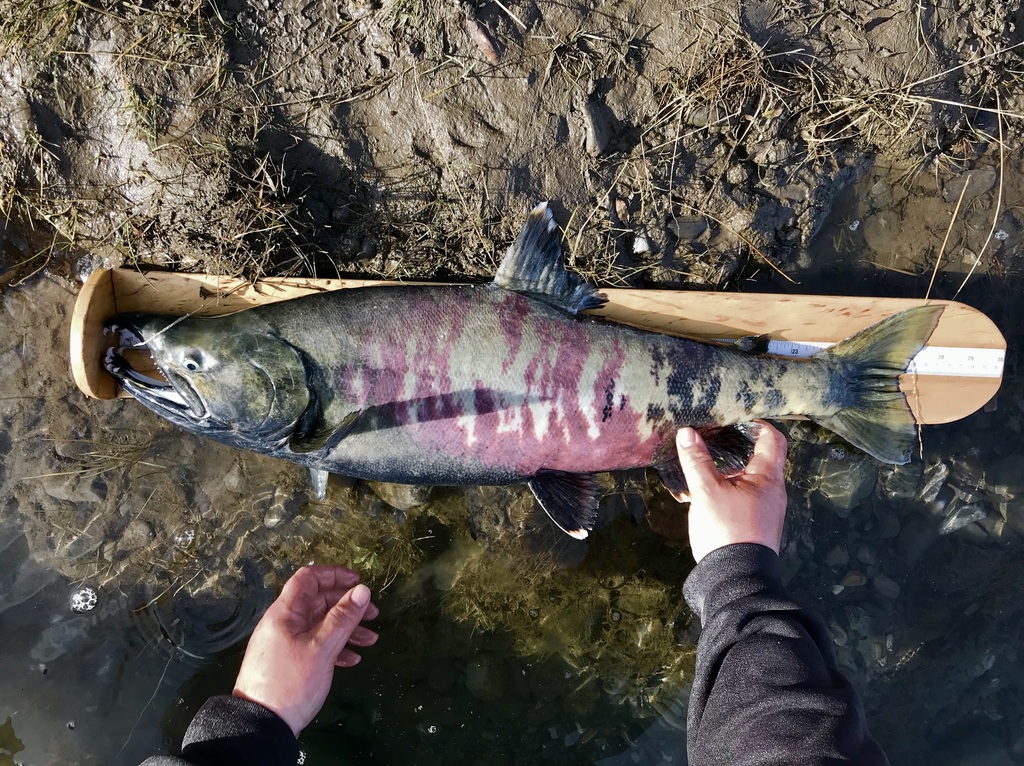
(c) Kevin Brix, some rights reserved (CC BY-SA) · licence
Family: Salmonidae · Class: Actinopterygii · Order: Salmoniformes
Conservation status: G5 S2
Oncorhynchus tshawytscha pop. 13 (Chinook salmon - Central Valley fall run ESU) is a California animal in the Salmonidae family.
The Central Valley fall run Chinook salmon is one of four distinct runs of Chinook salmon (Oncorhynchus tshawytscha) in California's Central Valley. Adults typically measure 60 to 91 cm (24 to 36 inches) in length and weigh 4.5 to 14 kg (10 to 30 pounds), though individuals can reach larger sizes. During their ocean phase, both sexes display bright silver sides with dark backs and scattered black spots on the back and upper tail fin. Spawning adults develop darker coloration, with males exhibiting pronounced hooked jaws (kypes) and females becoming olive-brown with reddish hues. Historically, Central Valley fall run Chinook salmon spawned throughout the Sacramento and San Joaquin river systems and their tributaries. The current range is significantly reduced and fragmented due to dam construction and habitat modification. Major spawning populations now occur in the Sacramento River mainstem, American River, Feather River, Yuba River, Mokelumne River, Tuolumne River, and Merced River. The population also utilizes Battle Creek, Clear Creek, and Deer Creek in the upper Sacramento River system. Spawning habitat consists of clean gravel beds in flowing water with adequate dissolved oxygen levels. Adults prefer water temperatures below 16°C (61°F) for successful reproduction. Spawning typically occurs at depths of 0.3 to 3 meters in areas with moderate to swift current velocities. Juveniles require cool, well-oxygenated water with appropriate cover including undercut banks, large woody debris, and aquatic vegetation. Rearing habitat includes both riverine and estuarine environments as juveniles migrate toward the ocean. Central Valley fall run Chinook salmon are anadromous, spending most of their adult life in the Pacific Ocean before returning to freshwater to spawn. Adults enter the Sacramento-San Joaquin Delta and tributary rivers from July through December, with peak spawning occurring from October through December. Females construct redds (nests) in gravel substrates, depositing 2,000 to 5,000 eggs depending on body size. After spawning, adults die, and their decomposing bodies provide nutrients to the aquatic ecosystem. Juveniles emerge from gravel in late winter and early spring, typically migrating to the ocean after several months of freshwater rearing, though some may remain in freshwater for a full year. The Central Valley fall run maintains a Global rank of G5 (secure) but a State rank of S2 (imperiled), reflecting significant population declines from historical levels. According to the California Department of Fish and Wildlife, the population has experienced substantial reductions due to habitat loss, water diversions, and altered flow regimes. Major threats include dam construction blocking access to historical spawning grounds, water temperature increases, reduced streamflows during critical periods, predation at water export facilities, and ocean conditions affecting survival. The Central Valley Project Improvement Act and other regulatory measures have implemented flow requirements and habitat restoration efforts to support population recovery. Annual monitoring programs track spawning escapement and juvenile production to assess population trends and management effectiveness.
Classification
Class: Actinopterygii · Order: Salmoniformes · Family: Salmonidae
Conservation status
G5 S2
Frequently asked questions
How is Oncorhynchus tshawytscha pop. 13 classified?
Oncorhynchus tshawytscha pop. 13 belongs to class Actinopterygii, order Salmoniformes, family Salmonidae.
What family does Oncorhynchus tshawytscha pop. 13 belong to?
Oncorhynchus tshawytscha pop. 13 is in the Salmonidae family.
Is Oncorhynchus tshawytscha pop. 13 protected or of conservation concern?
Oncorhynchus tshawytscha pop. 13 carries the following status: G5 S2.
What is Oncorhynchus tshawytscha pop. 13?
The Central Valley fall run Chinook salmon is one of four distinct runs of Chinook salmon (Oncorhynchus tshawytscha) in California's Central Valley.
Is Oncorhynchus tshawytscha pop. 13 found in California?
Yes. Oncorhynchus tshawytscha pop. 13 is recorded in California in The California Species Project's catalogue.
Related species
Other California species in the same genus, family, or bioregion.
Data from The California Species Project — 14,000+ California species with verified data from CNPS, CDFW, USFWS, and more.