Oncorhynchus tshawytscha pop. 14
Chinook salmon - southern Oregon/northern California coastal
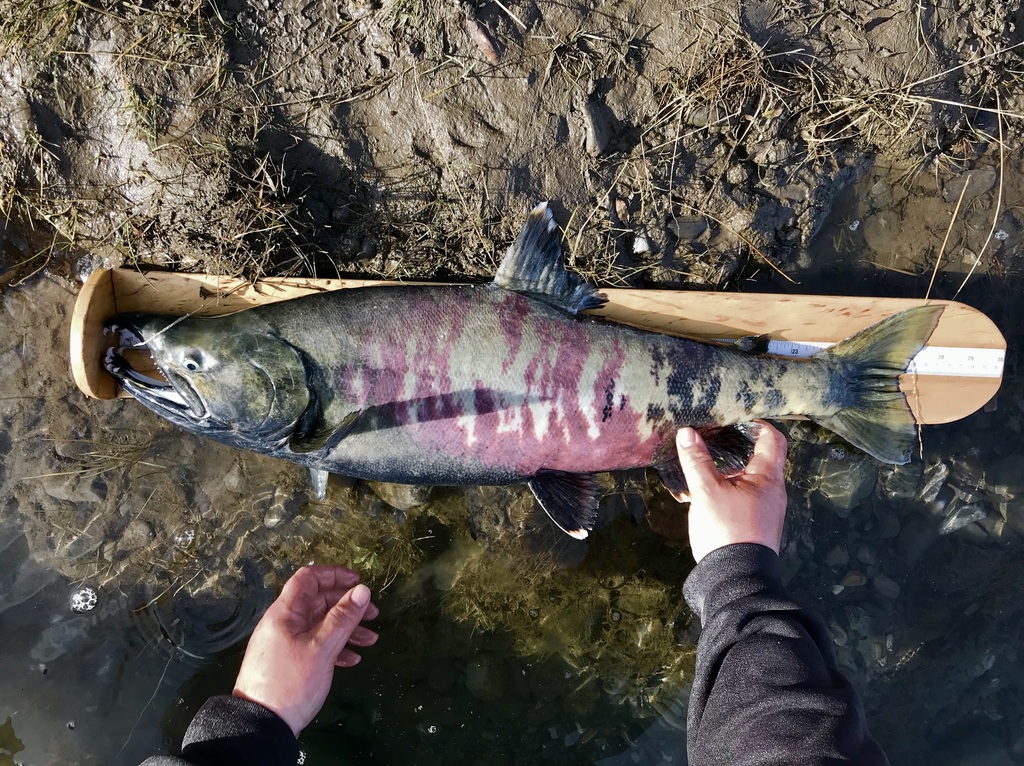
(c) Kevin Brix, some rights reserved (CC BY-SA) · licence
Family: Salmonidae · Class: Actinopterygii · Order: Salmoniformes
Conservation status: Candidate · G5T3Q S2
Oncorhynchus tshawytscha pop. 14 (Chinook salmon - southern Oregon/northern California coastal) is a California animal in the Salmonidae family.
The southern Oregon/northern California coastal Chinook salmon (Oncorhynchus tshawytscha) represents a distinct population segment of North America's largest Pacific salmon species. Adult Chinook salmon typically weigh 40 pounds and measure 27 inches in length, though individuals can exceed 100 pounds and reach lengths of 50 inches (USFWS). This population exhibits the characteristic anadromous life cycle, spending several years in the ocean before returning to natal streams to spawn. This population occurs along the coastal drainages of southern Oregon and northern California, representing the southernmost extent of naturally spawning Chinook salmon on the Pacific coast. The geographic range encompasses coastal rivers and streams from the Oregon-California border region southward into northern California's coastal watersheds. These salmon utilize both freshwater natal streams for spawning and rearing, and marine environments for the majority of their adult growth. Spawning habitat consists of gravel-bottomed streams and rivers with adequate water flow and quality. Adults construct redds (spawning nests) in suitable gravel substrates, with females depositing thousands of eggs that incubate through winter months. Juvenile salmon rear in freshwater for varying periods before migrating to the ocean, where they utilize nearshore and offshore marine environments. Ocean habitat requirements include areas with appropriate prey abundance and water temperatures. Chinook salmon are opportunistic predators with diet varying by life stage and environment. Juveniles in freshwater feed on aquatic insects, crustaceans, and smaller fish. Ocean-phase adults consume fish, squid, and crustaceans. The species exhibits complex life history patterns, with individuals spending 1-8 years in the ocean before returning to spawn. Most Chinook salmon die after spawning, though some populations include repeat spawners. The maximum reported age is 9 years (USFWS). This population currently holds federal candidate status under the Endangered Species Act, indicating that listing as threatened or endangered may be warranted but is precluded by higher priority actions. The Global/State Rank of G5T3Q S2 indicates the subspecies is vulnerable globally with questionable taxonomy, and imperiled within California. Primary threats include habitat degradation from logging, agriculture, and urban development; altered stream flows from water diversions and dam construction; ocean conditions affecting marine survival; and climate change impacts on both freshwater and marine environments. Historical population declines have been documented across much of the species' range, with many coastal watersheds experiencing significant reductions in spawning populations compared to historical levels. Conservation efforts focus on habitat restoration, water quality improvement, and fish passage enhancement at barriers.
Classification
Class: Actinopterygii · Order: Salmoniformes · Family: Salmonidae
Conservation status
Candidate · G5T3Q S2
Frequently asked questions
How is Oncorhynchus tshawytscha pop. 14 classified?
Oncorhynchus tshawytscha pop. 14 belongs to class Actinopterygii, order Salmoniformes, family Salmonidae.
What family does Oncorhynchus tshawytscha pop. 14 belong to?
Oncorhynchus tshawytscha pop. 14 is in the Salmonidae family.
Is Oncorhynchus tshawytscha pop. 14 protected or of conservation concern?
Oncorhynchus tshawytscha pop. 14 carries the following status: Candidate · G5T3Q S2.
What is Oncorhynchus tshawytscha pop. 14?
The southern Oregon/northern California coastal Chinook salmon (Oncorhynchus tshawytscha) represents a distinct population segment of North America's largest Pacific salmon species.
Is Oncorhynchus tshawytscha pop. 14 found in California?
Yes. Oncorhynchus tshawytscha pop. 14 is recorded in California in The California Species Project's catalogue.
Related species
Other California species in the same genus, family, or bioregion.
Data from The California Species Project — 14,000+ California species with verified data from CNPS, CDFW, USFWS, and more.