Ondatra zibethicus
Muskrat
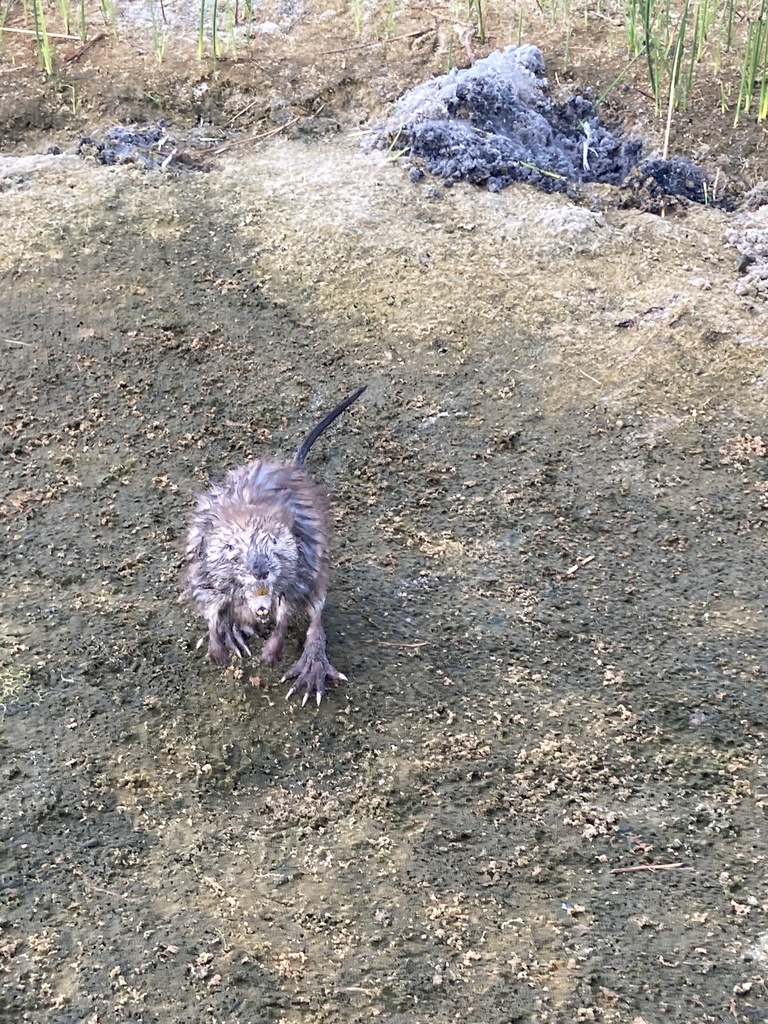
(c) Katie Gipson, some rights reserved (CC BY) · licence
Family: Cricetidae · Class: Mammalia · Order: Rodentia
Ondatra zibethicus (Muskrat) is a California animal in the Cricetidae family.
The muskrat is a medium-sized semiaquatic rodent native to North America. Adults measure 40 to 70 cm (16 to 28 inches) in total length, including a 20 to 30 cm (8 to 12 inch) tail, and weigh between 0.7 to 1.8 kg (1.5 to 4 pounds). The dense, waterproof fur is typically dark brown to blackish on the dorsal surface and lighter brown to gray on the ventral side. The species is distinguished by its laterally compressed, scaly tail that serves as a rudder during swimming, and partially webbed hind feet adapted for aquatic locomotion. The small eyes and ears are positioned high on the head, allowing the animal to remain mostly submerged while monitoring its surroundings. Muskrats historically occupied freshwater wetlands throughout much of North America, including California's Central Valley, northeastern counties, and scattered locations along the coast. The species was likely native to northeastern California but has expanded its range through both natural dispersal and human introduction. Current populations in California are primarily found in the Sacramento-San Joaquin Delta, San Francisco Bay Area marshes, and various wetlands in the Central Valley and mountain regions. The species inhabits shallow freshwater and brackish marshes, ponds, lakes, and slow-moving streams with emergent vegetation. Muskrats require water depths of at least 1 to 2 meters (3 to 6 feet) that do not freeze completely in winter, though California's mild climate eliminates this constraint. They construct dome-shaped lodges from cattails, sedges, and other marsh vegetation, or excavate bank dens with underwater entrances. Optimal habitat includes areas with 50 to 70 percent emergent vegetation coverage. Muskrats are primarily herbivorous, feeding on cattails, bulrushes, sedges, water lilies, and other aquatic plants. They occasionally consume mollusks, crayfish, and small fish. The species is most active during dawn and dusk hours. Breeding occurs from March through August in California, with females producing 2 to 3 litters annually. Gestation lasts 28 to 30 days, resulting in litters of 4 to 8 young. Juveniles reach sexual maturity at 10 to 12 months of age. Muskrats are not federally or state listed in California and maintain stable populations throughout most of their range. However, local populations may be affected by habitat loss due to wetland drainage, water diversions, and urban development. In some agricultural areas, the species is considered a pest due to their burrowing activities that can damage levees and irrigation infrastructure. Climate change and prolonged drought conditions may impact wetland availability, though the species demonstrates considerable adaptability to varying water levels and habitat conditions.
Classification
Class: Mammalia · Order: Rodentia · Family: Cricetidae
Frequently asked questions
How is Ondatra zibethicus classified?
Ondatra zibethicus belongs to class Mammalia, order Rodentia, family Cricetidae.
What family does Ondatra zibethicus belong to?
Ondatra zibethicus is in the Cricetidae family.
What is Ondatra zibethicus?
The muskrat is a medium-sized semiaquatic rodent native to North America.
Is Ondatra zibethicus found in California?
Yes. Ondatra zibethicus is recorded in California in The California Species Project's catalogue.
Related species
Other California species in the same genus, family, or bioregion.
Data from The California Species Project — 14,000+ California species with verified data from CNPS, CDFW, USFWS, and more.