Onychomys leucogaster
Northern Grasshopper Mouse
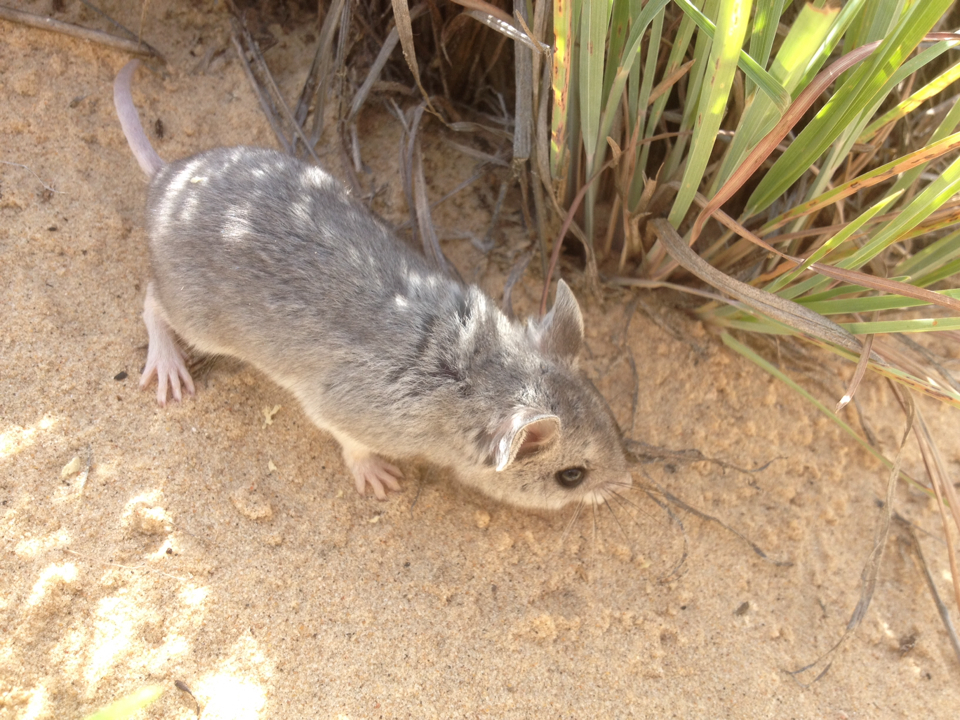
(c) Logan Ediger, some rights reserved (CC BY) · licence
Family: Cricetidae · Class: Mammalia · Order: Rodentia
Onychomys leucogaster (Northern Grasshopper Mouse) is a California animal in the Cricetidae family.
The Northern Grasshopper Mouse is a small, stocky rodent with distinctive carnivorous habits that distinguish it from most other North American mice. Adults measure 90 to 130 mm (3.5 to 5.1 inches) in total body length, with a tail length of 30 to 60 mm (1.2 to 2.4 inches), notably shorter than the body. Adults typically weigh 20 to 50 grams (0.7 to 1.8 ounces). The dorsal pelage ranges from pale gray to cinnamon-brown, while the ventral surface is white. The tail is distinctly bicolored, dark above and white below, with a white tip. The species has relatively large hind feet, small ears, and small eyes compared to other cricetid rodents. The Northern Grasshopper Mouse occurs across the western United States, extending from southern Canada to northern Mexico. In California, the species is found primarily in the northeastern counties, including portions of Modoc, Lassen, and Siskiyou counties. The California populations represent the westernmost extent of the species' range, which extends eastward across the Great Basin and Great Plains regions to the western edges of the Midwest. This species inhabits arid and semi-arid grasslands, shrublands, and desert environments. Northern Grasshopper Mice prefer areas with sparse vegetation cover, including sagebrush steppe, shortgrass prairie, and desert scrub communities. They occur at elevations ranging from near sea level to approximately 2,100 meters (6,900 feet). The species favors sandy or gravelly soils that facilitate burrowing and are typically found in areas with less than 50 centimeters (20 inches) annual precipitation. Unlike most mice, Northern Grasshopper Mice are primarily carnivorous, feeding on insects, spiders, scorpions, and other small arthropods. Grasshoppers and crickets form a significant portion of their diet, particularly during summer months. They also consume small vertebrates including lizards, other rodents, and birds when available. The species is notable for its ability to consume venomous prey, including scorpions and centipedes, apparently with immunity to certain toxins. Northern Grasshopper Mice are primarily nocturnal and maintain territories that they defend aggressively. Breeding occurs from spring through early fall, with females producing 2 to 6 young per litter after a gestation period of approximately 32 days. The species is known for its distinctive howling vocalizations, which can carry over considerable distances. The Northern Grasshopper Mouse is not federally listed and appears to maintain stable populations across most of its range. However, habitat conversion for agriculture and urban development has reduced available habitat in some areas. In California, the species' limited distribution makes it potentially vulnerable to localized threats, though specific population data for the state are limited. Climate change may affect the species through alterations to precipitation patterns and prey availability in arid environments.
Classification
Class: Mammalia · Order: Rodentia · Family: Cricetidae
Frequently asked questions
How is Onychomys leucogaster classified?
Onychomys leucogaster belongs to class Mammalia, order Rodentia, family Cricetidae.
What family does Onychomys leucogaster belong to?
Onychomys leucogaster is in the Cricetidae family.
What is Onychomys leucogaster?
The Northern Grasshopper Mouse is a small, stocky rodent with distinctive carnivorous habits that distinguish it from most other North American mice.
Is Onychomys leucogaster found in California?
Yes. Onychomys leucogaster is recorded in California in The California Species Project's catalogue.
Related species
Other California species in the same genus, family, or bioregion.
Data from The California Species Project — 14,000+ California species with verified data from CNPS, CDFW, USFWS, and more.