Onychomys torridus ramona
Southern Grasshopper Mouse
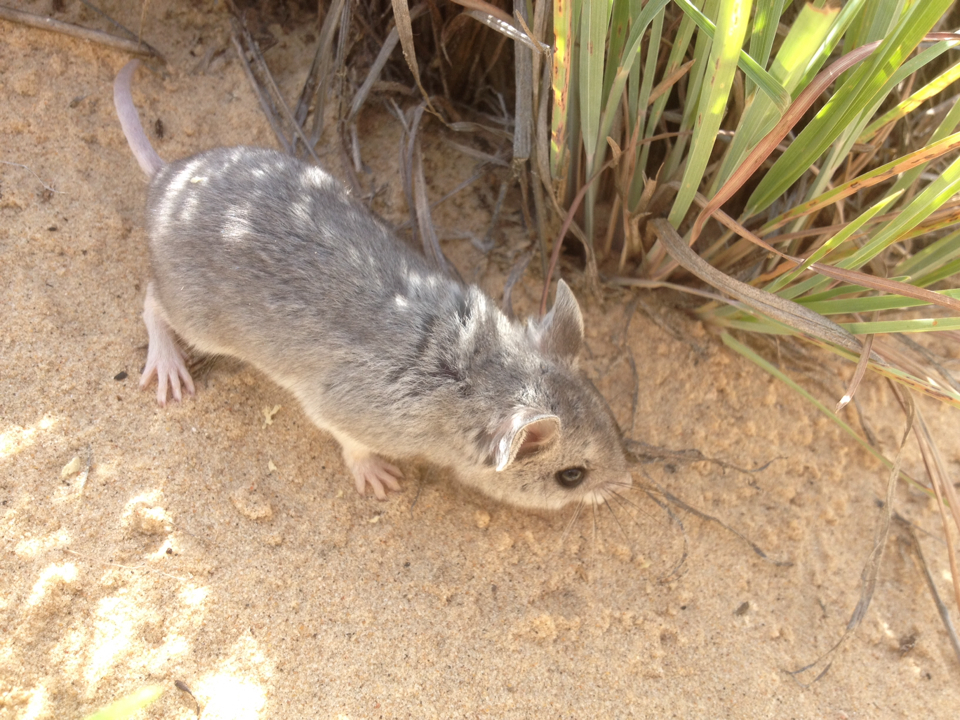
(c) Logan Ediger, some rights reserved (CC BY) · licence
Family: Cricetidae · Class: Mammalia · Order: Rodentia
Conservation status: G5T3 S3
Onychomys torridus ramona (Southern Grasshopper Mouse) is a California animal in the Cricetidae family.
The Southern Grasshopper Mouse (Onychomys torridus ramona) is a robust, carnivorous rodent subspecies endemic to California's arid regions. Adults typically measure 90-130 mm (3.5-5.1 inches) in body length with a tail approximately 40-60 mm (1.6-2.4 inches) long. The species exhibits a stocky build with relatively short tail compared to other mice, large head, and small ears. The dorsal pelage ranges from grayish-brown to cinnamon-buff, while the ventral surface is white. The tail is distinctly bicolored with dark dorsal and white ventral surfaces, often with a white tip. Historically, this subspecies occurred throughout much of southern California's Central Valley and adjacent foothills. The current range is significantly reduced from historical distribution, now primarily restricted to remnant populations in the San Joaquin Valley and surrounding areas. According to NatureServe, the subspecies has experienced substantial range contraction, contributing to its G5T3 S3 ranking, indicating the subspecies is vulnerable to extirpation within California despite the species' overall stability. Southern Grasshopper Mice inhabit arid and semi-arid environments including desert scrub, grasslands, and agricultural areas with sparse vegetation. They prefer areas with sandy or gravelly soils that facilitate burrowing. The species constructs extensive burrow systems that provide shelter from temperature extremes and predators. Elevation ranges typically span from sea level to approximately 1,200 meters (3,900 feet), though specific elevation data for the ramona subspecies requires further documentation. This subspecies exhibits unique carnivorous feeding behavior among North American rodents, primarily consuming arthropods including beetles, crickets, grasshoppers, and scorpions. They also prey on small vertebrates such as lizards and other rodents when available. Southern Grasshopper Mice are known for their distinctive howling vocalizations, produced by throwing back their heads and emitting high-pitched calls. Breeding typically occurs from spring through fall, with females producing 2-3 litters annually. Gestation lasts approximately 32-38 days, with litter sizes ranging from 2-5 young. The subspecies faces conservation challenges due to habitat loss from agricultural conversion, urban development, and habitat fragmentation throughout the Central Valley. California Department of Fish and Wildlife designates this subspecies as a Species of Special Concern, reflecting population declines and habitat threats. Unlike the nominate species which remains widespread across the southwestern United States, O. t. ramona's restricted California range makes it particularly vulnerable to local extirpations. Current population estimates are not well documented, but continued monitoring is essential given the ongoing conversion of suitable habitat. The subspecies' specialized habitat requirements and limited dispersal capabilities make habitat connectivity crucial for long-term persistence. Conservation efforts should focus on protecting remaining grassland and scrub habitats while maintaining corridors between isolated populations.
Classification
Class: Mammalia · Order: Rodentia · Family: Cricetidae
Conservation status
G5T3 S3
Frequently asked questions
How is Onychomys torridus ramona classified?
Onychomys torridus ramona belongs to class Mammalia, order Rodentia, family Cricetidae.
What family does Onychomys torridus ramona belong to?
Onychomys torridus ramona is in the Cricetidae family.
Is Onychomys torridus ramona protected or of conservation concern?
Onychomys torridus ramona carries the following status: G5T3 S3.
What is Onychomys torridus ramona?
The Southern Grasshopper Mouse (Onychomys torridus ramona) is a robust, carnivorous rodent subspecies endemic to California's arid regions.
Is Onychomys torridus ramona found in California?
Yes. Onychomys torridus ramona is recorded in California in The California Species Project's catalogue.
Related species
Other California species in the same genus, family, or bioregion.
Data from The California Species Project — 14,000+ California species with verified data from CNPS, CDFW, USFWS, and more.