Onychoprion anaethetus
Bridled Tern
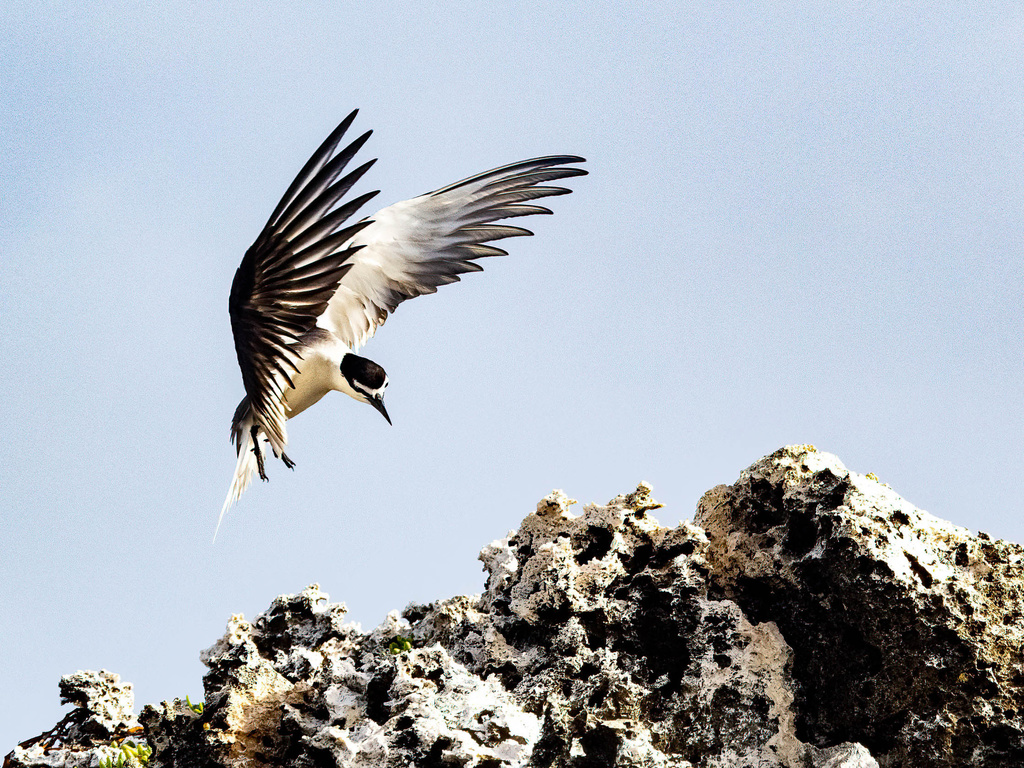
(c) caymanmatt, some rights reserved (CC BY) · licence
Family: Laridae · Class: Aves · Order: Charadriiformes
Onychoprion anaethetus (Bridled Tern) is a California animal in the Laridae family.
The Bridled Tern is a medium-sized seabird measuring 35-38 cm (14-15 inches) in length with a wingspan of 76-81 cm (30-32 inches). Adults display distinctive black and white plumage with a white forehead patch that extends behind the eye as a white supercilium, creating the characteristic "bridle" pattern for which the species is named. The cap is black, contrasting sharply with the white underparts. The upperparts are brownish-gray, and the deeply forked tail shows white outer edges. The bill is black with a slight yellowish base, and the legs are dark. Juveniles appear more mottled with brownish scaling on the upperparts and a less distinct bridle pattern. The Bridled Tern has a pantropical distribution, breeding on islands and coastal areas in warm ocean waters worldwide. In California waters, the species occurs as an irregular visitor, primarily observed during late summer and fall months from July through October. Most California records originate from the Channel Islands and waters off southern California, though individuals have been documented north to Monterey Bay. The species is considered a rare but regular post-breeding visitor to California, with numbers varying considerably between years. Bridled Terns inhabit warm offshore and nearshore marine waters, typically associating with areas of upwelling and productive waters where prey fish concentrate near the surface. They prefer waters over the continental shelf and around islands rather than deep oceanic environments. During the non-breeding season, individuals may range widely across tropical and subtropical waters, following prey concentrations and favorable oceanographic conditions. This species employs a distinctive feeding strategy, plunge-diving from heights of 3-6 meters (10-20 feet) to capture small fish, primarily anchovies, sardines, and flying fish. Unlike many tern species that dive completely underwater, Bridled Terns typically perform shallow plunges, often remaining on the surface to seize prey. They also practice kleptoparasitism, harassing other seabirds to force them to regurgitate or drop their catch. Bridled Terns are highly gregarious outside the breeding season, often forming mixed flocks with other tern species and following fishing vessels or marine mammal aggregations that drive prey to the surface. Breeding occurs on remote tropical islands, where pairs construct simple scrapes lined with vegetation, shells, or coral fragments. Clutch size is typically one egg, occasionally two, with incubation lasting 28-30 days. Both parents share incubation and chick-rearing duties, with fledging occurring after 55-60 days. The Bridled Tern is not federally listed and maintains stable global populations, though local breeding colonies face threats from habitat degradation, introduced predators, and human disturbance on nesting islands. Climate change may affect prey availability and distribution patterns, potentially influencing the species' occurrence in California waters. The species benefits from marine protected areas and seabird colony conservation efforts throughout its range.
Classification
Class: Aves · Order: Charadriiformes · Family: Laridae
Frequently asked questions
How is Onychoprion anaethetus classified?
Onychoprion anaethetus belongs to class Aves, order Charadriiformes, family Laridae.
What family does Onychoprion anaethetus belong to?
Onychoprion anaethetus is in the Laridae family.
What is Onychoprion anaethetus?
The Bridled Tern is a medium-sized seabird measuring 35-38 cm (14-15 inches) in length with a wingspan of 76-81 cm (30-32 inches).
Is Onychoprion anaethetus found in California?
Yes. Onychoprion anaethetus is recorded in California in The California Species Project's catalogue.
Related species
Other California species in the same genus, family, or bioregion.
Data from The California Species Project — 14,000+ California species with verified data from CNPS, CDFW, USFWS, and more.