Operophtera bruceata
The Bruce Spanworm
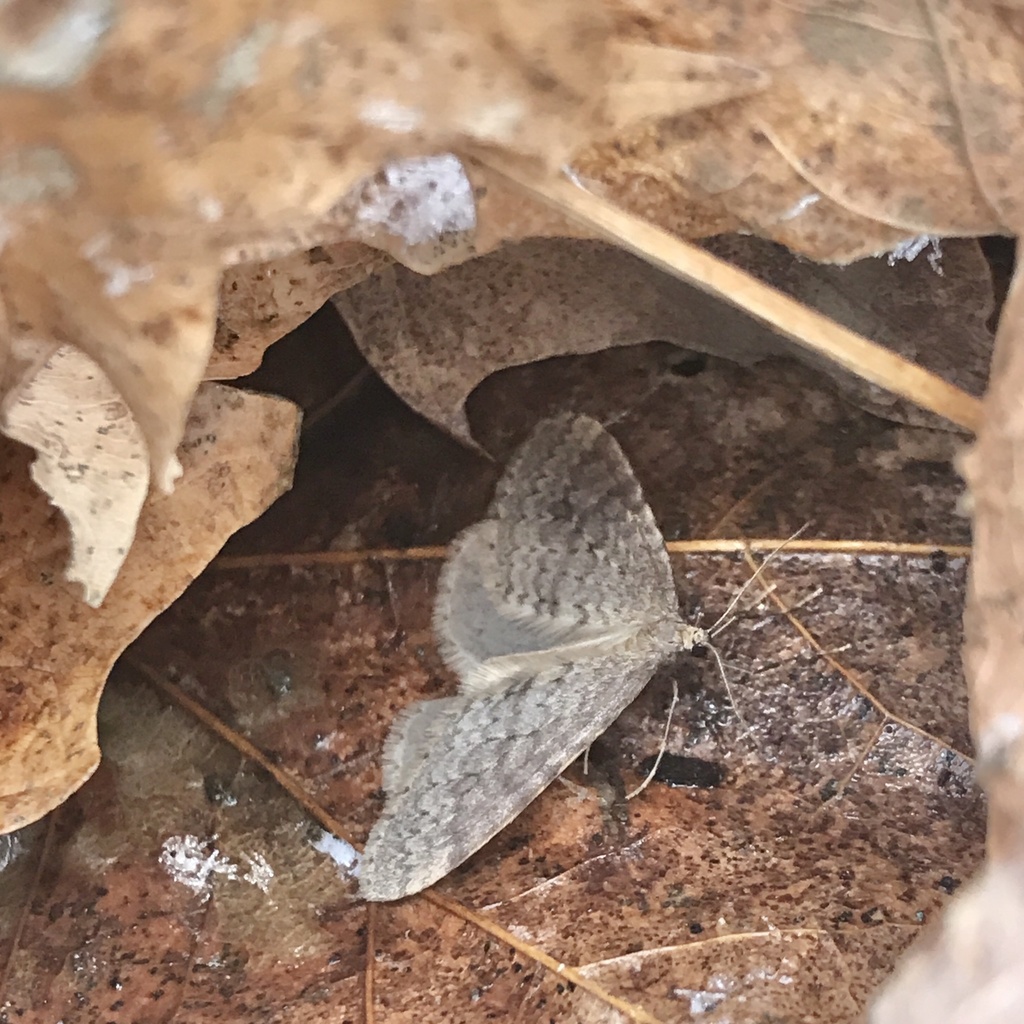
no rights reserved · CC0
Family: Geometridae · Class: Insecta · Order: Lepidoptera
Operophtera bruceata (The Bruce Spanworm) is a California animal in the Geometridae family.
The Bruce spanworm (Operophtera bruceata) is a small geometrid moth in the family Geometridae, subfamily Larentiinae. Males have forewings measuring approximately 12-15 mm in length, with ground color typically darker and more brown than gray. The forewings display a series of dark single dots along the terminal line, distinguishing it from the closely related autumnal moth (Epirrita autumnata), which has double dots. Males often exhibit dull yellowish scaling along the costa. Females are flightless with reduced wing buds that extend shorter than the second abdominal segment, a key identifying feature when compared to the winter moth (Operophtera brumata), where female wing buds extend longer than the second segment. The Bruce spanworm occurs coast to coast across northern United States and Canada, extending south in western regions to California but absent from the southeastern United States (BugGuide). In California, the species is tracked by the California Department of Fish and Wildlife's Natural Diversity Database as part of their Special Animals List, indicating it is considered a species of conservation interest within the state. This species inhabits diverse forested environments where its numerous host plants occur. The larvae are highly polyphagous, feeding on trees and shrubs from multiple plant families including Betulaceae, Ericaceae, Fagaceae, Pinaceae, Rosaceae, and Salicaceae (Moth Photographers Group). Documented host genera include conifers such as Abies (fir), Picea (spruce), Pseudotsuga (Douglas-fir), and Tsuga (hemlock), as well as deciduous trees including Acer (maple), Alnus (alder), Betula (birch), Fagus (beech), Populus (poplar), Quercus (oak), and Salix (willow). This broad host range allows the species to occupy various forest types from coniferous to mixed deciduous woodlands. The Bruce spanworm follows a univoltine life cycle with one generation per year. Adults typically emerge and fly during fall months, primarily September through October. The species overwinters in the egg stage, with larvae becoming active in spring and feeding from May through July. Pupation occurs in soil during June and July. The flightless females must be located by flying males for mating, after which females deposit eggs on or near host plants. Larvae are typical geometrid caterpillars, moving in a characteristic looping motion as they feed on foliage of their host plants. While not federally listed, the Bruce spanworm's inclusion on California's Special Animals List suggests potential conservation concerns within the state. The species may face threats from habitat loss due to forest management practices, urban development, and climate change impacts on forest ecosystems. The moth's dependence on diverse forest habitats and its role as both herbivore and prey species makes it an indicator of forest ecosystem health. Conservation efforts focused on maintaining diverse, mature forest stands with multiple tree species would benefit this and other forest-dependent moths. Additional research is needed to better understand population trends and specific conservation needs throughout its range.
Classification
Class: Insecta · Order: Lepidoptera · Family: Geometridae
Frequently asked questions
How is Operophtera bruceata classified?
Operophtera bruceata belongs to class Insecta, order Lepidoptera, family Geometridae.
What family does Operophtera bruceata belong to?
Operophtera bruceata is in the Geometridae family.
What is Operophtera bruceata?
The Bruce spanworm (Operophtera bruceata) is a small geometrid moth in the family Geometridae, subfamily Larentiinae.
Is Operophtera bruceata found in California?
Yes. Operophtera bruceata is recorded in California in The California Species Project's catalogue.
Related species
Other California species in the same genus, family, or bioregion.
Data from The California Species Project — 14,000+ California species with verified data from CNPS, CDFW, USFWS, and more.