Ophiothrix spiculata
Western Spiny Brittle Star
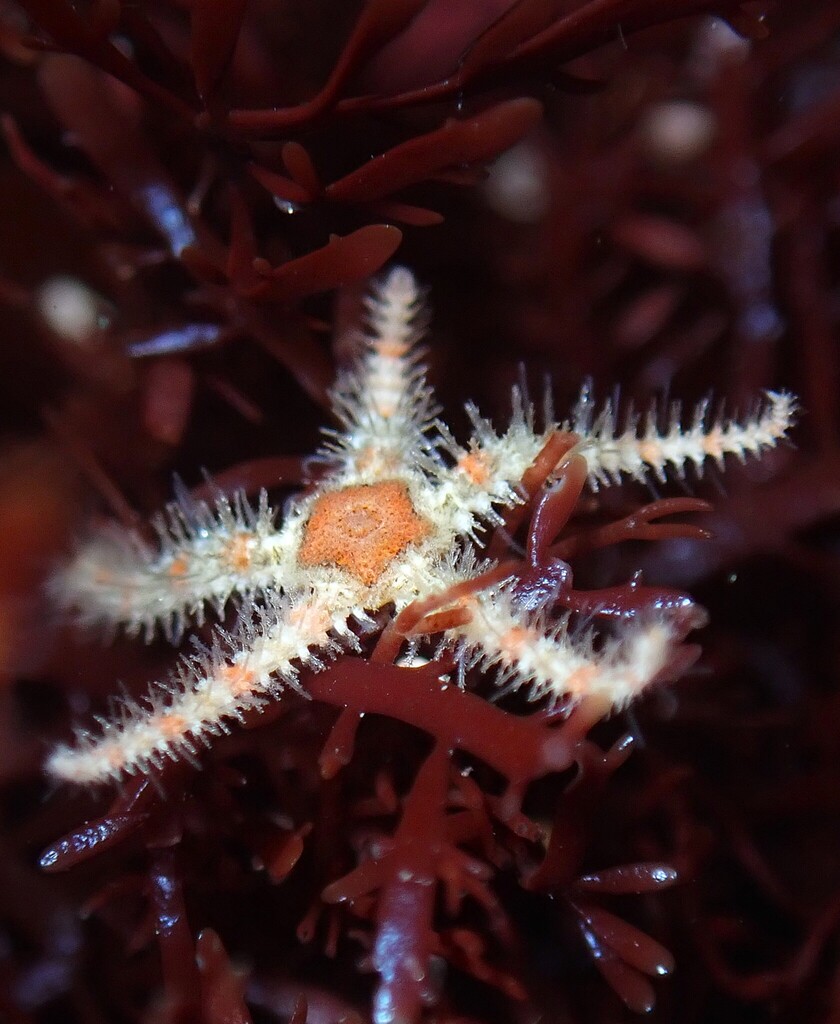
(c) Cypress Hansen, some rights reserved (CC BY) · licence
Family: Ophiothricidae · Class: Ophiuroidea · Order: Ophiurida
Ophiothrix spiculata (Western Spiny Brittle Star) is a California animal in the Ophiothricidae family.
Ophiothrix spiculata, the western spiny brittle star, is a marine invertebrate in the order Ophiurida, family Ophiothricidae. This species belongs to the class Ophiuroidea, distinguished from sea stars by their long, flexible arms that are clearly demarcated from a central disc. The body consists of a small central disc typically measuring 8-12 mm in diameter, from which five slender, highly flexible arms extend. The arms can reach lengths of 80-120 mm and are covered with numerous spines that give the species its common name. The central disc and arms display variable coloration, often appearing in shades of brown, gray, or reddish-brown, sometimes with banded patterns along the arms. The western spiny brittle star occurs along the Pacific coast of North America, with documented populations from British Columbia south to Baja California, Mexico (iNaturalist). In California waters, this species is found in various marine protected areas including Point Buchon State Marine Reserve in San Luis Obispo County, Anacapa Island marine reserves, and Swami's State Marine Conservation Area in San Diego County. The species appears to have a continuous distribution along the California coast in suitable habitat. This brittle star inhabits rocky intertidal and subtidal environments, typically found on hard substrates including rocky reefs, boulders, and underwater pinnacles. The species occurs from the low intertidal zone to depths of at least 120 feet, often associated with kelp forest ecosystems and rocky reef habitats. In Point Buchon waters, western spiny brittle stars are found among the sandy seafloor habitat interspersed with rocky reefs that support high densities of marine invertebrates. They frequently shelter under rocks, in crevices, and among algal holdfasts during daylight hours. Like other ophiuroids, O. spiculata is primarily nocturnal, emerging at night to feed on small organic particles, plankton, and detritus. The species uses its flexible arms for both locomotion and feeding, with tube feet along the arms helping to capture food particles and transport them to the mouth located on the underside of the central disc. Reproduction occurs through external fertilization, with females releasing eggs into the water column where they are fertilized by sperm released by males. The species can also reproduce asexually through arm regeneration, a common trait among brittle stars that allows them to regrow lost appendages. Currently, Ophiothrix spiculata has no federal or state conservation listing status. The species appears to maintain stable populations within California's marine protected area network, where it benefits from habitat protection and restrictions on take of marine resources. Its presence in multiple marine reserves along the California coast suggests adequate population connectivity, though specific population assessments have not been documented. Climate change impacts on ocean temperature and chemistry may affect future population stability, but current threats appear minimal for this widely distributed intertidal and subtidal species.
Classification
Class: Ophiuroidea · Order: Ophiurida · Family: Ophiothricidae
Frequently asked questions
How is Ophiothrix spiculata classified?
Ophiothrix spiculata belongs to class Ophiuroidea, order Ophiurida, family Ophiothricidae.
What family does Ophiothrix spiculata belong to?
Ophiothrix spiculata is in the Ophiothricidae family.
What is Ophiothrix spiculata?
Ophiothrix spiculata, the western spiny brittle star, is a marine invertebrate in the order Ophiurida, family Ophiothricidae.
Is Ophiothrix spiculata found in California?
Yes. Ophiothrix spiculata is recorded in California in The California Species Project's catalogue.
Related species
Other California species in the same genus, family, or bioregion.
Data from The California Species Project — 14,000+ California species with verified data from CNPS, CDFW, USFWS, and more.