Oporornis agilis
Connecticut Warbler
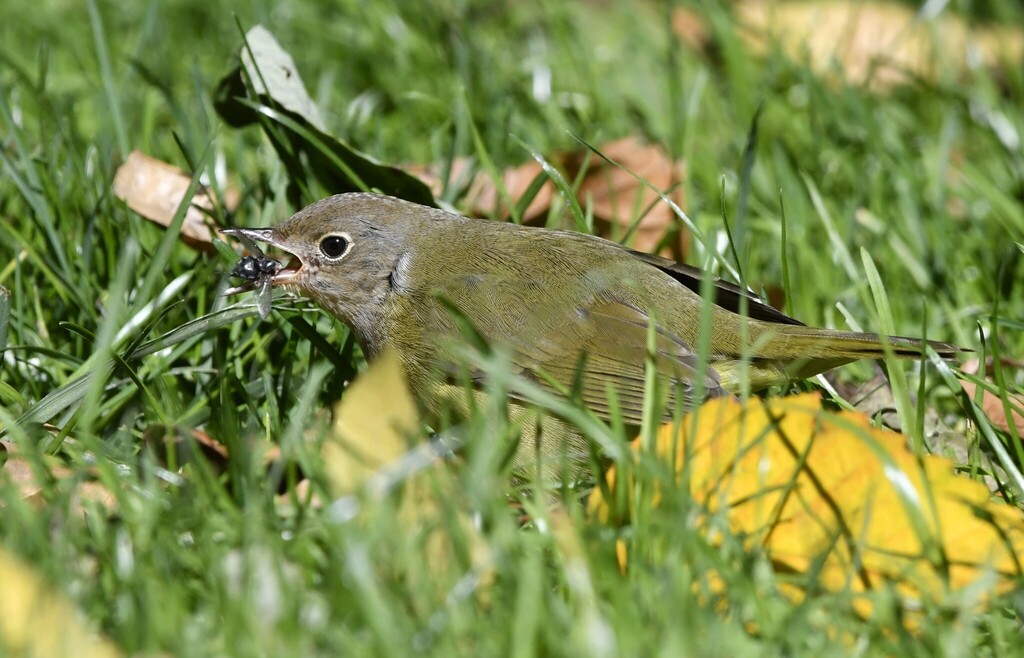
(c) Zac Peterson, some rights reserved (CC BY) · licence
Family: Parulidae · Class: Aves · Order: Passeriformes
Oporornis agilis (Connecticut Warbler) is a California animal in the Parulidae family.
The Connecticut Warbler is a medium-sized songbird measuring 13 to 15 cm (5.1 to 5.9 inches) in length with a wingspan of 22 to 23 cm (8.7 to 9.1 inches). Adults weigh approximately 13 to 18 grams. Breeding males display olive-green upperparts with a distinctive gray hood extending from the crown to the upper breast, separated from the bright yellow underparts by a white eye-ring that forms a complete circle around the eye. Females and non-breeding males show similar coloration but with a duller, brownish-gray hood and less vibrant yellow below. The species is distinguished from similar wood-warblers by its complete white eye-ring, long undertail coverts that nearly reach the tail tip, and characteristic habit of walking rather than hopping on the ground. Despite its name, the Connecticut Warbler breeds primarily in Canada's boreal forests from Alberta east to Quebec, with limited breeding populations in northern Minnesota, Wisconsin, and Michigan. In California, this species occurs as an extremely rare vagrant during migration, typically appearing in fall from late August through October. Most California records come from coastal areas and offshore islands, with scattered inland occurrences. The species follows an elliptical migration pattern, traveling through the Great Plains in spring but taking a more easterly route in fall through the Atlantic states. Breeding habitat consists of mature boreal and mixed forests with dense understory, particularly areas with sphagnum bogs, wet meadows, and forest openings created by natural disturbance. The species shows preference for forests with dense shrub layers of alder, willow, and bog birch. During migration, Connecticut Warblers utilize various woodland habitats including deciduous forests, parks, and woodland edges, typically remaining in dense cover close to the ground. Connecticut Warblers are primarily insectivorous, foraging on the ground and in low vegetation for beetles, caterpillars, ants, flies, and other invertebrates. During migration and winter, they supplement their diet with small fruits and berries. The species exhibits secretive behavior, remaining hidden in dense vegetation and rarely venturing into the open. Breeding occurs from late May through July, with females constructing cup-shaped nests on the ground or in low shrubs. Clutch size typically ranges from 3 to 5 eggs, with an incubation period of 11 to 12 days. Young fledge after 8 to 9 days but remain dependent on adults for several additional days. The Connecticut Warbler is not federally listed but faces conservation challenges throughout its range. According to the North American Bird Conservation Initiative, the species has experienced significant population declines, with breeding bird survey data indicating losses of approximately 66% since 1970. Primary threats include habitat loss from logging and development in breeding areas, climate change affecting boreal forest ecosystems, and collisions with communication towers during nocturnal migration. The species' secretive nature and remote breeding locations make population monitoring challenging, contributing to uncertainty about its current conservation status.
Classification
Class: Aves · Order: Passeriformes · Family: Parulidae
Frequently asked questions
How is Oporornis agilis classified?
Oporornis agilis belongs to class Aves, order Passeriformes, family Parulidae.
What family does Oporornis agilis belong to?
Oporornis agilis is in the Parulidae family.
What is Oporornis agilis?
The Connecticut Warbler is a medium-sized songbird measuring 13 to 15 cm (5.1 to 5.9 inches) in length with a wingspan of 22 to 23 cm (8.7 to 9.1 inches).
Is Oporornis agilis found in California?
Yes. Oporornis agilis is recorded in California in The California Species Project's catalogue.
Related species
Other California species in the same genus, family, or bioregion.
Data from The California Species Project — 14,000+ California species with verified data from CNPS, CDFW, USFWS, and more.