Opsius stactogalus
Tamarix Leafhopper
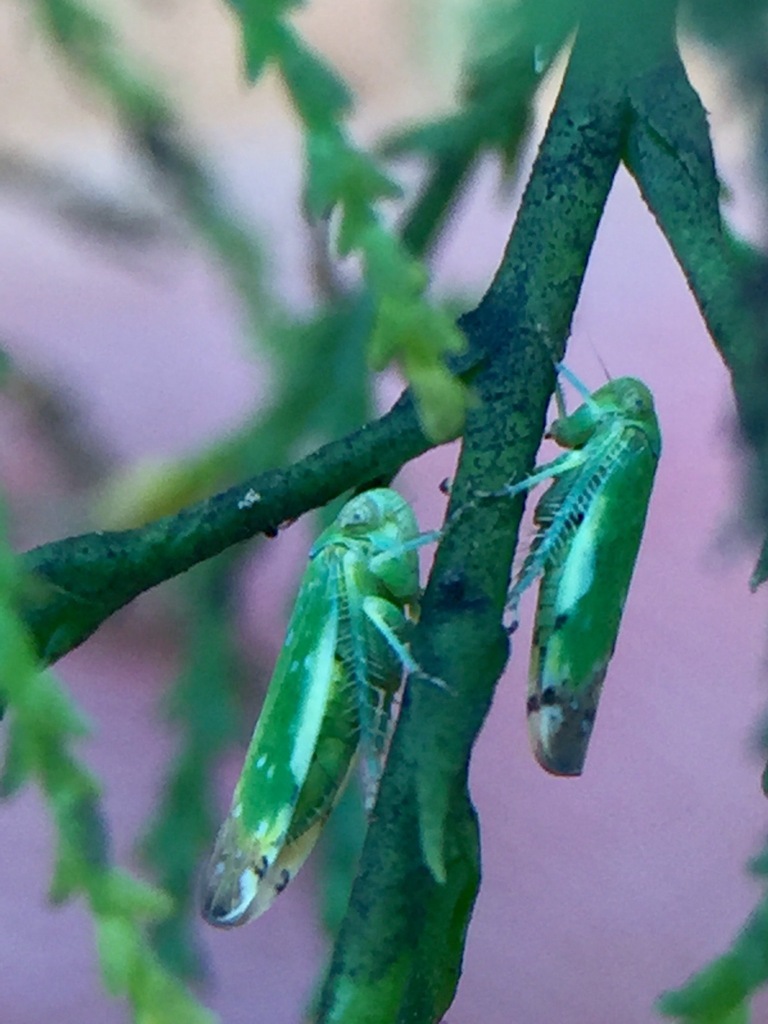
(c) Stephen Thorpe, some rights reserved (CC BY) · licence
Family: Cicadellidae · Class: Insecta · Order: Hemiptera
Opsius stactogalus (Tamarix Leafhopper) is a California animal in the Cicadellidae family.
The Tamarix leafhopper (Opsius stactogalus) is a small hemipteran insect in the family Cicadellidae. Adults measure approximately 3 to 5 millimeters (0.1 to 0.2 inches) in length and display the characteristic wedge-shaped profile typical of leafhoppers. The body is pale yellowish to light brown with darker markings on the forewings. Like other cicadellids, this species has piercing-sucking mouthparts adapted for feeding on plant fluids and powerful hind legs that enable rapid jumping when disturbed. This federally threatened species occurs in scattered locations across the southwestern United States and northwestern Mexico. In the United States, populations are documented in California, Nevada, Arizona, New Mexico, and Texas, with additional occurrences in Sonora, Mexico (USFWS ECOS). The species' distribution is closely tied to the presence of its primary host plant, saltcedar or tamarisk (Tamarix species), an invasive shrub that has colonized riparian areas throughout the American Southwest since the early 1900s. Opsius stactogalus inhabits riparian zones, desert washes, and other areas where tamarisk grows, typically at elevations below 1,500 meters (4,900 feet). These environments are characterized by alkaline soils, fluctuating water levels, and high salt concentrations. The leafhopper is specifically adapted to the harsh conditions of these disturbed riparian ecosystems, where few native insects can survive the combination of salt stress and habitat modification. The species exhibits a close ecological relationship with tamarisk, both as its primary food source and breeding habitat. Adults and nymphs feed exclusively on tamarisk foliage, using their needle-like mouthparts to extract plant sap. Females deposit eggs in tamarisk stems and branches, where they overwinter before hatching in spring. The leafhopper typically produces two to three generations per year, with peak adult activity occurring during warm months from April through October. Population dynamics are directly linked to the health and density of tamarisk stands. The U.S. Fish and Wildlife Service listed the Tamarix leafhopper as threatened in 1993, primarily due to concerns about biological control programs targeting its host plant. Federal and state agencies have implemented extensive tamarisk control efforts using herbicides, mechanical removal, and introduced biological agents to restore native riparian vegetation. These control programs pose the primary threat to O. stactogalus populations, as the elimination of tamarisk directly reduces available habitat and food resources. Additional threats include habitat destruction from urban development, water diversions that alter riparian hydrology, and climate change effects on desert water availability. The species' conservation presents a unique challenge, as it depends on an invasive plant that land managers actively work to eliminate. Current management requires balancing invasive species control with protection of this specialized native insect that has adapted to utilize the non-native host plant.
Classification
Class: Insecta · Order: Hemiptera · Family: Cicadellidae
Frequently asked questions
How is Opsius stactogalus classified?
Opsius stactogalus belongs to class Insecta, order Hemiptera, family Cicadellidae.
What family does Opsius stactogalus belong to?
Opsius stactogalus is in the Cicadellidae family.
What is Opsius stactogalus?
The Tamarix leafhopper (Opsius stactogalus) is a small hemipteran insect in the family Cicadellidae.
Is Opsius stactogalus found in California?
Yes. Opsius stactogalus is recorded in California in The California Species Project's catalogue.
Related species
Other California species in the same genus, family, or bioregion.
Data from The California Species Project — 14,000+ California species with verified data from CNPS, CDFW, USFWS, and more.