Oravelia pege
Dry Creek Cliff Strider Bug
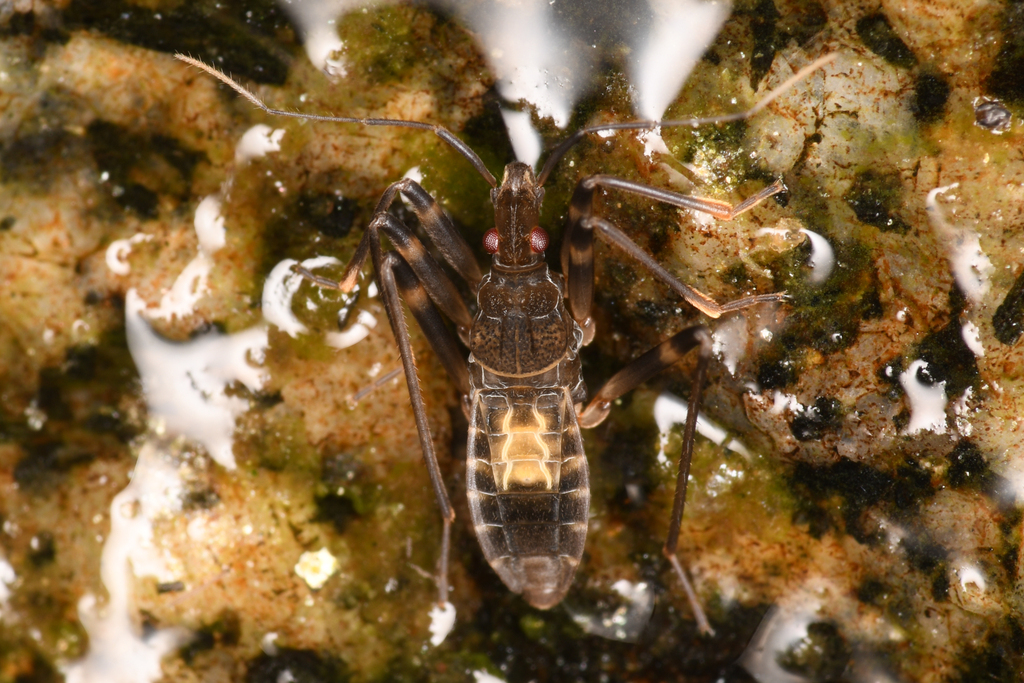
(c) Trevor Van Loon, some rights reserved (CC BY) · licence
Family: Macroveliidae · Class: Insecta · Order: Hemiptera
Conservation status: G1 S1
Oravelia pege (Dry Creek Cliff Strider Bug) is a California animal in the Macroveliidae family.
The Dry Creek cliff strider bug (Oravelia pege) is a small, semi-aquatic insect in the family Macroveliidae, order Hemiptera. As a member of the infraorder Hemiptera, this species belongs to the group of true bugs adapted for life on water surfaces. The physical characteristics of O. pege have not been extensively documented in scientific literature, though like other Macroveliidae, it likely measures between 2-4 millimeters in length with elongated legs adapted for surface tension locomotion. This species is endemic to California and represents one of the rarest insects in North America. The Dry Creek cliff strider bug is currently known from only a few locations, making it extremely vulnerable to local extirpation. Its distribution appears to be highly restricted within the state, though specific locality data remains limited in published sources. The habitat requirements of O. pege are not well documented in available literature. Based on its taxonomic classification and common name, the species likely inhabits rocky stream environments, particularly areas with cliff faces or steep terrain near water sources. Members of the Macroveliidae family typically occur along the margins of streams, springs, or seeps, where they utilize surface tension to move across the water film on rocks and vegetation. Ecological information for this species is extremely limited. Like other members of Gerromorpha, the Dry Creek cliff strider bug presumably feeds on small arthropods and organic matter found on water surfaces or in the surface film. Reproductive behavior, seasonal activity patterns, and specific dietary preferences have not been documented. The species' life cycle likely follows the general hemipteran pattern of incomplete metamorphosis, progressing from egg through several nymphal stages to adult. The conservation status of Oravelia pege reflects its extreme rarity and restricted distribution. The species carries a global rank of G1, indicating it is critically imperiled with typically 5 or fewer occurrences worldwide (NatureServe). Its state rank in California is S1, similarly indicating critical imperilment. As of December 2025, the species does not appear on the federal Endangered Species Act list, despite its precarious status. The primary threats to this species likely include habitat degradation, water diversions, pollution, and climate change impacts on California's aquatic ecosystems. The species' restriction to only a few known locations makes it particularly vulnerable to localized disturbances or environmental changes. Scientific documentation for this species remains extremely limited. This species is included on the California Department of Fish and Wildlife's Special Animals List. The information presented here synthesizes available data from NatureServe, USFWS taxonomic databases, and BugGuide observations. Detailed ecological studies, population assessments, and habitat characterization are urgently needed to develop effective conservation strategies. The species represents a significant gap in our understanding of California's aquatic insect fauna and highlights the need for increased survey efforts in specialized habitats. We welcome contributions of verified scientific data, photographs, or field observations to enhance this species account.
Classification
Class: Insecta · Order: Hemiptera · Family: Macroveliidae
Conservation status
G1 S1
Frequently asked questions
How is Oravelia pege classified?
Oravelia pege belongs to class Insecta, order Hemiptera, family Macroveliidae.
What family does Oravelia pege belong to?
Oravelia pege is in the Macroveliidae family.
Is Oravelia pege protected or of conservation concern?
Oravelia pege carries the following status: G1 S1.
What is Oravelia pege?
The Dry Creek cliff strider bug (Oravelia pege) is a small, semi-aquatic insect in the family Macroveliidae, order Hemiptera.
Is Oravelia pege found in California?
Yes. Oravelia pege is recorded in California in The California Species Project's catalogue.
More California species
This species has no close relatives in our California data — here are other species to explore.
Data from The California Species Project — 14,000+ California species with verified data from CNPS, CDFW, USFWS, and more.